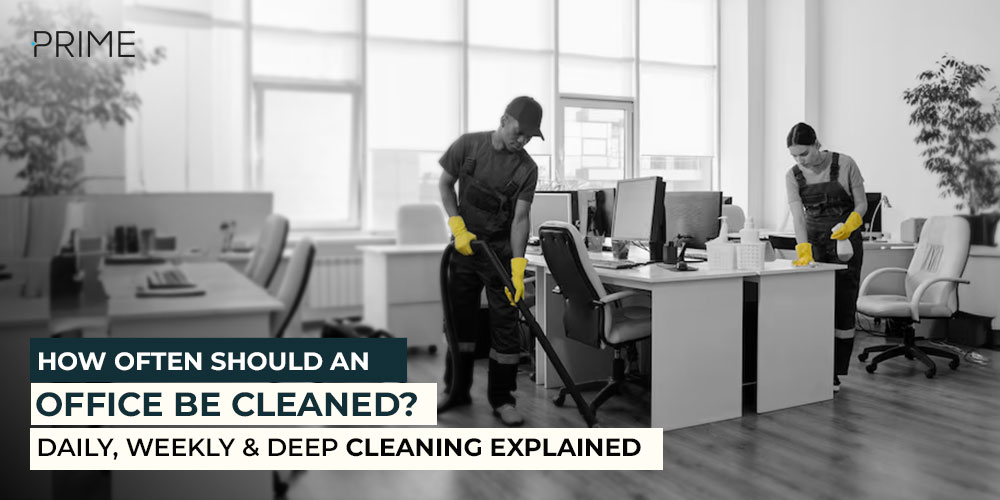

Cleaning is usually carried out on a daily basis for most offices with routine maintenance done once a week. Large offices are cleaned more frequently than small ones; nevertheless, the best frequency of cleaning in an office setting is determined by factors like the size of the office, number of employees, etc.
A hectic day at an office often overlooks cleaning responsibilities to produce high-quality work. However, to boost productivity in the workplace, it is essential to maintain a clean office environment.
A spotless lobby or fresh-smelling restroom can create a lasting impression on your clients and business partners. Furthermore, a tidy workspace ensures the well-being of your employees.
But how to keep an office clean and clutter-free year-round? That’s when it is crucial to determine the frequency of office cleaning.
It depends on factors specific to your office and its requirements. For instance, you want to ensure routine upkeep. To do that, you should opt for daily office cleaning.
Many business owners require office cleaning during the holidays when there are no people around. In such a circumstance, weekly cleaning can be effective.
Also, some may choose to clean the office by the end of the year. Those scenarios demand annual deep cleaning.
No matter which cleaning you choose, it is vital to ensure the place is tidy. It will keep the dirt away and reduce the number of sick days.
To know how often an office should be cleaned, you’ve come to the right place.
This blog explores the office cleaning timeline and the key factors that determine it. Additionally, you will find out the signs of infrequent office cleaning that will help you take effective measures to maintain the space.
Key Takeaways
- Most offices should be cleaned daily, with weekly maintenance and periodic deep cleaning to maintain a healthy, professional, and productive workplace.
- Daily office cleaning should include restroom sanitization, trash removal, vacuuming, mopping, and disinfection of high-touch surfaces.
- Weekly cleaning services help tackle workstations, conference rooms, glass surfaces, breakrooms, and shared office equipment.
- Monthly or quarterly deep cleaning removes hidden dust, allergens, and buildup from carpets, upholstery, HVAC vents, and hard-to-reach areas.
- High-traffic offices in NYC often require more frequent commercial cleaning due to increased foot traffic, employee density, and shared spaces.
- The ideal office cleaning schedule depends on office size, industry, employee count, and building usage patterns.
How Often Should an Office Be Cleaned?
| Cleaning Frequency | What It Covers |
|---|---|
| Daily Cleaning | Restrooms, trash removal, vacuuming, mopping, high-touch surface disinfection, and supply replenishment. |
| Weekly Cleaning | Workstations, meeting rooms, glass surfaces, shared equipment, and common areas. |
| Monthly Cleaning | HVAC vents, baseboards, interior windows, kitchens, and other detailed cleaning tasks. |
| Deep Cleaning (1–2 Times Per Year) | Grout cleaning, behind appliances, under sinks, carpet cleaning, upholstery, and hard-to-reach areas. |
| As Needed | Emergency cleaning, spill cleanup, post-event cleaning, and special sanitization services. |
When it comes to workplace upkeep, the frequency of office cleaning is vital. A busy office building where people are constantly coming and going will accumulate dust and dirt by the end of the day.
Also, frequent restroom use will deplete supplies by noon. These factors can impact the effectiveness and productivity of the office. For that reason, you should ensure daily cleaning in the office. It will prevent dust buildup and make cleaning easier, especially for a more thorough cleaning.
In addition to daily surface cleaning, weekly and monthly maintenance will also help maintain a high standard of cleaning for employee health. These cleaning tasks will sanitize the office and keep allergens and bacteria at bay.
Moreover, an office space also requires thorough cleaning once or twice a year using a deep-cleaning process. Office deep cleaning includes detailed upkeep in hidden areas that aren’t covered in regular maintenance.
Inspecting and clearing out grout in the washrooms, wiping down beneath the sinks, and behind the appliances are the areas where deep cleaning is done. All these tasks ensure the overall tidiness and sanitation of the office space.
Why Cleanliness Matters in the Office?
A clean office is not just for aesthetic appeal but also creates a productive work environment. With the number of people working in the office, office cleanliness impacts employees’ health, morale, and efficiency.
A clutter-free workspace enhances focus, professionalism, and a positive ambiance among colleagues. Furthermore, maintaining cleanliness helps prevent germ contamination, reducing absenteeism in the office.
Infrequent cleaning can accumulate dirt in hard-to-reach surfaces like ceilings. It makes the place look shabby. To ensure your clients and business partners have a positive image of your workspace, cleanliness becomes essential.
Close environments in offices require proper ventilation systems. Failing to maintain cleanliness will contribute to grime buildup. As a result, it may affect the space’s air quality. To improve air quality, it is crucial to clean ventilation systems.
Overall, maintaining office cleanliness fosters good habits. It allows workers to lean toward their workspace, making them feel more comfortable.
Why Office Cleaning Frequency Varies by Workplace?
The office cleaning timeline varies by workplace because each workspace has different requirements for foot traffic, occupant density, and industry standards.
For in-house cleaning teams, addressing these different factors can be difficult. The reason is that they might lack the knowledge about workplace cleaning standards or may not follow a proper checklist.
To ensure proper cleaning compliant with OSHA (Occupational Safety and Health Administration) guidelines, business owners can introduce commercial office cleaning.
These are services provided by cleaning experts. They will assess the workplace and determine the commercial office cleaning schedule.
In a large office with many employees, dust buildup is common. With daily cleaning of high-touch surfaces like elevator buttons, desks, light switches, and doorknobs, professional cleaning teams can minimize the risk of germ spread.
For smaller offices featuring fewer employees, you can schedule a weekly cleaning with cleaning experts. They will wipe down mirrors and windows to eliminate spots and dust. Moreover, they empty trash bins and dispose of them properly to keep the environment tidy and fresh.
Key Factors That Decide How Often an Office Should Be Cleaned
After knowing the varied requirements of the workplace, it is evident that the office cleaning timeline depends on factors specific to a workspace.
The cleaning frequency that may work for large offices may not work for small spaces. To implement the best office hygiene practices, it is therefore crucial to know the key factors. These are as follows:
- Office size and layout
Larger office spaces take more time and effort to clean effectively. Thorough weekly cleaning can reduce the daunting daily maintenance to address common areas like conference rooms and break rooms, as well as high-touch surfaces.
For open-plan offices, frequent cleaning can be effective. Such layouts attract more traffic, leading to dust and dirt accumulation. Regular high-touch surface cleaning helps prevent dust accumulation and maintain a healthy working environment.
- Number of employees and visitors
A higher number of people in the office naturally leads to more dirt, germs, and dust. If your office experiences heavy foot traffic, frequent cleaning becomes crucial.
Moreover, you can incorporate deep cleaning for lobbies and entryways to keep these areas spotless at all times. Cleaning teams can address accidental spills and even remove trash to maintain a hygienic, presentable workspace.
- Industry and type of work
Industries like medical facilities and food services have strict hygiene standards. Overlooking spills on hospital floors or failing to attend to overflowing trash bins in restaurants can cause contamination to spread. It will thus affect the health of patients, employees, and visitors.
For that reason, cleaning should be done more often. The cleaning tasks should comply with the healthcare regulations to ensure safety. Moreover, it should include equipment deep cleaning to extend its lifespan and maintain a positive office image.
- Specific cleaning needs
Offices often have unique cleaning needs. For instance, an office may have upholstered furniture and carpeted floors. To ensure they stay in good condition for a long time, they require regular vacuuming or shampooing.
You can incorporate carpet & upholstery cleaning services to eliminate dirt and stubborn grime from these surfaces. They will use fabric-friendly equipment to deep-clean these areas, preserving their aesthetic appeal. Also, regular vacuuming of these surfaces will prevent dust, promoting a safe workspace.
How Often Should an Office Be Cleaned? (General Guidelines)
After learning the key factors influencing office cleaning frequency, it’s time to have a detailed understanding of the cleanliness. Typically, high-traffic areas like entryways, lobbies, and restrooms require regular cleaning.
However, for a full routine cleaning like trash removal, dusting, and vacuuming, 1-3 times a week is enough. It will minimize dirt buildup, which may increase the labor required for more intensive cleaning.
Moreover, you can opt for monthly or annual deep cleaning, depending on the number of visitors and the company’s size. The following is the office sanitation frequency that you should know to make an informed decision:
Daily Office Cleaning – What Must Be Done Every Day?
Daily office cleaning involves regular dusting, vacuuming, or mopping high-traffic surfaces. From lobbies to restrooms, daily cleaning addresses everything. It basically includes cleaning of surfaces that don’t require much time.
For small offices, daily cleaning may take 1-2 hours; for large offices, it may take 3-5 hours, depending on the cleaning activities.
The cleaning tasks for daily cleaning are:
- Wiping and sanitizing every surface.
- Cleaning and mopping floors.
- Switching off appliances like coffee makers and changing the filters.
- Removing unwanted food items from refrigerators and wiping down the appliances.
- Disinfect common areas to remove dirt and grime.
Weekly Office Cleaning – What Can Be Done Less Often?
Weekly office cleaning is more detailed than daily upkeep. For small offices, the time would be more than 3 hours, and for large offices, weekly cleaning may take more than 8 hours.
The weekly office cleaning tasks generally focus on making the premises spotless. Though it takes more time than daily cleaning, it ensures a more precise level of tidiness in the space.
Here we will discuss the weekly cleaning tasks that are done less often in the space:
- Cleaning solid surfaces with a mop.
- Washing the walls of entrances, corridors, and doorways.
- Use microfiber cloths to clean the cubicle areas.
- Properly cleaning and disinfecting monitors, keyboards, and other devices.
- Vacuuming floors and furniture for a clean and presentable work environment.
Monthly Office Cleaning – Preventive Maintenance Tasks
Monthly cleaning addresses a significant amount of dust and dirt in an office. As a result, it takes more time than standard cleaning. Typically, monthly cleaning takes 5+ hours to ensure the workspace is clean and fresh.
Since monthly cleaning is an intensive process, in-house staff should maintain a comprehensive office cleaning checklist. It will document the tasks required to maintain workspace cleanliness.
These cleaning tasks every month include:
- Dusting hard-to-reach areas like ceilings, cabinet tops, etc.
- Cleaning and vacuuming mats and carpets.
- Carefully cleaning and disinfecting light fixtures.
- Checking office supplies and restocking them.
- Wiping down and sanitizing windows and window frames.
Quarterly or Annual Deep Cleaning – When It’s Necessary?
Apart from monthly maintenance, offices require a deep cleaning. Standard cleaning methods often miss certain areas, and deep cleaning addresses them. For instance, the constant movement may attract dust to carpets.
To ensure effective cleaning, vacuuming the carpets might not be enough. Shampooing the carpets can remove stubborn grime and retain their integrity. It will maintain workspace cleanliness and make it more presentable.
Office deep cleaning is generally done quarterly or annually, depending on requirements and tasks. These tasks involve:
- Deep scrubbing restroom floors, toilets, and sanitizing them.
- Cleaning HVAC (heating, ventilation, and air-conditioning) systems and changing the filters.
- Vacuuming office furniture and wiping down the frames to remove dirt, oils, and grime.
- Sweeping, dusting, and mopping lobbies to minimize germ spread.
- Cleaning kitchen and office appliances inside and out to remove stubborn grime.
How Often Should an Office Be Cleaned by Office Type?
Understanding office cleaning intervals, you can incorporate daily, weekly, monthly, or quarterly cleaning in your workspace. Be it a corporate office, a medical office, or a shared space, effective cleaning is imperative.
However, it is crucial to analyze the office type to ensure appropriate cleaning practices and tools are used. Here’s how often you should consider cleaning an office, depending on its type:
Corporate and Administrative Offices
Corporate and administrative offices accommodate large numbers of people. Their constant movement in and out requires daily cleaning. It maintains basic hygiene in the place and provides a safe working environment for employees.
Frequent dusting of desks and sanitizing restrooms are daily cleaning tasks in such offices. Apart from that, weekly and monthly cleaning also helps prevent dust buildup in hard-to-reach areas. These include top-of-cabinet shelves, under-sink areas, faucets, and every corner of the break room.
Medical and Healthcare Offices
Medical and healthcare offices are hotspots for germ contamination. Thus, frequent cleaning becomes necessary. Areas like lobbies, waiting rooms, examination rooms, and high-touch surfaces need disinfection multiple times a day.
In addition to these specific areas, general floor vacuuming is also essential in these offices. It will reduce the risk of cross-contamination and provide a safe environment for patient recovery and visits.
IT, Tech, and Call Centers
Information Technology (IT), tech, and call centers attract a large number of workers. With increasing foot traffic, it is natural to have more dust and dirt on floors. Also, shared surfaces like desks, keyboards, and headsets can increase allergen spread. For that reason, daily, weekly, and monthly cleaning becomes essential.
While regular cleaning involves dusting door handles and elevator buttons, and mopping floors, weekly cleaning includes clearing stubborn grime from air ducts. These tasks will improve the space’s air quality. Also, with monthly maintenance, the call center will promote a clean working space.
Industrial and Warehouse Offices
The frequency of cleaning industrial and warehouse offices will depend on the tasks. For instance, if the office’s machinery and storage areas are cluttered, it will require daily maintenance. The cleaning team will ensure trash is removed and floors are dusted to keep the environment tidy.
Furthermore, cobwebs hanging from warehouse ceilings can create a negative impression of the space. To prevent that, it requires a weekly or monthly maintenance. By performing effective deep cleaning, cleaning teams can address these areas, leaving the space spotless.
Coworking and Shared Office Spaces
Coworking spaces are areas where different teams work together. The high volume of people working in these spaces requires daily cleaning at a minimum. From cleaning restrooms to dusting high-touch surfaces, cleaning teams perform it all.
Additionally, these spaces require weekly, monthly, and annual deep cleaning, depending on the requirements. For instance, if there’s hidden dirt in the corners of floor tiles or carpets, deep cleaning is essential. Intensive mopping of floor tiles with appropriate cleaning products, or shampooing carpets, makes these spaces look spotless.
When Should an Office Be Cleaned More Frequently Than Usual?
By now, you know that office cleaning takes place daily, weekly, monthly, or annually, depending on the type of cleaning and the requirements. But there are certain scenarios where frequent office cleaning is necessary.
During peak flu season, there’s a potential risk of bacteria spreading in the offices. To prevent or reduce it, regular disinfection with Environmental Protection Agency (EPA)- approved products is vital.
Sometimes, increased dust accumulation in HVAC systems disrupts air quality and spreads allergens. As a result, employees may experience allergies or breathing issues. To prevent that, thoroughly clean HVAC systems and replace filters to improve indoor air quality.
An increase in visitors in the workspace indicates greater movement on the floors and increased restroom usage. All such elements will increase debris and waste accumulation. With frequent cleaning, the cleaning personnel dust and mop routinely.
Furthermore, they will inspect supplies in the restrooms and restock them from time to time to keep the operations running effectively.
Signs Your Office Is Not Being Cleaned Often Enough
Many business owners focus on maintaining the place’s aesthetic appeal by adding new furniture or painting the spaces. But maintaining cleanliness is the easiest way to give your office a shine.
Of course, cleaning hard-to-reach areas and other hidden spaces can eliminate dirt and debris. But if the space is not cleaned between the annual maintenance, it can impact the effectiveness of the office.
With frequent cleaning, cleaning teams can reduce dust buildup and the daunting responsibilities that come with thorough maintenance. To know that your office is sparkling, knowing the following signs of infrequent cleaning is crucial:
- Overflowing trash cans and cluttered common areas are common signs that your office requires frequent cleaning.
- Unpleasant odors are a sign of poor hygiene and mold in offices. Regular upkeep can address these issues promptly and improve the indoor air quality.
- If employees are complaining about cleanliness, you should make efforts to improve the aspect. Maintaining a professional office cleaning frequency can help keep the office environment clean.
- An increase in allergic reactions in the office can be a sign of an unclean environment. With more frequent, thorough cleaning, professionals can help create a healthier workspace.
Ensure Prompt Office Cleaning with Prime Cleaning Services
A clean office reflects a positive and productive work environment. Employees and visitors trust that a space that maintains the cleaning standards. For that reason, offices must follow the office cleaning timeline.
With daily, weekly, monthly, or annual deep cleaning, you can ensure your office space is spotless. Since cleaning tasks in every office vary, it can be challenging to follow the schedule for in-house cleaners.
That’s when Prime Cleaning Services steps in. We provide cleaning solutions for offices, from medical facilities to commercial office spaces.
Our professional cleaning teams have expertise in understanding the daily, weekly, or monthly cleaning of different spaces. Following comprehensive checklists, we conduct cleaning with proper tools and products.
By communicating clearly with business owners or property managers, our team can customize cleaning methods for your organization. That way, you will get the precise cleaning that you want in your office.
Explore our office cleaning services and make your space sparkle.
FAQs
1. Is daily office cleaning really necessary if employees work remotely or part-time?
Daily office cleaning involves regular dusting and disinfecting office spaces. Even if employees are working remotely or part-time, dirt buildup is natural in shared surfaces like desks, monitors, light switches, and elevator buttons. To prevent the buildup, daily cleaning is crucial.
2. How often should high-touch surfaces be cleaned in an office?
High-touch surfaces require cleaning and disinfection at least once daily. Regular maintenance of elevator buttons, desks, keyboards, and light switches can help reduce the risk of germ contamination.
3. Does office deep cleaning frequency affect indoor air quality?
Yes, the frequency of office cleaning significantly affects indoor air quality. Infrequent cleaning deposits dust in HVAC systems, spreading allergens and affecting workers’ overall health. To minimize such risks, vacuuming floors and cleaning HVAC systems become essential. These will improve the workspace’s indoor air quality.
4. Can cleaning too often damage office furniture or surfaces?
Yes, cleaning too often or using improper cleaning products can damage office furniture or surfaces. Frequent cleaning with harsh chemicals can lead to discoloration or wear and tear of the furniture surfaces. It is thus essential to use mild cleaners to clean office furniture, removing dirt while preserving its fabric.
5. What are the consequences of infrequent office cleaning?
Infrequent office cleaning significantly drops employee productivity. As the space’s cleanliness is overlooked, dust builds up, and germs spread. As a result, more employees call in sick, disrupting the professional image and productivity of the space. Therefore, frequent office cleaning is vital.