
Imagine walking into a spotless and shining space in the morning. How would you feel? The welcoming appearance and fresh ambiance bring a positive feeling. A clean office creates a productive and healthy environment for employees and visitors.
A clean and maintained office area offers a sense of organization and order while contributing to employee health and hygiene. It enables employees to work with minimal distractions.
Employees can work efficiently and complete tasks more effectively when the workspace and common areas are clean and inviting.
In this comprehensive blog, we will explore an office cleaning checklist that will help improve employee morale and loyalty and discuss the importance of having a daily, weekly, and monthly cleaning checklist.
The advanced strategies and techniques will give you a systematic and all-encompassing approach to cleaning.
Start reading!
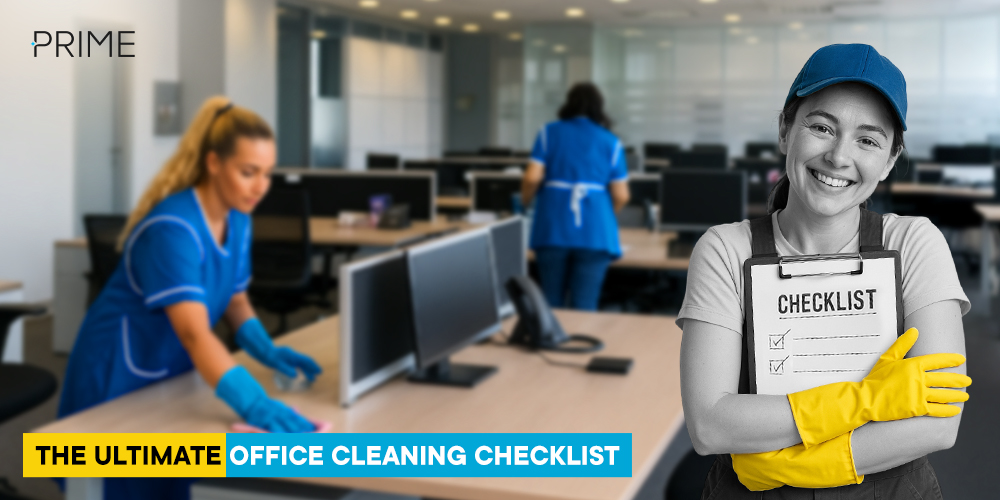
Download The Office Cleaning Checklist Template (Free Printable PDF)
Free Download: Printable PDF
Quick Guide to a Commercial Cleaning Checklist
- A tidy and organized workspace helps reduce stress, minimizes distractions, and supports mental focus, leading to improved work performance.
- Using daily, weekly, and monthly checklists ensures that all cleaning duties are performed regularly and nothing important is missed.
- Disinfecting shared surfaces and maintaining hygiene helps lower the spread of germs, contributing to a healthier environment for employees.
- Professional office cleaners use the right tools and follow safety rules to deliver better results and keep your office in good condition.
- Using non-toxic, biodegradable products helps reduce environmental impact while creating a safer workspace for staff.
The Complete Office Cleaning Checklist in 2026
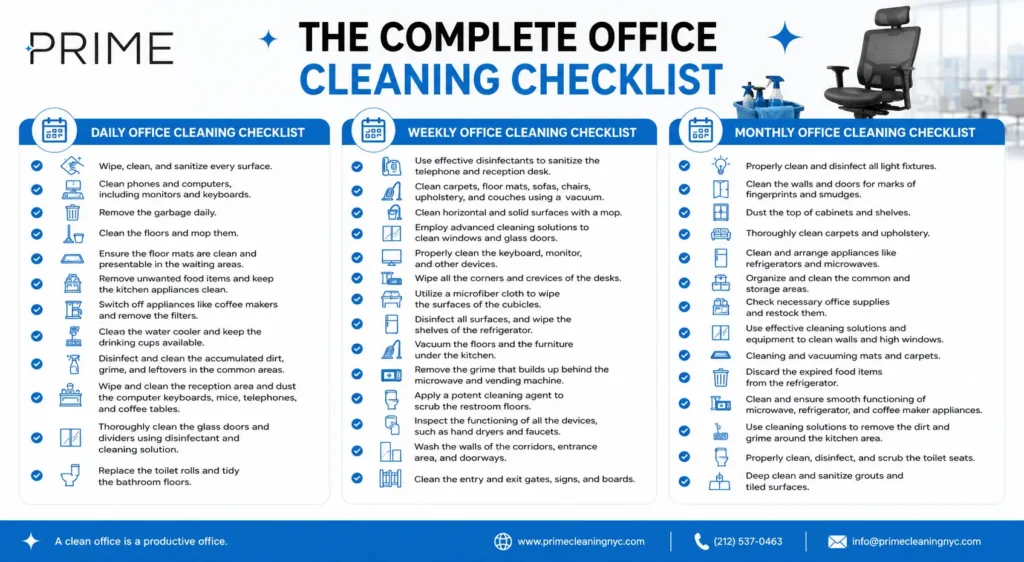
An extensive cleaning checklist emphasizes maintaining good health and hygiene in workspace environments.
A daily, weekly, and monthly checklist helps maintain a clean and appealing office environment. It includes details about the cleaning process, implementing tailored cleaning, and achieving optimum results.
Everyone likes a clean home, regularly removing the dirt and making the place feel fresh. Similarly, the workspace needs proper cleaning and maintenance. Along with the aesthetic appeal, a clean environment contributes to various health benefits.
Let us delve into the daily, weekly, and monthly office cleaning checklist template –
Daily Office Cleaning Checklist
Some parts of the office need daily cleaning. Maintaining a professional office cleaning checklist guarantees your office remains immaculate. It enhances production and safety while safeguarding the organization from OSHA violations and penalties.
A daily and basic office cleaning checklist is vital to disinfect frequently touched surfaces. These include door handles, handrails, light switches, and elevator buttons, which should be disinfected using sanitizers.
Let us look into the daily office cleaning checklist format –
- Wipe, clean, and sanitize every surface.
- Clean phones and computers, including monitors and keyboards.
- Remove the garbage daily.
- Clean the floors and mop them.
- Ensure the floor mats are clean and presentable in the waiting areas.
- Remove unwanted food items and keep the kitchen appliances clean.
- Switch off appliances like coffee makers and remove the filters.
- Clean the water cooler and keep the drinking cups available.
- Disinfect and clean the accumulated dirt, grime, and leftovers in the common areas.
- Wipe and clean the reception area and dust the computer keyboards, mice, telephones, and coffee tables.
- Thoroughly clean the glass doors and dividers using disinfectant and cleaning solution.
- Replace the toilet rolls and tidy the bathroom floors.
Reception Area
The reception area creates the first impression of your business and should remain clean throughout the day.
- Wipe and sanitize the reception desk.
- Dust computer monitors, keyboards, telephones, and coffee tables.
- Clean glass entrance doors and dividers.
- Vacuum or clean entrance mats.
- Empty trash bins and replace liners.
- Disinfect door handles and other high-touch surfaces.
Workstations & Office Desks
Employee workstations should be cleaned daily to maintain hygiene and improve productivity.
- Wipe and sanitize desks and work surfaces.
- Clean computer monitors, keyboards, phones, and mice.
- Empty individual trash bins.
- Dust office furniture and shelves.
- Disinfect shared office equipment.
Meeting Rooms
Meeting spaces should always be ready for employees and visitors.
- Wipe conference tables.
- Clean chairs and shared equipment.
- Remove trash and unwanted items.
- Sanitize presentation equipment and remote controls.
- Vacuum or mop the floor if needed.
Kitchen & Break Room
Keeping shared kitchen areas clean helps reduce odors and maintain hygiene.
- Remove unwanted or expired food.
- Clean countertops, sinks, and tables.
- Wipe the microwave, refrigerator, and coffee maker.
- Empty trash bins.
- Clean and refill the water cooler and drinking cups.
- Sweep and mop the floor.
Restrooms
Restrooms require daily cleaning to maintain a safe and hygienic workplace.
- Clean and disinfect toilets, sinks, and countertops.
- Replace toilet paper, paper towels, and soap.
- Mop restroom floors.
- Empty sanitary waste bins.
- Clean mirrors and touchpoints such as faucets and door handles.
Floors & Common Areas
Common areas experience the highest foot traffic and should be cleaned every day.
- Vacuum carpets and rugs.
- Sweep and mop hard floors.
- Clean hallways and corridors.
- Disinfect handrails, elevator buttons, and light switches.
- Remove dirt, dust, and debris from shared spaces.
Estimated Time to Complete The Tasks:
1. Small offices: 1 – 2 hours.
2. Medium offices: 2 – 4 hours.
3. Large Offices: 3- 5 hours.
Weekly Office Cleaning Checklist
A weekly commercial office cleaning checklist is beneficial for achieving spotless premises. Although weekly cleaning takes longer, it ensures a clean and peaceful atmosphere. It includes aspects beyond daily cleaning, especially high-touch areas and cleaning appliances.
Here, we will discuss the weekly cleaning checklist –
- Use effective disinfectants to sanitize the telephone and reception desk.
- Clean carpets, floor mats, sofas, chairs, upholstery, and couches using a vacuum.
- Clean horizontal and solid surfaces with a mop.
- Employ advanced cleaning solutions to clean windows and glass doors.
- Properly clean the keyboard, monitor, and other devices.
- Wipe all the corners and crevices of the desks.
- Utilize a microfiber cloth to wipe the surfaces of the cubicles.
- Disinfect all surfaces, and wipe the shelves of the refrigerator.
- Vacuum the floors and the furniture under the kitchen.
- Remove the grime that builds up behind the microwave and vending machine.
- Apply a potent cleaning agent to scrub the restroom floors.
- Inspect the functioning of all the devices, such as hand dryers and faucets.
- Wash the walls of the corridors, entrance area, and doorways.
- Clean the entry and exit gates, signs, and boards.
Estimated Time to Complete The Tasks:
1. Small offices: 2 – 3.5 hours.
2. Medium offices: 4 – 7 hours.
3. Large Offices: 8+ hours.
Monthly Office Cleaning Checklist
Maintaining an office deep cleaning checklist is crucial, and it must be performed once a month. This occurs after given intervals and involves moving furniture and larger items. It helps remove dust buildup, clean the floors, and clean the baseboards.
Monthly cleaning is more extensive and requires more time than standard cleaning. As a result, employees need to adjust their schedules accordingly.
Let us take a look at the monthly cleaning checklist –
- Properly clean and disinfect all light fixtures.
- Clean the walls and doors for marks of fingerprints and smudges.
- Dust the top of cabinets and shelves.
- Thoroughly clean carpets and upholstery.
- Clean and arrange appliances like refrigerators and microwaves.
- Organize and clean the common and storage areas.
- Check necessary office supplies and restock them.
- Use effective cleaning solutions and equipment to clean walls and high windows.
- Cleaning and vacuuming mats and carpets.
- Discard the expired food items from the refrigerator.
- Clean and ensure smooth functioning of microwave, refrigerator, and coffee maker appliances.
- Use cleaning solutions to remove the dirt and grime around the kitchen area.
- Properly clean, disinfect, and scrub the toilet seats.
- Deep clean and sanitize grouts and tiled surfaces.
Estimated Time to Complete The Tasks:
1. Small offices: 3 – 5 hours.
2. Medium offices: 6 – 8 hours.
3. Large Offices: 10+ hours.
Cleaning Supplies and Equipment Required For Office Cleaning
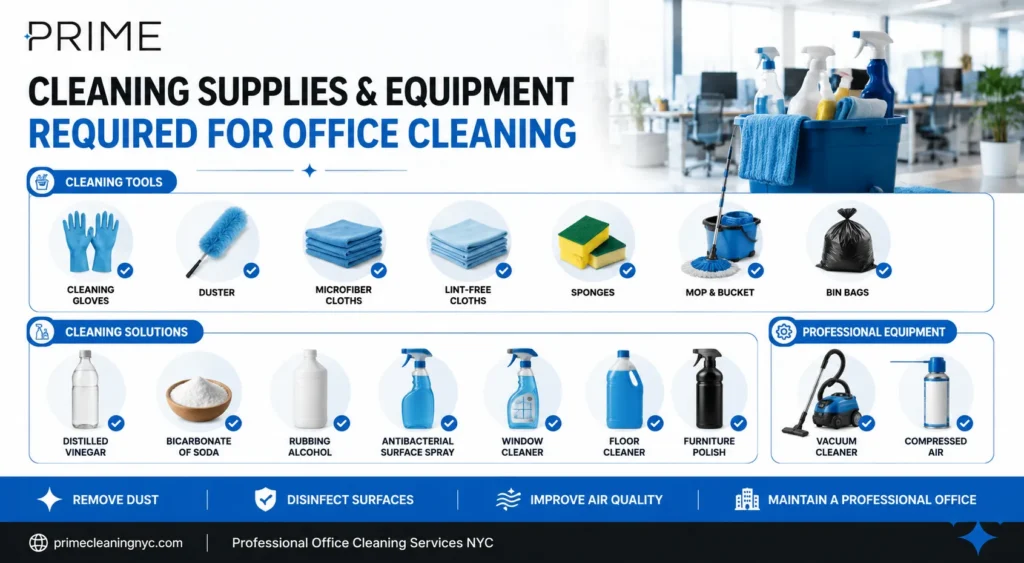
Professional cleaning processes involve implementing essential components. These items are crucial to establishing spotless office areas. These products are efficient in quickly cleaning harsh surfaces, primarily commercial areas.
These items are made to provide a more comprehensive cleaning. Commercial cleaning services involve multiple challenges, and this equipment offers a professional-grade clean.
Here is a list of essential cleaning supplies and equipment for office cleaning –
- Cleaning gloves
- Duster
- Microfiber cloths
- Lint-free cleaning cloths
- Sponges
- Mop and bucket
- Bin bags
- Distilled vinegar
- Bicarbonate of soda
- Rubbing alcohol
- Antibacterial surface spray
- Window cleaner
- Floor cleaner
- Vacuum cleaner
- Furniture polish
- Compressed air
How to Start Cleaning with an Office Cleaning Checklist
Follow these simple steps to get started:
Walk Through Your Office
Inspect every area that needs regular cleaning, including workstations, meeting rooms, reception areas, restrooms, kitchens, break rooms, hallways, and storage spaces. Make a list of surfaces, equipment, and high-touch points that require routine cleaning.
Group Tasks by Frequency
Separate your cleaning tasks into daily, weekly, and monthly checklists.
- Daily: Empty trash, disinfect high-touch surfaces, clean restrooms, wipe desks, vacuum high-traffic areas, and sanitize break rooms.
- Weekly: Clean windows, vacuum upholstery, mop all floors, dust workstations, and disinfect shared office equipment.
- Monthly: Deep clean carpets, sanitize light fixtures, clean air vents, organize storage areas, and deep clean kitchen appliances.
Gather the Right Cleaning Supplies
Before you begin, make sure you have the necessary cleaning products and equipment, such as microfiber cloths, disinfectants, glass cleaner, floor cleaner, vacuum cleaners, mops, trash liners, gloves, and restroom cleaning supplies. Having everything ready improves efficiency and reduces interruptions during cleaning.
Assign Responsibilities
If multiple people are involved, assign specific tasks or areas to each person. Clear responsibilities help prevent missed tasks and improve accountability, especially in larger offices or commercial buildings.
Check Off Completed Tasks
Mark each task as it is completed and review the checklist regularly. Tracking completed work helps maintain consistent cleaning standards, identifies areas that need extra attention, and makes it easier to plan future cleaning schedules.
By following a structured office cleaning checklist, businesses can maintain a cleaner, healthier, and more professional workplace while ensuring that no essential cleaning task is overlooked.
The Importance of a Clean Workspace
A workplace cleaning checklist helps you clearly understand the necessary cleaning tasks. It ensures your team gets to work in a clean, organized, and sanitized office.
A checklist helps you understand specific areas to clean daily, weekly, or monthly.
Workplace cleaning significantly boosts productivity, mental clarity, and well-being. Regular office work leads to a buildup of dust and dirt and a messy atmosphere. A tidy and well-organized workspace improves focus and efficiency.
All the mess and clutter around your workspace impacts your ability to concentrate. When you find a clean workspace, it reduces distractions and helps you focus on necessary tasks.
Following a cleaning schedule checklist for the office boosts a sense of calmness and control, motivates you to complete tasks, and increases morale.
1. Improved Health and Wellness
Dust, allergens, and germs contribute to respiratory problems and other health issues. Professional cleaning reduces these irritants and helps create a healthier environment for staff and employees.
2. Enhanced Productivity
Accumulated clutter is distracting and affects employees’ focus and productivity. A spotless and well-organized workspace helps employees focus better and complete their tasks.
3. Positive First Impression
Following a checklist for cleaning offices creates a positive impression on clients, visitors, and even potential hires.
4. Boosted Employee Morale
Employees who work in a clean and properly maintained professional space contribute to better productivity and increased morale.
To better understand the value and impact of a clean workspace, explore our blog, ‘The Importance of Office Cleaning.
Health & Safety Considerations During Office Cleaning
When cleaning offices, it is crucial to focus on the health and safety of the professional cleaners. This reduces the risks associated with cleaning agents, possible biological dangers, and other issues.
Prioritizing worker safety is essential through sufficient training and utilizing appropriate equipment. It leads to a healthy, tidy, and organized work environment.
The essential health and safety factors to consider are –
1. Working with hazardous substances
Cleaning agents can be very harmful if they touch the skin. Professionals must read every label thoroughly and utilize chemicals solely for their designated purpose. They must also wear suitable PPE while handling chemical substances and properly store them.
The office staff should also be aware of what chemicals are applied. These areas should be emptied while cleaning is in progress.
2. PPE (Personal Protective Equipment)
The cleaners must wear PPE, including uniforms, safety shoes, gloves, and goggles. This ensures their safety from hazardous cleaning solutions and accumulated waste.
3. Use of cleaning equipment
All cleaners must be well-trained in operating cleaning tools such as buffers and floor scrubbers. They must also embrace safe work habits and be aware of and understand the equipment. They must inspect all equipment before use and confirm that there is no visible damage.
4. Cleaning office equipment
When sanitizing and cleaning tools, especially kitchen devices, ensure that everything is switched off at the power source. For safety, professionals must be careful when handling sharp items. They should also be aware of the fire exits and know the location of the nearest fire extinguisher.
5. Signage
The professional cleaning team should know the signs to display during cleaning activities. It helps to secure areas where spills have happened. It reduces and restricts sudden workplace slips, trips, and falls. They must wear proper shoes, ensuring better traction in places prone to spills or during floor cleaning activities.
6. Use of containers
It is essential to verify that all containers are correctly labeled. The professionals must also check whether transferring the chemical substance involved is safe.
Why Should You Use An Office Cleaning Checklist?
An office cleaning schedule is crucial for maintaining a sparkling clean space. A structured approach to cleaning promotes a healthier environment for employees.
Proper checklist use can increase productivity, enhance professionalism, and create a welcoming atmosphere.
Streamlined Cleaning Process
A deep cleaning checklist for the office is ideal, ensuring all areas are thoroughly cleaned. By following a checklist, cleaning professionals seamlessly move through the office space. It helps them complete tasks well-structured and organized, optimizing the cleaning process and boosting productivity.
Reduced Risk of Oversights
Following a comprehensive checklist helps avoid mistakes and ensures complete cleaning. The checklist reminds everyone of all the tasks that need to be completed, eliminating the chances of overlooking hidden areas or tasks. This ensures that every corner of the office gets the required attention, maintaining cleanliness and hygiene standards.
Improved Communication
Checklists simplify clear communication with the employees and staff. Sharing a proper checklist helps professionals understand their roles and responsibilities. It ensures that all tasks are carried out according to given industry standards.
Enhanced Accountability
The checklists offer a proper means of tracking and monitoring the cleaning process. They make it easier to keep track of individuals responsible for their duties. Following a checklist ensures all tasks are completed on time, according to industry standards.
Increased Efficiency
Utilizing a systematic checklist to help with cleaning tasks is crucial to completing them efficiently and quickly. It assists professional cleaners in planning and distributing their time accordingly.
A cleaning checklist improves efficiency during cleaning, enabling tasks to be finished without compromising quality. A complete cleaning elevates the working atmosphere for clients and employees.
Why Should You Hire Professional Office Cleaning Services?
Keeping a tidy, structured work environment is crucial for the success of every business. A clean environment leaves a great first impression on clients, enhancing employee productivity and morale.
Hiring skilled professionals offers an ideal solution, as they boast expertise, dedication, and reliability.
Let us look at the reasons why hiring professional cleaners is beneficial –
1. Efficient, High-Quality Cleaning
Employing expert commercial cleaners ensures a high standard of cleaning and maintenance. They offer efficient service with dedicated, well-prepared personnel. They have the knowledge to deal with different office spaces.
The professionals fulfill your specific requirements, providing an immaculate space. They collaborate with you to provide tailored services according to your schedule.
2. Better Business Reputation
Clutter and dirty areas bring down a business’s image. Inadequate cleaning compromises your business’s reputation, driving away customers, clients, and potential hires.
Hiring professionals helps you establish a spotless, comfortable, and reputed workspace.
3. Healthier and Safer Workplace
Workers should not worry about falling ill while on the job. A tidy workplace helps reduce the transmission of disease, and commercial cleaning services help disinfect and sanitize the space.
They safeguard the entire workplace from germs that cause illness. Professional cleaners meet the standard regulations and prevent health risks.
4. Improved Employee and Company Morale
Your employees will experience the advantages of professional cleaning. A professionally sanitized setting emphasizes health and safety, resulting in satisfied and driven employees.
5. Increased Productivity
Less distraction and an improved mood enhance employees’ job performance. Thus, expert commercial cleaning reduces the amount of germs, leading to increased productivity.
6. Long-Term ROI
Hiring professionals leads to higher profit margins. They ensure you are investing in the durability of the building, its furnishing, features, and equipment.
7. Peace of Mind
Expert commercial cleaning services provide flexible scheduling and excellent customer support. They assure you they will help you with any requests whenever issues arise.
Related: The Benefits Of Commercial Cleaning Services
Get Sparkling Clean Offices with Prime Cleaning Services!
The cleanliness of an office should always be prioritized. An organized office setting is crucial for enhancing employee efficiency and client satisfaction. It brings a positive work culture, which is essential to business development.
At Prime Cleaning Services, we use our expertise to ensure a higher level of cleanliness in your office space.
We implement advanced cleaning solutions and pay attention to detail, bringing a shining, spotless space. Hiring us is smart, as we work with precision, which benefits your business in the long run.
We work according to a daily, weekly, and monthly office cleaning checklist per your requirements.
Get effortless cleaning and exceptional results with our office cleaning services in NYC.
Reach out to us now and experience cleaning at its finest!
Frequently Asked Questions
1. How Often Should An Office Be Cleaned?
An office should be cleaned regularly, combining daily, weekly, and monthly cleaning tasks. Daily cleaning focuses on high-traffic areas like restrooms and reception areas, while weekly cleaning involves more thorough tasks like vacuuming and mopping. Monthly cleaning includes deeper tasks like carpet cleaning and floor waxing.
2. Why Is An Office Cleaning Checklist Important?
A cleaning checklist for the office ensures a reliable and deep cleaning routine. It prevents tasks from being overlooked, improves communication within cleaning teams, and promotes accountability. It also helps train new employees, track progress, and identify potential issues early on.
3. Should I use PPE during Office Cleaning Tasks?
You should wear Personal Protective Equipment (PPE) during office cleaning tasks. PPE helps protect cleaners from hazards such as chemical exposure, pathogens, and physical injuries.
4. Can Office Cleaning Be Done After Business Hours?
Yes, office cleaning is often done after business hours. This is a common practice to reduce disruption to employees. It allows cleaners to access all areas without interference, maximizing cleaning efficiency and minimizing potential safety risks.
5. How Much Does Office Cleaning Services Cost?
Office cleaning service costs vary depending on the workspace size, cleaning frequency, the type of services needed, and location.
6. Is it Better to Hire Professionals for Office Deep Cleaning?
Yes, hiring professionals for office deep cleaning is highly recommended. Professionals can meticulously clean areas inaccessible to regular cleaning and use specialized equipment and products to ensure a deeper, more hygienic clean.
7. Is Green Or Eco-Friendly Cleaning Suitable for Offices?
Yes, green or eco-friendly cleaning is suitable for offices. It offers numerous benefits, including a healthier work environment, reduced environmental impact, and potential cost savings.
Businesses can contribute to a more sustainable future by using green cleaning, which can also help improve the overall well-being of their employees.
8. What Is Included In An Office Cleaning Checklist?
A standard office cleaning checklist includes daily, weekly, and monthly tasks designed to keep the workplace clean and hygienic.
Common items include dusting desks, disinfecting high-touch surfaces, vacuuming carpets, mopping floors, emptying trash bins, cleaning restrooms, sanitizing break rooms, and maintaining reception areas. A complete checklist can also include deep cleaning tasks such as carpet cleaning, upholstery cleaning, and interior window cleaning.
9. What Does An Office Cleaner Do?
An office cleaner is responsible for maintaining a clean, safe, and professional work environment. Typical duties include vacuuming, mopping floors, dusting furniture, disinfecting shared surfaces, cleaning restrooms, emptying trash, sanitizing kitchens and break rooms, and replenishing supplies. Depending on the facility, they may also perform periodic deep cleaning and floor maintenance.
10. What Does Office Cleaning Services Include?
Office cleaning services generally include routine cleaning of workstations, conference rooms, reception areas, kitchens, restrooms, and common spaces. Services often cover dusting, vacuuming, mopping, trash removal, surface disinfection, and restroom sanitization. Many commercial cleaning companies also offer deep cleaning, carpet cleaning, floor care, interior window cleaning, and day porter services.
11. What Cleaning Supplies Are Needed For Office Cleaning?
Basic office cleaning supplies include microfiber cloths, disinfectants, glass cleaner, all-purpose cleaner, floor cleaner, mops, buckets, vacuum cleaners, trash liners, restroom cleaners, paper towels, and protective gloves. Using commercial-grade cleaning products helps maintain a cleaner and healthier workplace.
12. How Do You Create An Office Cleaning Schedule?
Start by dividing cleaning tasks into daily, weekly, monthly, and periodic activities. Assign responsibilities for each task and create a schedule based on the office size, occupancy, and traffic levels. Using a written cleaning schedule helps ensure consistency and makes it easier to track completed work.
13. What Areas Are Commonly Missed During Office Cleaning?
Frequently overlooked areas include keyboards, computer mice, telephones, light switches, door handles, chair armrests, baseboards, air vents, break room appliances, and the space behind office furniture. Including these areas in your cleaning checklist helps maintain a healthier and more hygienic workplace.
14. Which Areas Require Daily Cleaning in an Office?
High-traffic and high-touch areas should be cleaned every day. These include workstations, reception areas, kitchens, restrooms, shared meeting rooms, door handles, light switches, elevator buttons, and office equipment such as phones and keyboards. Daily cleaning helps maintain a hygienic and professional workplace.
15. What Tasks Should Be Included in a Monthly Office Deep Cleaning?
Monthly office deep cleaning should include carpet and upholstery cleaning, high-level dusting, cleaning light fixtures, sanitizing air vents, washing interior windows, deep cleaning kitchen appliances, organizing storage areas, and disinfecting grout and tiled surfaces. These tasks help remove accumulated dirt that routine cleaning may miss.
16. Why Should High-Touch Surfaces Be Disinfected Daily?
High-touch surfaces such as door handles, keyboards, telephones, elevator buttons, light switches, and shared office equipment are touched by multiple people throughout the day. Daily disinfection helps reduce the spread of germs, supports a healthier workplace, and maintains a cleaner office environment for employees and visitors.
17. What Is a Commercial Cleaning Checklist Template?
A commercial cleaning checklist template is a structured list of cleaning tasks that helps businesses organize and track routine cleaning. It can include daily, weekly, and monthly tasks for offices, restrooms, kitchens, common areas, floors, and other commercial spaces.
18. Can I Use a Printable Commercial Cleaning Checklist?
Yes. A printable commercial cleaning checklist can help cleaning staff track completed tasks and maintain consistent cleaning standards. The checklist can be customized based on the size of the facility, cleaning frequency, and specific areas that require attention.