
Does your office look clean on the surface but feel dusty or unhygienic? It happens when the space maintains the aesthetic but lacks cleaning beneath the surface.
Unclean office spaces directly affect employees’ health, comfort, and productivity. To ensure employees work comfortably, businesses should implement proper cleaning practices.
Often, companies use a single cleaning approach, i.e., regular cleaning, to enhance the space’s professional image and prevent overtime germ contamination. However, it is difficult to maintain the entire property with regular cleaning.
To create a visually pleasant, dust-free environment year-round, both regular and deep cleaning are essential.
Most areas get regular cleaning. The day-to-day maintenance keeps visible dust at bay. Wiping down high-touch surfaces like doorknobs, elevator buttons, and light switches, emptying trash bins, and vacuuming floors are all a part of routine cleanliness. But it may not address the deeper dirt or grime.
In such circumstances, deep cleaning can be useful. It targets hidden grime and allergen buildup that routine cleaning may not reach. From clearing out stubborn dirt between the tiles to dusting vents of the heating, ventilation, and air conditioning (HVAC) systems, deep cleaning does it all.
If you want to strategically use regular cleaning and deep cleaning, then you’ve come to the right place.
This blog will cover the differences between regular cleaning and deep cleaning. From these differences, you can understand the tasks these methods entail, their benefits, and expert tips for maintaining spaces between thorough cleanings.
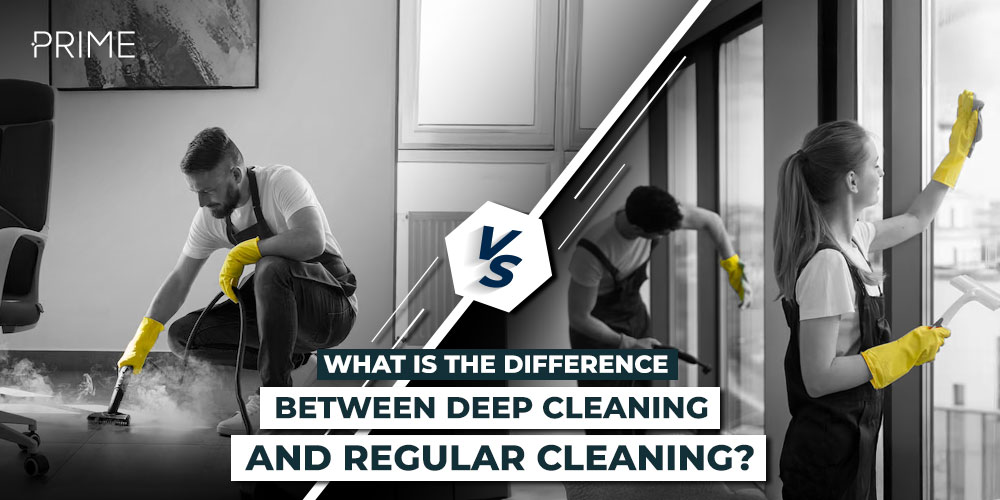
Deep Cleaning vs. Regular Cleaning: Quick Comparison
| Cleaning Factor | Regular Cleaning | Deep Cleaning |
|---|---|---|
| Purpose | Maintains day-to-day cleanliness | Removes built-up dirt, grime, and hidden contaminants |
| Cleaning Scope | Visible and high-traffic areas | Visible areas plus hard-to-reach and often overlooked spaces |
| Frequency | Daily, weekly, or bi-weekly | Monthly, quarterly, or as needed |
| Tasks Included | Dusting, vacuuming, mopping, trash removal, restroom cleaning | Everything in regular cleaning plus baseboards, vents, behind furniture, grout, fixtures, and detailed sanitization |
| Time Required | Faster and less labor-intensive | More detailed and time-intensive |
| Level of Sanitization | Basic cleaning and disinfection | Intensive cleaning and deep sanitization |
| Best For | Ongoing maintenance of clean spaces | Seasonal cleaning, move-ins/outs, post-construction, or neglected areas |
| Business Impact | Keeps the workplace presentable | Improves hygiene, indoor air quality, and professional appearance |
| Cost | Lower due to routine maintenance | Higher due to additional labor and specialized cleaning |
| Recommended Schedule | Daily or weekly | Every 3–6 months, depending on facility needs |
What Is Regular Cleaning?
Regular cleaning is a routine process that keeps the workspace hygienic, tidy, and appealing daily. The method ensures surface-level maintenance, which in-house cleaning teams perform several times a day or weekly, depending on office traffic.
During busy work hours, employees may dispose of waste in the trash bins. The overflowing bins will harbor dirt and create a foul odor. To prevent such an untidy environment, in-house staff will empty the trash bins.
Regular cleaning also involves other essential tasks to sustain the professional image and welcoming environment in the office.
Common Tasks Included in Regular Cleaning
Knowing what regular cleaning entails will help you incorporate it properly into your daily upkeep. From vacuuming floors to wiping down surfaces, it comprises various tasks. These are as follows:
- Cleaning shared spaces and reception areas
- Spot cleaning visible stains or spills immediately
- Scrubbing sinks in restrooms
- Wiping down countertops in the breakrooms
- Sanitizing desks
- Disinfecting high-touch surfaces
- Restocking restroom essentials (toilet paper, soap, and towels)
- Vacuuming floors
Why Regular Cleaning Is Important?
Regularly cleaning reception areas, shared spaces, and high-touch surfaces enhances the office’s appearance throughout the day. It also prevents the accumulation of dirt, creating a productive and safe environment for employees. Besides that, regular cleaning is also crucial for the following reasons:
- Better safety: Regular cleaning identifies spills that can cause potential accidents in the workplace. Addressing the mess promptly reduces risk and ensures a safer environment for everyone.
- Improved health and hygiene: Bustling offices are hotspots for germs and diseases. Employees frequently touch elevator buttons or shared equipment, increasing the risk of contamination. Regular cleaning can help prevent the spread of disease and enhance employee health and hygiene.
- Enhanced productivity and morale: Cluttered desks in offices can distract employees. By discarding waste paper and dusting the surfaces, the desks create a tidy space. It allows them to focus on their work better and increases productivity.
- Equipment longevity: Frequent individual use of office printers and projectors can collect germs and dirt over time. Regular sanitization and cleaning keep the equipment in good condition. Also, it will prevent dirt buildup and extend the lifespan of these electronics.
What Is Deep Cleaning?
Deep cleaning is an intensive process that removes grime, bacteria, and dirt buildup from hard-to-reach or hidden surfaces. It involves detailed grout-cleaning and disinfection of floors, reception areas, and kitchen surfaces that harbor significant levels of germs and allergens.
Even with routine mopping, dust and debris may linger inside the HVAC vents or settle on ceiling fans. As it continues to accumulate, the indoor quality deteriorates. To properly address these areas, deep cleaning becomes an effective approach.
Tasks Included in Deep Cleaning
Unlike regular upkeep, deep cleaning targets overlooked areas, such as the insides of appliances, HVAC vents, ceiling fans, and under furniture.
So, what does deep cleaning include? It includes in-depth cleaning of all such areas. The common deep cleaning tasks are as follows:
- Wiping down restroom cabinets inside and out
- Cleaning mirrors and glass surfaces
- Wiping down the sides and tops of furniture surfaces
- Cleaning light fixtures
- Dusting cobwebs from ceiling fans
- Emptying and sanitizing trash bins
- Cleaning appliances (behind and underneath)
- Pressure washing entryways
Why Deep Cleaning Is Important?
Deep cleaning is essential for removing embedded dirt and grime that regular cleaning often misses. By eliminating these particles, it reduces the risk of germ contamination and creates a productive work environment. Deep cleaning is also helpful for the following reasons:
- Prevents long-term damage: Dirt and moisture buildup in areas like restroom tiles or kitchen hoods leads to mold growth and structural damage. Office deep cleaning addresses these issues early, preventing costly repairs in the long run.
- Eliminates hidden dirt and grime: Deep cleaning removes dust buildup in hard-to-reach areas. By cleaning behind appliances or scrubbing grout, the office highlights a spotless surface. It also creates an inviting environment for employees and visitors.
- Restores surfaces and fixtures: Deep cleaning also helps retain the natural shine of surfaces and fixtures in workplace settings. From addressing muddy footprints on floors to removing stains from fixtures, deep cleaning performs all these tasks.
- Removes stubborn allergens: Spills, dust, and footprints settle deep into vents, upholstery, and carpets. Overtime deposits can increase allergen levels, leading to respiratory diseases among employees. To improve employees’ health and safety, deep cleaning is the best approach. It also helps improve the office atmosphere.
What Is the Difference Between Deep Cleaning and Regular Cleaning?
Maintaining workplace cleanliness enhances a professional image. Dusting high-touch surfaces, clearing out grime from tiles, and cleaning carpets reduce the spread of germs and dust. It helps protect employee health and sustains productivity in the office.
Cleaning can be broadly divided into two categories: regular cleaning and deep cleaning. While regular cleaning addresses a basic level of hygiene, deep cleaning is a more intensive process that focuses on hidden bacteria, dirt, and buildup that routine cleaning cannot reach.
Despite their differences, the two are frequently confused with one another. It usually happens because they involve similar activities, such as vacuuming, wiping surfaces, and scrubbing. However, cleaning practices differ in scope, frequency, and intensity.
The following are the differences between regular cleaning and deep cleaning:
- Scope: Regular cleaning covers visible surfaces, including floors, common areas, and countertops. Deep cleaning extends to overlooked areas, such as upholstery, grout lines, inside vents, and behind appliances.
- Frequency: To ensure a consistent level of hygiene, perform daily, weekly, or biweekly cleaning. Deep cleaning, on the other hand, takes place monthly or seasonally. It is an intensive process that depends on the size and usage of the space.
- Intensity: Since regular cleaning manages surface-level dirt, the process is faster. Deep cleaning is far more thorough and often requires professionals and advanced tools to clear out embedded grout, mold, and dirt.
| Aspect | Regular Cleaning | Deep Cleaning |
| Cleaning Intensity | Light and fast cleaning process ensures basic upkeep | Intensive and detailed cleaning targets dust and grime buildup |
| Areas Covered | Visible and common areas like floors, countertops, desks, light switches, and surfaces. | Neglected and hidden areas like grout, inside cabinets, under furniture, and behind appliances. |
| Time and Effort Required | Less time-consuming | Time-intensive and requires more effort and attention to detail |
| Tools and Equipment Used | Basic mops, cloths, and mild cleaners | Specialized tools like commercial vacuum cleaners, carpet extractors, electrostatic sprayers, microfiber cloths, and eco-friendly disinfectants |
| Frequency of Cleaning | Daily or weekly | Monthly or quarterly |
Deep Cleaning Checklist for Offices
Deep cleaning focuses on in-depth maintenance of commercial spaces, including offices. To ensure thorough cleaning, businesses often hire professional deep-cleaning services.
These services provide skilled cleaners who wipe down, sanitize, and disinfect every corner, leaving no spot missed. They follow a top-to-bottom cleaning practice to sparkle the high-traffic areas, including workstations, restrooms, kitchen/break rooms, and common areas.
To ensure they thoroughly clean all surfaces, professionals follow an office deep-cleaning checklist. It is a document that lists all the cleaning tasks they will perform in specific areas to keep a safe and welcoming atmosphere in the office.
The upkeep tasks that the checklist highlights include:
- Cleaning lighting fixtures and ceilings
- Mopping and machine scrubbing hardwood floors
- Emptying and disinfecting trash bins
- Wiping down blinds
- Clearing dirt from window sills
- Cleaning inside appliances (refrigerators/microwaves)
- Replacing light bulbs
- Shampooing & steaming carpets and upholstery
- Sanitizing computer equipment
- Disinfecting faucets, toilets, and dispensers
- Cleaning reception areas and entryways
Deep Cleaning vs Regular Cleaning: Which One Do You Need?
By now, you’ve learned about the differences between regular cleaning and deep cleaning. But the real struggle you may face is to choose between the two. While both are useful for keeping the office space tidy, each cleaning method is suitable for different scenarios.
When Regular Cleaning Is Enough?
Regular cleaning is ideal for managing daily upkeep. Since most work is done during business hours, in-house staff are responsible for routine maintenance. They focus on high-traffic areas and commonly used surfaces to prevent the accumulation of germs and dust.
Regular cleaning is sufficient if:
- The office maintains a consistent cleaning schedule (daily or multiple times a week).
- Foot traffic is less and doesn’t accumulate excessive dirt.
- The workspace has limited exposure to heavy debris.
- You want to create an appealing ambience for employees and visitors.
- There is no specific hygiene concern, such as workplace illness.
When Deep Cleaning Is Necessary?
Deep cleaning is all about in-depth maintenance. It prioritizes thorough cleaning of neglected office spaces to prevent the accumulation of dirt, grime, and allergens. As a result, the office will reflect the highest standards of cleanliness and a strong professional image.
Companies should consider deep cleaning when:
- The office hasn’t been professionally cleaned for a long time.
- You’re moving into a new commercial building or preparing for new tenants.
- The office is undergoing renovations or being prepared for an event.
- There’s no visible buildup in corners, upholstery, or carpets.
- Employees are experiencing frequent allergies or cold due to germ contamination.
Expert Tips for Maintaining Clean Spaces Between Deep Cleans
Scheduling office deep cleaning services is indeed helpful for promoting a professional, tidy workspace. But what happens in between professional visits? The restrooms still get dirty, and garbage piles up in the trash bins.
To address these areas, consistent cleaning is essential. A structured cleaning routine can keep the workspace clean and client-ready at all times.
Here are some expert tips to keep your office tidy and well-maintained:
- Encourage employees to keep their workstations clutter-free to promote a neat environment.
- Set a policy for the in-house cleaning team to regularly disinfect high-touch surfaces like light switches, door handles, elevator buttons, and keyboards.
- Establish daily, weekly, or monthly tasks to make the cleaning more manageable.
- Limit food consumption to specific areas to prevent crumbs, spills, and foul odor in workspaces.
- Foster a culture of accountability so everyone contributes to maintaining a healthy, inviting office environment.
Experience the Difference with Professional Deep Cleaning by Prime Cleaning Services
Though the tasks of regular and deep cleaning may seem similar, they are different in approach. While regular cleaning prioritizes dusting or wiping down surfaces, deep cleaning focuses on eliminating any grime buildup.
Together, they provide a balanced approach that enhances employee safety and well-being and improves the office’s appearance. However, achieving such a level of cleanliness goes beyond routine effort. It requires proper planning, the right tools, and attention to detail, especially for deep cleaning.
That’s when Prime Cleaning Services makes a difference. Offering professional cleaners, we help businesses maintain office spaces that are not just visually clean but truly hygienic.
Our cleaning professionals use advanced equipment, including commercial vacuum cleaners, microfiber cloths, and environmentally friendly disinfectants, to maintain the highest standards of cleanliness in the office.
Whether you need consistent upkeep or a detailed cleaning solution, we can tailor our services according to your needs. Our cleaning solutions also comply with industry protocols to offer a safe, welcoming, and efficient office year-round.
Schedule our professional deep cleaning services and give your office the upkeep that it deserves.
Difference between Deep Cleaning and Regular Cleaning: FAQs
How often should an office schedule deep cleaning to maintain hygiene and safety?
An office can usually schedule deep cleaning quarterly or biannually to maintain hygiene and safety. However, for high-traffic areas, the cleaning should be more frequent. Deep cleaning involves specialized maintenance to address hidden areas, such as under furniture and inside cabinets. It also follows daily sanitization to prevent allergens and germs.
Which areas in an office require the most frequent cleaning and disinfection?
Areas that require the most frequent cleaning and disinfection in an office are high-touch surfaces, such as light switches, door knobs, elevator buttons, and shared equipment (projectors/printers). Even in areas with significant foot traffic, frequent cleaning is required to prevent dust accumulation. These areas include reception areas, kitchen surfaces, lobbies, and workspaces.
Is deep cleaning necessary for small offices or only large workplaces?
Deep cleaning is vital for offices of all sizes and not just large workplaces. Large offices offer more space and high-traffic areas, which lead to more grime and dirt buildup. Small offices, on the other hand, present concentrated high-touch surfaces that can become breeding grounds for germs if neglected. To prevent dirt buildup and germ contamination, both small and large offices should perform deep cleaning.
Does office deep cleaning frequency affect indoor air quality?
Yes, the frequency of office deep cleaning directly impacts indoor air quality (IAQ). The accumulation of mold, allergens, and dust in HVAC systems, carpets, and furniture can disrupt the air employees breathe. Thorough deep cleaning removes these contaminants and prevents them from recirculating throughout the workspace. It helps improve employees’ respiratory health and boosts productivity.
What happens if an office is not cleaned regularly?
Neglecting regular office cleaning can have various consequences for both employees and the business. Germ buildup on shared surfaces increases sick days. Furthermore, dust accumulation degrades indoor air quality, impacting employee morale and damaging equipment. An unclean office also poses safety risks, such as falls and trips, which could lead to workplace injuries.