
New York City thrives on appealing office spaces. Indeed, the architecture adds to their beauty, but maintaining the cleaning standards is what makes these buildings truly shine. However, most business owners find it difficult to understand their cleaning plans.
They either overpay for cleaning they don’t need or underpay, which is why the office feels untidy by mid-week. To tackle all these challenges, it is necessary to understand the office cleaning schedule in NYC.
Depending on foot traffic and the size of an enterprise, business owners or property managers can decide on the cleaning frequency. For instance, a small office with limited walk-ins can benefit from a weekly visit.
However, for medium offices where more people are walking in and out of buildings, sanitation regulations become a norm. Cleaning floors, restrooms, break rooms, and lobbies multiple times per week reduces the accumulation of grime on surfaces. As a result, it maintains the cleanliness, health, and safety of the employees.
Also, clients and business partners will leave with a lasting impression when they step into a gleamingly clean office.
If you’re looking for a cleaning schedule that fits your office’s needs, you’ve come to the right place.
This blog will explore enterprise cleaning frequency in NYC and why it matters. It will also discuss the critical factors that determine the cleaning schedule to maintain a tidy, hygienic office environment.
Why Cleaning Frequency Is Critical for NYC Enterprises?
In NYC, shared workspaces, pollution, and high foot traffic accelerate dirt buildup faster than in most cities. To ensure the building shines at all times, consistent, frequent cleaning is extremely critical.
Besides that, cleaning frequency matters for NYC enterprises because of the following reasons:
- Fewer distractions: Waste paper piled up on desks highlights clutter. Regular desk cleaning creates a clutter-free space that allows employees to focus better on their work.
- Strict regulatory compliance: Enterprises should adhere to NYC commercial cleaning standards, especially in healthcare and food service. It includes pest management or cleaning with eco-friendly products. The cleaning codes for these businesses are strict, and failing to comply can result in penalties and closures.
- Allergen spread: A medical office where patients are continuously visiting can become a hotspot for germs and allergens. Since these particles accumulate in the air, daily cleaning of the entryways, HVAC (heating, ventilation, and air conditioning) systems, restrooms, and breakrooms is essential.
- Accident prevention: Wet floors can lead to slip-and-fall accidents. Regularly cleaning the office can prevent such accidents and create a safe working environment for everyone.
Recommended Cleaning Frequency for NYC Businesses
Once you understand the importance of cleaning frequency, you may wonder how often an office should be cleaned.
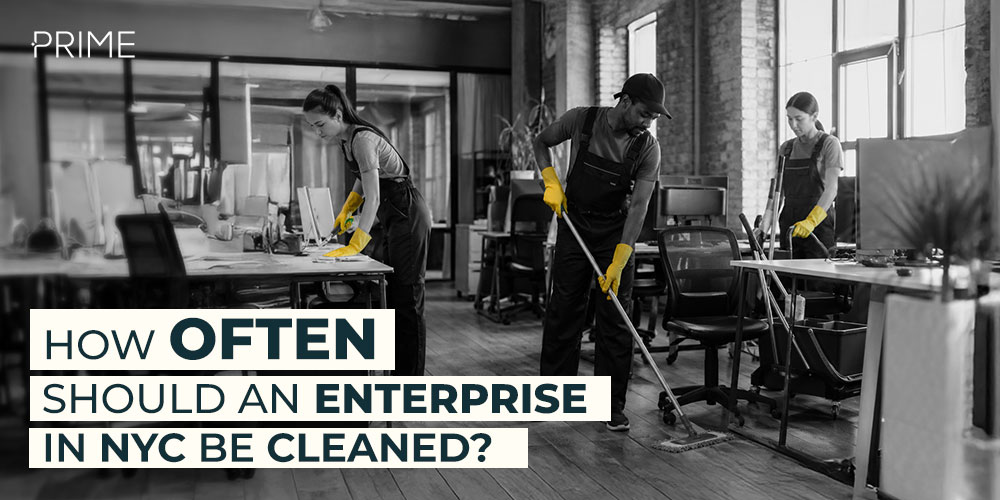
Typically, businesses in NYC require daily, weekly, monthly, and quarterly cleaning. The frequency depends on the foot traffic and the size of the company.
For instance, a small office accommodating 10-20 employees can benefit from daily cleaning. However, a large office may require a combination of regular cleaning and deep cleaning.
Regular cleaning will involve maintaining the visible areas, such as desks, floors, restrooms, and lobbies. Deep cleaning is an intensive process that often targets overlooked areas such as ceilings, carpets, and appliance interiors.
Following a proper cleaning routine will help prevent dust accumulation on all surfaces and improve employee health in the office.
Here are the recommended cleaning frequencies for NYC businesses:
Daily Cleaning (Essential for Most Enterprises)
Daily cleaning is the basic requirement for any NYC enterprise. If an office accommodates more than 20 employees, the visitor traffic will be higher, leading to grime buildup on floors. Without daily upkeep, trash bins overflow quickly, high-touch surfaces become contamination hotspots, and restrooms fall short of hygiene standards.
Regularly attending to these areas will give the office a cleaner look. Daily cleaning for a typical NYC enterprise covers:
- Restroom sanitation: Restrooms need attention multiple times a day due to more usage. Cleaners should sanitize toilets, floors, faucets, and mirrors to reduce bacterial contamination. Restroom sanitation also includes restocking supplies, such as soaps and paper towels, to ensure there’s no disruption in using these spaces.
- Trash removal: Overflowing trash bins create an unhygienic, unprofessional image. Daily collection across common areas, restrooms, and workstations is a standard practice in most NYC offices.
- Breakroom and kitchen cleanup: tables, appliance handles, and countertops accumulate bacteria from users and from food contact throughout the day. Daily wiping down these areas is crucial for general hygiene and food safety.
- High-touch surface disinfection: Light switches, elevator buttons, doorknobs, and keyboards are hotspots for contaminants in a shared working space. Wiping down these surfaces with EPA-registered disinfectants daily can help reduce contamination and maintain overall employee health.
- Clearing out entryways and lobbies: Lobbies, hallways, and elevator landings experience significant dust. To reduce the buildup, vacuuming and mopping these surfaces are critical. These tasks make the enterprise look consistently professional.
Weekly Cleaning
While daily cleaning handles visible areas, a weekly cleaning routine addresses everything that accumulates more gradually. Skipping weekly cleaning makes the office appear untidy, even when cleaners regularly dust high-touch surfaces and break rooms.
A proper weekly cleaning routine for enterprises includes:
- Vacuuming carpeted areas: It includes under reception desks and in hallway corners, where daily spot cleaning often misses. Cleaning teams should use HEPA (high-efficiency particulate air) filter vacuum cleaners to capture fine dust particles from carpets, improving the space’s air quality.
- Mopping hard floors: In addition to high-traffic areas, cleaners should mop hard floors in side corridors, conference rooms, and storage areas. It prevents the dirt from settling in these areas, offering a professional environment.
- Cleaning interior glass and partitions: It involves glass doors, office windows, and conference room walls. Use glass cleaners and microfiber cloths to remove smudges and fingerprints from these spaces.
- Dusting horizontal surfaces: Dirt accumulates quickly on equipment tops, shelving, and window sills. It often detracts from the office’s overall appearance. Wiping down these areas can restore the overall aesthetics of the enterprise.
Monthly & Quarterly Deep Cleaning
Scheduled deep cleaning monthly/quarterly addresses layers of buildup that weekly cleaning doesn’t manage. Enterprises with moderate foot traffic should consider deep cleaning every three months. It will tackle grimy floors, upholstery, and even kitchen appliances.
The tasks for monthly and quarterly deep cleaning include:
- Air vent and HVAC grille cleaning: Clogged vents recirculate allergens and mold spores, affecting the office’s indoor air quality. To enhance workplace hygiene in NYC, it is essential to clean HVAC vents monthly or every 4 months.
- Carpet and upholstery extraction cleaning: Carpets absorb a significant amount of grime faster than any other surface. Shampooing carpets and upholstery extraction removes embedded dirt, helping extend the life of the furniture.
- Addressing large appliances: Grime accumulates behind and beneath large appliances, such as ovens, coffee machines, and refrigerators. Deep cleaning targets these areas to prevent device buildup and malfunction.
- Higher areas dusting: Cobwebs in ceilings can make an enterprise look shabby. Using specialized dusters can clean light fixtures and hard-to-reach ceiling corners, creating a welcoming work space.
Industry-Specific Cleaning Requirements
With the understanding of cleaning frequency for NYC offices, the next step is to learn your requirements. Every NYC enterprise has distinct cleaning needs.
For instance, retail spaces encounter frequent foot traffic. It leads to significant dust buildup, requiring daily cleaning.
Healthcare facilities, on the other hand, have stricter cleanliness codes. As patients and visitors enter and exit these buildings, it is critical to use appropriate cleaning products.
Spraying chemical-based sanitizers can cause respiratory issues. Therefore, using Environmental Protection Agency-approved products is critical to maintain individuals’ safety and health.
The other industry-specific cleaning requirements are as follows:
Corporate Offices and Financial Institutions
Professionalism is paramount in these spaces. The frequent meetings in conference rooms and constant foot traffic demand a combination of daily, weekly, and monthly deep cleaning.
While regular dusting of shared equipment, desks, and light switches prevents dust accumulation, weekly floor maintenance checks can create an inviting environment. To tackle hidden areas like beneath appliances or inside desk drawers, deep cleaning can be effective.
It will reduce clutter and extend the lifespan of appliances. All these help maintain the professional environment in the office.
Retail business
Fitting rooms, display surfaces, and checkout counters of a retail space require daily cleaning. As visitors step inside the business or even take a glance through the window, it should present flawless surfaces.
Regular wiping down of the glass exteriors and vacuuming the aisle will foster a hygienic environment. Weekly cleaning is also advisable behind counters or entryways to keep dirt from entering the building.
You can also consider day porter services during peak business hours to tackle fitting room cleanup. They can take the rejected clothes to proper locations to reduce clutter and distractions.
Medical and healthcare facilities
These have the strictest cleaning requirements among all commercial environments in NYC. The Occupational Safety and Health Administration (OSHA) sets minimum compliance standards that every medical facility must follow.
The lobbies and waiting zones of these spaces are breeding grounds for germs. To maintain the safety of visitors and staff, these facilities require cleaning with EPA-registered products.
Cleaners should also be proactive in attending to fluid spills to create a safe environment for both patients and staff. Cleaning teams should also focus on wiping down test machines to extend their longevity.
Gym and fitness centers
Gym and fitness centers are high-risk points for surface contamination. Shared lifts, locker rooms, and bathroom facilities require a mix of daily, weekly, and monthly cleaning.
Cleaning staff should dust equipment daily to prevent the spread of germs. Furthermore, wiping down locker-room surfaces keeps the area clutter-free.
To maintain the overall hygiene of the space, monthly deep cleaning of the bathrooms can be an effective tool. The cleaning teams can wipe down showers and restock towels to keep the gym operations running smoothly.
Key Factors That Influence Cleaning Frequency
After learning the industry-specific cleaning requirements, you may wonder how frequently you should clean your office. The cleaning frequency of each office varies. A large office with more than 50 employees will have high foot traffic, leading to increased dust and clutter.
It will therefore require cleaning multiple times a day. However, an office with fewer than 20 employees may accumulate less dirt. Thus, cleaning high-traffic zones once can be enough.
The following are the factors that influence cleaning frequency:
- Employee Density: Employee density is a core factor that affects an enterprise’s cleaning frequency. Businesses with open floor plans accommodate 100 employees. It leads to more significant contamination than a private office. However, offices with fewer than 20 employees can manage cleaning two to three times per week.
- Foot Traffic Levels: Besides the employee count, the number of visitors to the office also determines the cleaning frequency. Small sales spaces that experience multiple client visits every day generate far more surface contamination than a back office of the same size. Therefore, the high-traffic office cleaning frequency is also significant for those offices. Client-facing areas like lobbies, conference rooms, and reception areas thus require more frequent cleaning than internal workspaces.
- NYC Sanitation Regulations: The NYC sanitation cleaning requirements align with public health standards, waste management, and commercial cleaning. It sets strict guidelines for sensitive areas, including medical offices, restaurants, and office break rooms. To comply with the regulations, these spaces require a structured daily, weekly, or monthly cleaning schedule. From dusting visible surfaces to handling dust accumulated in ceilings will offer a hygienic environment, ensuring cleanliness of the highest standards.
- Seasonal Demand: Weather conditions fluctuate, so professional cleaners plan their schedules accordingly. They adapt their cleaning schedule in those situations. For instance, the snow deposits on office floors can create safety hazards if not addressed properly. Cleaning teams promptly mop and dry the floors to prevent slips and falls. Cold and flu season increases office absenteeism. Cleaners sanitize high-touch surfaces to reduce contamination spread and absenteeism.
Signs Your Enterprise Needs More Frequent Cleaning
Once you understand the factors that determine cleaning frequency in an office, you may want to adopt a structure for your enterprise as well. However, without understanding the signs, you may end up following a frequency that is not suitable for your space.
The following are the signs your enterprise needs more frequent cleaning:
- Persistent odors in break rooms or restrooms require thorough cleaning to eliminate the source.
- Visible dirt between cleaning sessions on floors indicates that the current frequency is insufficient. You can engage day porters to keep your office clean between deep cleanings. They will handle cleaning responsibilities during business hours to maintain the space’s professional image.
- Overflowing trash bins and empty supplies indicate a mismatch in cleaning schedules. Engage cleaning teams to address these issues and keep the business running smoothly.
- Visitor complaints are a strong indicator of an unsanitary environment. Respond to it with an effective cleaning schedule to make the space sanitary and inviting for individuals.
Benefits of Maintaining the Right Cleaning Schedule
Knowing the signs can help you implement frequent, routine cleaning in your enterprise. It will help you build a strong professional image. Furthermore, frequent cleaning will protect employees from contamination, leading to a productive office.
The benefits of maintaining the right cleaning schedule are as follows:
- Consistent cleaning frequency minimizes the spread of harmful bacteria. It thus reduces sick days and promotes employee productivity.
- Cleaning an enterprise daily or weekly helps maintain a tidy, sanitary environment. It builds a strong reputation for your organization among business partners and clients.
- Regular upkeep helps increase the lifespan of your facility assets. It also reduces costs for their repairs or replacements.
- Maintaining a cleaning frequency minimizes risks of safety or health hazards. It thus ensures the business complies with the necessary cleanliness protocols.
How to Choose the Right Cleaning Schedule for Your Business?
Knowing the benefits of a cleaning schedule will now drive you to choose one for your business. It is where property managers or business owners require expert advice.
They may see dust settling in lobbies and ask in-house staff to mop regularly. But deciding upon the frequency requires an honest assessment of the space.
Consider the following tips to choose the right cleaning schedule for your business:
- Evaluate your company’s size and foot traffic volumes to plan a cleaning routine. High-traffic areas like restrooms and lobbies require daily attention, while appliances or carpets may require weekly/monthly care.
- Establish a cleaning routine. Choose professionals who conduct daily sanitization of high-touch surfaces and perform deep carpet cleaning. It provides a thorough cleaning process and maintains the office environment’s overall hygiene.
- Consider a professional to get janitorial services tailored to your business needs in NYC. You can specify your company size and employee count, and they will create a cleaning schedule to maintain your company’s professional image.
- Create a checklist of cleaning duties and their frequencies. It will maintain transparency, and every cleaning crew will remain consistent in their roles.
Prioritize Cleaning Frequency and Make Your Enterprise Sparkle
Knowing the enterprise cleaning frequency in NYC helps businesses avoid overspending on upkeep. It also allows performing proper cleaning duties based on areas, foot traffic, and employee density.
Daily upkeep, weekly maintenance, or monthly/quarterly deep cleaning will address buildup and keep your office presentable year-round.
To incorporate a flexible cleaning routine, you can hire professional cleaners who are swift in their upkeep duties.
At Prime Cleaning Services, we have trained cleaners who are efficient at a wide range of cleaning tasks. Our cleaning teams will assess your facility/enterprise and provide a cleaning frequency that aligns with the foot traffic levels and areas.
We also provide specialized cleaning services, such as day porter cleaning, to address your needs during rush hours. We also have teams to handle intensive cleaning after working hours that reflect good hygiene and professionalism.
Get a tailored cleaning plan from us today and make your enterprise shine.
Enterprise Cleaning Frequency NYC: FAQs
Ques: How often should a small office in NYC be cleaned?
Ans: A small office in NYC requires professional cleaning two to three times every week. High-traffic areas, particularly kitchens, restrooms, and workstations, get messy fast due to frequent visits. Thus, cleaning these areas daily will help maintain a healthy environment.
Ques: Is daily cleaning mandatory for all NYC businesses?
Ans: Daily cleaning is necessary in practice for regulatory compliance and safety. The daily cleaning tasks include trash removal to prevent rodents and health hazards. It also involves cleaning gutters and sidewalks of litter and animal waste, highlighting a company’s professionalism.
Ques: What areas need the most frequent cleaning in an office?
Ans: The areas that require the most frequent cleaning in an office are restrooms, entryways, and break rooms. There are also high-touch surfaces like elevator buttons, doorknobs, kitchen appliances, and desks where dirt and germs gather the most. Cleaning these areas twice a day will prevent contamination and foster a hygienic work environment.
Ques: How often should deep cleaning be scheduled?
Ans: You should create a deep cleaning schedule for offices every 3 to 6 months. The frequency helps prevent dirt buildup in entryways, restrooms, and high-touch surfaces. As dirt is not settling in these spaces, it creates a positive workplace image, improving employees’ health standards.
Ques: Can cleaning frequency change during certain seasons?
Ans: Yes, cleaning frequency can change during certain seasons to address specific environmental challenges. For instance, the monsoon season brings muddy footprints in offices. Janitors or cleaners thus have additional responsibility to frequently mop the floors or clean the carpets. It makes the office look presentable and keeps bacteria at bay, reducing absenteeism.