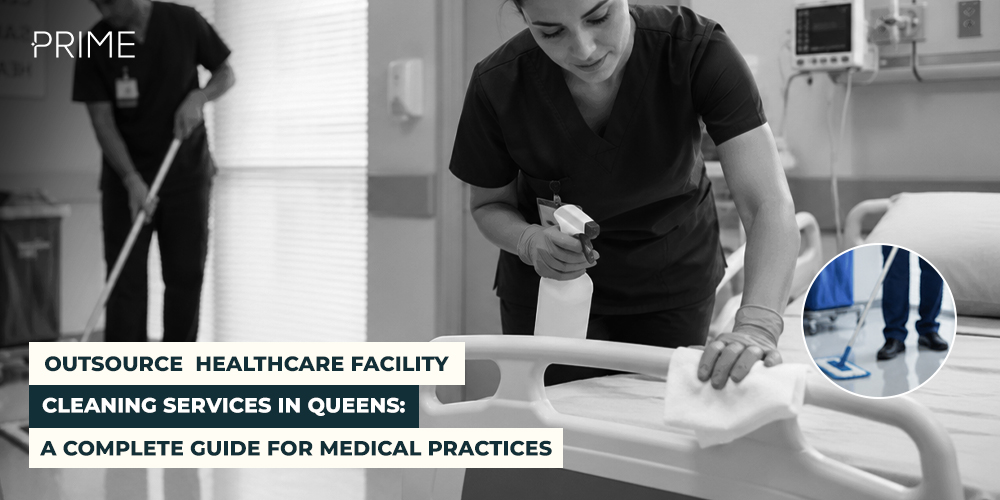

Cleaning healthcare offices in Queens, New York City requires attention to clinical areas and handling bloodborne particles as recognized by NYC Health and OSHA (Occupational Safety and Health Administration).
These responsibilities make medical office cleaning more demanding than routine cleaning. That’s why the best option is to outsource healthcare facility cleaning.
A qualified cleaning provider understands the seriousness of maintaining patient-facing spaces, treatment areas, and equipment. By creating effective cleaning schedules and using the right cleaning products, they help minimize pathogen spread.
This guide explains the benefits of outsourcing healthcare cleaning in Queens, what it includes, and which standards vendors should follow. It also explores how to compare outsourcing with in-house cleaning, what to evaluate before signing a contract, and the steps involved in changing providers.
Key Takeaways
- Outsourcing gives Queens medical practices access to trained healthcare cleaning crews.
- Specialized cleaning addresses clinical areas, high-touch surfaces, spills, and patient spaces.
- Clear cleaning standards help prevent cross-contamination and support infection control.
- Flexible schedules keep cleaning aligned with patient traffic and operating hours.
- Facility assessments help create a cleaning plan based on specific risks and needs.
Why Are More Healthcare Facilities in Queens Outsourcing Cleaning Services?
For a medical practice, cleaning has to keep up with patient traffic and infection-control requirements. When managing cleaners, schedules, supplies, and quality checks becomes another task for an already busy team, outsourcing can help keep these responsibilities under control.
Many practices outsource healthcare cleaning services in Queens for the following reasons:
- Rising Patient Expectations: Patients notice the condition of waiting rooms, exam areas, restrooms, and other visible spaces.
- Infection Prevention: Regular cleaning and proper disinfection help limit contamination on clinical and frequently touched surfaces.
- Labor Shortages: Outsourcing gives practices access to cleaning staff without the challenge of recruiting and retaining an in-house team.
- Predictable Costs: A clearly defined cleaning scope makes routine service costs easier to budget.
- Reduced Management Burden: The cleaning provider manages staffing, schedules, supplies, and day-to-day service coordination.
- Better Accountability: Cleaning logs and routine inspections give facility managers a clearer way to track service quality.
- Access to Trained Cleaners: Experienced cleaners understand the procedures, products, and precautions needed in healthcare settings.
Which Healthcare Facilities Benefit Most from Outsourced Cleaning?
Outsourced cleaning can work across many healthcare settings. However, each facility has different cleaning priorities based on its patients, procedures, equipment, and daily traffic.
Professional healthcare facility cleaning services in NYC can adapt the cleaning plan to those specific needs.
Healthcare facilities that can benefit from outsourced cleaning include:
- Family Medicine: Regular cleaning of exam rooms, waiting areas, and high-touch surfaces helps manage hygiene across steady patient traffic.
- Urgent Care: Rapid patient turnover makes timely cleaning between visits essential, especially around frequently touched surfaces.
- Dental Clinics: Treatment rooms need thorough cleaning after procedures, including dental chairs, nearby surfaces, and other patient-contact areas.
- Physical Therapy Centers: Shared treatment tables and therapy equipment need frequent cleaning because multiple patients use them throughout the day.
- Imaging Centers: Cleaning should cover patient-contact surfaces and imaging areas without disrupting scheduled scans or appointments.
- Dialysis Clinics: Repeated patient use of treatment areas requires consistent cleaning and careful attention to frequently touched surfaces.
- Behavioral Health Offices: Cleaning should maintain hygiene while supporting a calm, comfortable, and secure setting for patients.
- Surgical Centers: Procedure areas require controlled cleaning and disinfection routines before and after surgical activity.
- Pediatric Clinics: Frequent contact with shared surfaces makes regular cleaning important in waiting rooms, exam rooms, and other patient areas.
- Women’s Health Clinics: Exam rooms and patient-contact surfaces require thorough cleaning between appointments to maintain hygienic conditions.
- Multi-Specialty Practices: Different departments may require different cleaning routines, so services should adapt to each area rather than follow one standard schedule.
- Laboratories: Cleaning must address work surfaces and areas with potential biological exposure without interfering with laboratory work.
What Does a Professional Healthcare Cleaning Service Include?
A healthcare facility needs different levels of cleaning across waiting rooms, exam rooms, treatment areas, restrooms, and other patient-contact spaces.
Professional cleaning services cover these needs through daily cleaning, clinical-area disinfection, preventive tasks, and periodic deep cleaning, with the approach adjusted to the facility’s patient flow and cleaning risks.
Daily Cleaning
Medical offices need daily cleaning that responds to patient contact, clinical use, and areas where contamination can spread during normal operations.
The daily checklist for medical office cleaning includes:
- Exam and Treatment Rooms: Disinfect exam tables, counters, sinks, and patient-contact surfaces after use.
- High-Touch Surfaces: Disinfect handles, switches, faucets, chair arms, and other frequently touched points.
- Waiting and Reception Areas: Clean seating, counters, floors, and shared surfaces to keep patient areas hygienic.
- Restrooms: Disinfect toilets, sinks, faucets, dispensers, and other high-contact fixtures.
- Waste and Restocking: Remove waste safely and replenish soap, sanitizer, and paper supplies.
Clinical Area Cleaning
Clinical area cleaning focuses on spaces and surfaces directly involved in patient care, with procedures adjusted to the level of clinical activity.
- Patient Turnover Cleaning: Clean and disinfect the treatment space after each patient, where required by the facility’s procedures.
- Examination Equipment: Clean external surfaces of examination and treatment equipment that come into patient contact.
- Clinical Work Surfaces: Disinfect procedure counters, workstations, sinks, and other surfaces used during patient care.
- Blood and Body-Fluid Spills: Contain, clean, and disinfect spills using the facility’s established procedures and appropriate protective equipment.
- Clinical Waste Areas: Clean designated waste-handling areas and follow the practice’s procedures for removing potentially contaminated waste.
Preventive Cleaning
Preventive cleaning helps medical practices address areas that can affect hygiene between routine cleaning cycles.
- High-Touch Surface Rotation: Schedule deeper cleaning for door handles, rails, switches, and other frequently contacted surfaces.
- Clinical Equipment Areas: Clean around carts, examination equipment, and other clinical fixtures where dust and debris can collect.
- Behind and Under Clinical Furniture: Clean areas beneath exam tables, treatment chairs, carts, and other movable equipment.
- Patient-Care Area Fixtures: Clean partitions, privacy curtains, dispensers, and other fixtures that can receive frequent patient contact.
- Hard-to-Reach Clinical Surfaces: Include corners, edges, ledges, and other overlooked areas within exam and treatment spaces.
Periodic Deep Cleaning
Periodic deep cleaning addresses facility areas that need intensive cleaning beyond the regular medical office routine.
- Floor Deep Cleaning: Deep-clean clinical and patient-area floors to remove embedded soil and buildup.
- Carpet Extraction: Extract accumulated dirt and debris from carpets in waiting and administrative areas.
- Upholstery Cleaning: Deep-clean patient chairs, waiting-room seating, and other fabric surfaces.
- Privacy Curtain Cleaning: Clean or replace privacy curtains according to the practice’s hygiene schedule.
- Terminal Cleaning: Perform a detailed room clean when required after specific clinical events, outbreaks, or facility procedures.
Medical Cleaning Standards Every Vendor Should Follow
A healthcare cleaning vendor should have clear procedures for handling clinical spaces, disinfectants, exposure risks, and cleaning records.
Before hiring healthcare cleaning services in Queens, medical practices should make sure the provider can show how its team follows these standards in day-to-day work.
- EPA-Registered Disinfectants: Use EPA-registered products that are suitable for the surfaces and pathogens the practice needs to address.
- CDC Environmental Cleaning Guidance: Cleaning procedures should follow established CDC (Centers for Disease Control) practices for healthcare settings, particularly in patient-care areas.
- OSHA Bloodborne Pathogens Standard: Staff who may handle blood or other potentially infectious materials need proper training, protective measures, and exposure procedures.
- Color-Coded Microfiber: Assign cleaning cloths and mop heads to specific areas to help keep contaminants from moving between rooms.
- HEPA Vacuum Systems: Use HEPA (high efficiency particulate air)-filtered vacuums where appropriate to capture fine particles during carpet and floor cleaning.
- Cross-Contamination Prevention: Change cleaning materials as needed and work from cleaner areas toward dirtier areas to avoid spreading contaminants.
- Documentation: Keep cleaning schedules, inspection records, product information, safety data sheets, and staff training records up to date.
- Staff Training: Cleaners should know how to use disinfectants, wear PPE correctly, respond to spills, and follow the practice’s healthcare cleaning procedures.
The Biggest Advantages of Outsourcing Healthcare Cleaning in Queens
For a medical practice, outsourcing can take the day-to-day burden of cleaning off the internal team while keeping service standards consistent.
When practices hire healthcare facility cleaning services in Queens, they can gain trained staff, clearer quality controls, and a cleaning program that can adjust to their operating needs.
- Lower Operational Costs: Outsourcing shifts the costs of cleaning staff, equipment, supplies, and day-to-day supervision to the service provider.
- Consistent Staffing: The practice gets dependable cleaning coverage without having to manage employee absences, turnover, or replacement staff.
- Better Quality Control: A defined service plan gives facility managers a clearer way to monitor whether cleaning standards are being met.
- Reduced Liability: Trained cleaning staff and proper handling procedures can reduce risks associated with spills, contamination, and workplace exposure.
- Easier Compliance Documentation: Organized cleaning records make it easier to show that routine services, inspections, and staff training have been completed.
- Flexible Scheduling: Cleaning can be arranged around patient appointments, procedures, and the practice’s operating hours.
- Access to Specialized Equipment: The provider supplies the equipment needed for healthcare cleaning, so the practice does not have to invest in it.
- Scalable Services: The cleaning plan can change when the practice adds space, sees more patients, or adjusts its operating schedule.
How to Choose the Right Healthcare Cleaning Company in Queens
Choosing a healthcare cleaning provider requires more than comparing prices. When you hire a medical facility cleaning company in Queens, look for proven healthcare experience, trained staff, clear safety practices, and a reliable quality-control process.
Consider the following before choosing a provider:
- Healthcare Experience: Look for experience cleaning dental clinics, dialysis clinics, imaging centers, and more.
- Insurance: Confirm adequate coverage for cleaning-related risks and incidents.
- Background-Checked Staff: Verify that cleaners undergo appropriate screening before entering patient areas.
- OSHA Training: Staff should understand relevant workplace safety and bloodborne pathogen procedures.
- EPA Disinfectants: Check that products are EPA-registered and suitable for intended use.
- Inspection Program: Ask how supervisors check completed work.
- Emergency Response: Confirm how quickly the provider handles spills or urgent cleaning needs.
- References: Speak with current or recent healthcare clients.
- Quality Audits: Look for regular reviews that identify missed tasks and service gaps.
- Service Guarantee: Understand how the company handles quality concerns.
- Communication Process: Establish who handles requests, issues, and schedule changes.
Questions to Ask Before Signing a Healthcare Cleaning Contract
For healthcare facilities, the contract should clearly cover clinical areas, patient spaces, spills, waste, and other cleaning needs.
Ask these questions to confirm the provider’s scope, training, response times, and quality checks.
What healthcare facilities have you cleaned before?
Ask for examples of facilities similar to your practice and references you can contact.
What cleaning and disinfection procedures will you follow?
The provider should explain how it handles clinical areas, high-touch surfaces, spills, waste, and different facility zones.
How do you train and supervise your cleaning staff?
Ask about healthcare-specific training, OSHA requirements, PPE, and ongoing supervision.
How do you inspect and document completed work?
Look for clear cleaning logs, supervisor inspections, quality audits, and a process for correcting missed tasks.
What happens if we need urgent cleaning or additional coverage?
Confirm response times, after-hours availability, and how schedule or service changes are handled.
Outsourcing vs. In-House Cleaning: Which Is Better for Healthcare Facilities?
Hiring healthcare cleaning services in Queens can shift staffing and cleaning management to a specialist, while an in-house team gives the facility more direct control over daily operations.
| Factor | Outsourced Cleaning | In-House Cleaning |
|---|---|---|
| Cost | Service fees cover agreed cleaning responsibilities. | Practice covers wages, benefits, supplies, equipment, and staffing overhead. |
| Staffing | Provider manages hiring, absences, and replacements. | Practice handles recruitment, coverage, and turnover. |
| Equipment | Provider supplies and maintains cleaning equipment. | Practice purchases, stores, and maintains equipment. |
| Compliance | Vendor manages training and cleaning procedures within the agreed scope. | Practice manages training, procedures, and documentation. |
| Training | Access to staff trained for healthcare cleaning requirements. | Practice is responsible for staff training and refreshers. |
| Quality | Inspections and service standards can be built into the contract. | Practice directly supervises cleaning quality. |
| Scheduling | Cleaning can be arranged around patient care and operating hours. | Practice manages shifts and schedule changes. |
| Scalability | Service levels can change as facility needs grow or decline. | Scaling requires hiring or reallocating staff. |
| Accountability | Contract terms establish service expectations and responsibilities. | Accountability remains within the practice. |
| Management Time | Less time spent managing cleaning operations. | Managers handle staffing, supplies, schedules, and oversight. |
Signs Your Current Cleaning Provider Is No Longer Meeting Healthcare Standards
A healthcare cleaning provider should deliver consistent, documented service across patient and clinical areas.
These warning signs suggest the current service may be falling short:
- Missed Cleaning Logs: Required room or task checks are regularly incomplete or missing.
- Dust Accumulation: Dust remains on vents, ledges, equipment bases, or other clinical-area surfaces.
- Dirty Touchpoints: Door handles, faucets, switches, and chair arms remain visibly soiled.
- Odors: Persistent smells in exam rooms, restrooms, or waste areas point to inadequate cleaning.
- Poor Communication: Cleaning concerns are reported but not addressed within the agreed timeframe.
- Staff Complaints: Clinical staff repeatedly flag missed rooms, supplies, or cleaning tasks.
- Patient Complaints: Patients notice unclean waiting areas, restrooms, or other visible spaces.
- High Turnover: Frequent cleaner changes make it harder to maintain consistent facility-specific routines.
- Inconsistent Cleaning Teams: Different teams leave different standards behind, making service quality unpredictable.
Healthcare Cleaning Challenges Unique to Queens
Queens medical practices deal with heavy patient traffic, busy buildings, and long operating hours. These conditions can make consistent cleaning harder to maintain and require cleaning plans that fit the facility and its daily flow.
Common cleaning challenges include:
- High Patient Volumes: More patients mean faster buildup on shared and high-touch surfaces.
- Multi-Tenant Medical Buildings: Shared entrances, elevators, and restrooms add cleaning demands beyond the practice itself.
- Dense Commercial Districts: Busy streets bring more dirt and debris into facility entrances.
- Older Healthcare Buildings: Older layouts and fixtures can make some areas harder to clean thoroughly.
- Public Transportation Foot Traffic: Patients and staff can track outdoor dirt into entrances and common areas.
- Winter Salt and Moisture: Snow, slush, and road salt can quickly soil floors and create slip hazards.
- Extended Operating Hours: Longer schedules leave fewer opportunities for uninterrupted cleaning.
- Multi-Language Patient Environments: Cleaning instructions and facility procedures may need clear, accessible communication for diverse staff and patients.
The Transition Process: Switching to a New Healthcare Cleaning Provider
Changing cleaning providers should not disrupt patient care or leave gaps in routine cleaning.
A structured transition helps the new team understand your facility, identify higher-risk areas, and follow the required cleaning standards from the start.
1. Facility Walkthrough
Review clinical, patient, staff, and support areas on site.
2. Risk Assessment
Identify areas with higher cleaning, contamination, or traffic risks.
3. Scope Development
Define the rooms, tasks, surfaces, and service standards covered.
4. Cleaning Schedule
Set cleaning frequencies around patient care and operating hours.
5. Staff Orientation
Familiarize cleaners with facility procedures, access rules, and site-specific requirements.
6. Trial Period
Test the service before moving into a long-term arrangement.
7. Quality Inspections
Check completed work against the agreed cleaning scope.
8. Performance Reviews
Review service results and address any recurring gaps.
How Professional Cleaning Supports Patient Experience
Patients notice the condition of a healthcare facility before they interact with its staff. Consistent healthcare cleaning services in Queens can help improve overall patient comfort and support a professional environment.
Professional cleaning can help provide:
- Cleaner Waiting Areas: A well-maintained waiting room feels more comfortable and cared for.
- Reduced Odors: Proper cleaning helps control unpleasant smells in patient and restroom areas.
- Better First Impressions: Clean surroundings can shape how patients view the practice from their first visit.
- Employee Morale: A cleaner workplace can make daily working conditions more pleasant for staff.
- Patient Confidence: Visible cleanliness can reassure patients that the facility takes hygiene seriously.
- Brand Reputation: Consistent facility standards can support a professional image and patient trust.
- Regulatory Readiness: Documented cleaning practices can help the practice stay prepared for inspections and reviews.
Why Choose Prime Cleaning Services for Healthcare Cleaning Services?
If you want to hire a healthcare cleaning company in Queens, Prime Cleaning Services is a well-known name. We use trained professionals to support healthcare facility cleaning.
Here are some reasons to consider Prime Cleaning Services:
- Healthcare-Focused Cleaning: Our professionals understand the added hygiene concerns of medical facilities, including patient safety, clinical zones, and sensitive equipment.
- Trained Crews: We have highly experienced cleaning teams to offer consistent cleaning in treatment and patient-facing areas.
- Consistent Quality Checks: Our crews follow detailed checklists, while post-cleaning inspections help identify missed areas and maintain service consistency.
- Flexible Scheduling: We can arrange cleaning schedules around your facility’s operating hours, including daily, weekly, or other recurring schedules.
- Licensed, Bonded, and Insured: Our crew is fully licensed, bonded, and insured, giving facility managers added confidence.
Keep Your Healthcare Facility Clean, Safe, and Ready for Patients
Instead of spending on in-house cleaning, outsource healthcare facility cleaning to a team that understands its importance. Moreover, scheduling a specialized service can help meet regulatory cleaning standards and enhance the patient experience.
Looking for commercial cleaning services in Queens? At Prime Cleaning Services, we serve medical facilities with eco-friendly cleaning products and flexible schedules.
Improve patient and employee safety with our specialized cleaning today!
Frequently Asked Questions
1. Why should healthcare facilities outsource cleaning services in Queens?
Healthcare facilities can outsource cleaning to access trained professionals, specialized equipment, and consistent cleaning protocols. Professional cleaners can work around patient schedules and facility operations. Outsourcing also reduces the workload on internal staff and helps maintain a cleaner environment that supports patient safety and infection prevention.
2. What is included in healthcare facility cleaning?
Healthcare facility cleaning can include disinfecting high-touch surfaces, cleaning patient rooms, treatment areas, waiting rooms, restrooms, floors, and common areas. Services may also cover waste handling and detailed cleaning of clinical spaces. The exact scope depends on the facility type, layout, services, and specific cleaning requirements.
3. How often should a healthcare facility be professionally cleaned?
Healthcare facilities typically need frequent cleaning because patients, staff, and visitors constantly use shared spaces. High-touch and clinical areas may require cleaning and disinfection multiple times throughout the day. The appropriate schedule depends on patient volume, facility type, infection risks, and operational requirements.
4. Are EPA-registered disinfectants used in medical cleaning?
Yes, professional healthcare cleaners may use EPA-registered disinfectants appropriate for the surfaces and cleaning tasks involved. These products should follow their labeled directions for use, including contact time. Cleaning teams should also understand where and how each disinfectant can be safely used within a medical facility.
5. What regulations should a healthcare cleaning company follow?
Healthcare cleaning companies should understand applicable OSHA requirements, CDC infection-control guidance, EPA disinfectant requirements, and relevant state and local regulations. Requirements can vary based on the type of healthcare facility and services provided. A qualified cleaning company should build its procedures around the facility’s specific compliance needs.
6. Can healthcare cleaning be scheduled after business hours?
Yes, many healthcare cleaning services can schedule work after business hours. Evening, overnight, or other low-traffic schedules can reduce disruption to patients and staff. A flexible schedule also gives cleaners sufficient time to complete routine cleaning and disinfection without interfering with appointments or daily facility operations.
7. How much does outsourced healthcare facility cleaning cost in Queens?
Outsourced healthcare facility cleaning in Queens usually costs between $0.10 and $0.50 per sq. ft. Depending on the facility area and patient volume, the price may vary. Strict OSHA and CDC standards also impact pricing.
8. What’s the difference between healthcare facility cleaning and general commercial cleaning?
Healthcare facility cleaning requires more specialized procedures than general commercial cleaning. Medical environments may involve blood or bodily fluids, clinical surfaces, sensitive areas, and greater infection-control concerns. Healthcare cleaners need appropriate training, products, equipment, and procedures to address these risks safely and consistently.
9. Can one cleaning company service multiple medical locations?
Yes, one healthcare cleaning company can service multiple medical locations when it has the staffing, resources, and management systems to support them. A centralized cleaning partner can also simplify scheduling, quality control, communication, and service management across different locations while maintaining consistent cleaning standards.
10. How do I choose the best healthcare cleaning company in Queens?
Look for a company with healthcare cleaning experience, trained staff, appropriate insurance, flexible scheduling, and clear quality-control procedures. Ask about cleaning protocols, disinfectants, staff training, and service coverage. A facility assessment can also help you determine whether the company understands your location’s specific cleaning requirements.
11. Why is a facility assessment important before outsourcing medical cleaning?
A facility assessment helps identify the areas, surfaces, traffic levels, and cleaning challenges that require attention. It also allows the cleaning company to understand your operating schedule and service expectations. This information supports a more accurate cleaning plan and helps create a schedule that fits your facility.
12. How do healthcare cleaning companies help support infection prevention?
Healthcare cleaning companies support infection prevention by regularly cleaning and disinfecting high-touch and clinical surfaces. Trained cleaners follow established procedures for handling cleaning products, equipment, and waste. Consistent cleaning helps reduce environmental contamination and supports the broader infection-control practices already used by healthcare facilities.