
Healthcare facilities demand a higher standard of cleanliness than traditional office spaces. Every day, patients, healthcare providers, and visitors meet shared surfaces that can harbor bacteria, viruses, and other harmful microorganisms.
A structured medical office cleaning checklist helps maintain a clean, organized, and safer environment while supporting infection prevention efforts, improving patient confidence, and creating a healthier workplace for staff. When paired with professional medical cleaning services in NYC, it can also help maintain consistent cleaning standards across your facility.
Whether you manage a primary care clinic, specialty practice, urgent care center, dental office, or outpatient medical facility in New York City, having a standardized cleaning checklist ensures that no critical task is overlooked. It also provides consistency across cleaning teams, simplifies staff training, and helps verify that routine cleaning activities are completed on schedule.
This comprehensive guide explains what a medical office cleaning checklist should include, why healthcare facilities require specialized cleaning procedures, and how to establish an effective cleaning routine for every area of your practice.
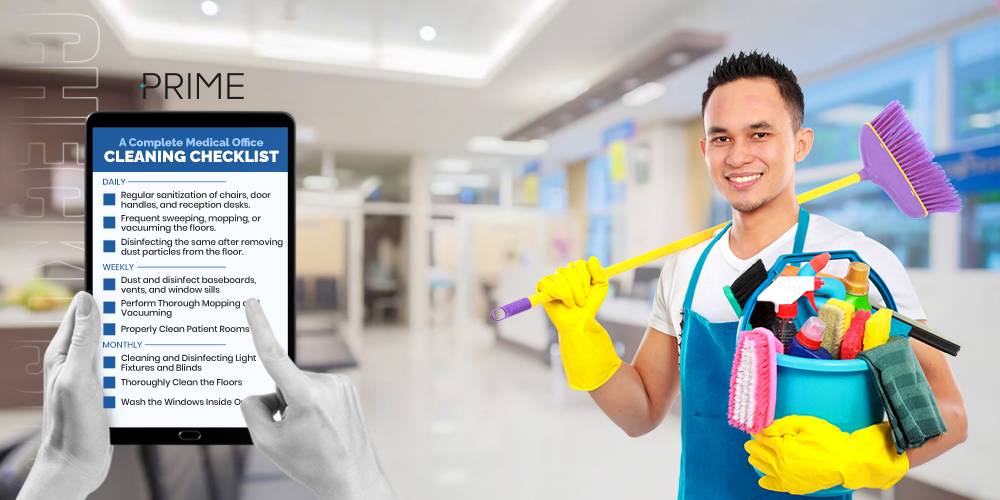
Medical Office Cleaning Checklist (Quick Reference)
Daily
- Disinfect high-touch surfaces
- Clean reception and waiting areas
- Clean and disinfect restrooms
- Empty trash
- Vacuum or mop floors
- Restock hygiene supplies
- Complete cleaning log
Between Patients
- Replace exam table paper
- Remove waste
- Clean and disinfect patient-contact surfaces
- Restock room supplies
- Perform visual inspection
Weekly
- Clean vents and baseboards
- Organize storage areas
- Deep clean furniture
- Review cleaning documentation
Monthly
- Inspect equipment
- Audit cleaning procedures
- Deep clean floors as appropriate
- Review staff training
- Replace worn cleaning tools
- Update cleaning SOPs if needed
Following a standardized checklist like this helps medical offices maintain a cleaner, more organized, and patient-focused environment while supporting consistent cleaning practices throughout the facility.
**Download the Medical office cleaning checklist (PDF) for FREE
What Is a Medical Office Cleaning Checklist?
A medical office cleaning checklist is a standardized document that outlines the cleaning and disinfection tasks required to maintain a safe healthcare environment. It specifies:
- Which areas should be cleaned
- Which surfaces require disinfection
- How frequently each task should be completed
- The supplies and equipment needed
- Staff responsibilities
- Inspection and documentation requirements
Unlike a standard office cleaning checklist, a medical office checklist prioritizes infection prevention. Healthcare environments have a greater risk of exposure to bodily fluids, respiratory droplets, and contaminated high-touch surfaces, making consistent environmental cleaning an essential part of daily operations.
A well-designed checklist benefits everyone involved in the facility by:
- Promoting consistent cleaning standards
- Reducing the risk of cross-contamination
- Improving patient confidence
- Supporting staff accountability
- Simplifying employee training
- Helping supervisors perform quality inspections
- Creating a documented record of completed cleaning tasks
Why Medical Offices Require Specialized Cleaning
Medical offices differ significantly from corporate offices, retail stores, or commercial buildings. Patients may arrive with contagious illnesses, compromised immune systems, or open wounds, increasing the importance of maintaining a hygienic environment.
Environmental cleaning is a key component of infection prevention. While no cleaning program can eliminate every risk, proper cleaning and disinfection reduce contamination on frequently touched surfaces and support a safer environment for patients, healthcare professionals, and visitors.
Several factors make medical office cleaning unique.
1. Frequent Contact with High-Touch Surfaces
Patients and staff regularly touch:
- Door handles
- Reception counters
- Check-in kiosks
- Pens
- Chairs
- Light switches
- Elevator buttons
- Computer keyboards
- Exam tables
- Blood pressure equipment
Without routine cleaning and disinfection, these surfaces can become reservoirs for microorganisms.
2. Increased Patient Turnover
Busy medical practices may see dozens or even hundreds of patients each day. Examination rooms often require cleaning between patients, while common areas need frequent attention throughout operating hours.
3. Regulatory Expectations
Healthcare facilities are expected to follow applicable infection prevention practices and workplace safety requirements.
While specific obligations vary depending on the type of facility, organizations such as the Centers for Disease Control and Prevention (CDC), the Occupational Safety and Health Administration (OSHA), and the Environmental Protection Agency (EPA) provide guidance and standards related to environmental cleaning, worker safety, and disinfectant selection.
4. Patient Experience
Cleanliness directly influences patient perception. A spotless reception area, sanitized examination room, and well-maintained restroom help reinforce professionalism and build trust in your practice.
Cleaning vs. Disinfecting vs. Sanitizing: Know The Differences
One of the most common misunderstandings in healthcare cleaning is assuming these terms mean the same thing. They do not.
| Process | Purpose | Typical Use |
| Cleaning | Removes dirt, dust, and organic material from surfaces | First step before disinfection |
| Sanitizing | Reduces the number of certain microorganisms to acceptable levels on appropriate surfaces | More common in food-service settings than clinical environments |
| Disinfecting | Uses EPA-registered disinfectants according to label directions to kill many disease-causing microorganisms on hard, non-porous surfaces | Essential for many high-touch surfaces in healthcare settings |
Cleaning should always come before disinfection. Dirt, blood, and other organic material can reduce the effectiveness of disinfectants.
Another critical concept is contact time (also called dwell time). Every disinfectant requires a specified amount of time to remain visibly wet on a surface to achieve the effectiveness stated on its label. Wiping the product away too soon can reduce its performance.
Understanding Risk-Based Cleaning
Not every area of a medical office requires the same cleaning frequency. A risk-based approach allows facility managers to prioritize resources where they are needed most.
1. Low-Risk Areas
These areas generally have limited patient interaction.
Examples include:
- Administrative offices
- Staff offices
- File storage rooms
- Conference rooms
Cleaning priorities include:
- Dust removal
- Vacuuming
- Emptying trash
- Disinfecting shared equipment
- Floor care
2. Moderate-Risk Areas
These spaces receive regular patient traffic but usually involve limited clinical procedures.
Examples include:
- Reception areas
- Waiting rooms
- Hallways
- Consultation rooms
- Public restrooms
Cleaning priorities include:
- Frequent disinfection of high-touch surfaces
- Restroom sanitation
- Trash removal
- Floor cleaning
- Supply restocking
3. High-Risk Areas
These environments require the most rigorous cleaning protocols.
Examples include:
- Examination rooms
- Treatment rooms
- Procedure rooms
- Specimen collection areas
These areas often require cleaning between patients, proper use of EPA-registered disinfectants, attention to contact times, and appropriate personal protective equipment (PPE) based on the task being performed.
Daily Medical Office Cleaning Checklist
Daily cleaning forms the foundation of an effective healthcare cleaning program. Every task should be documented and verified to ensure consistency.
1. Reception Area
The reception area creates the first impression of your practice and experiences constant contact throughout the day.
Daily tasks include:
- Disinfect reception counters
- Clean check-in kiosks and touch screens
- Wipe payment terminals
- Sanitize pens and clipboards or replace with single-use options where appropriate
- Disinfect phones
- Clean keyboards and computer mouse
- Empty trash receptacles
- Clean glass entry doors
- Disinfect door handles
- Vacuum or mop floors
- Remove fingerprints from frequently touched surfaces
- Restock hand sanitizer stations
Expert Tip: If your practice experiences heavy patient traffic, disinfect high touch surfaces multiple times throughout the day rather than waiting until closing.
2. Waiting Room
The waiting room often contains the highest concentration of shared surfaces.
Daily checklist:
- Disinfect chairs and armrests
- Wipe side tables
- Clean children’s play areas (if provided)
- Sanitize self-service kiosks
- Disinfect water dispenser buttons
- Wipe vending machines
- Clean television remotes
- Disinfect door handles
- Remove visible debris from floors
- Vacuum carpet or damp mop hard flooring
- Empty trash bins before they overflow
- Inspect for spills immediately
Maintaining a clean waiting area helps improve patient confidence while reducing the accumulation of contaminants on frequently touched surfaces.
3. Restrooms
Healthcare restrooms require close attention because they are used by patients, visitors, and staff throughout the day.
Daily tasks include:
- Clean and disinfect toilets and urinals
- Sanitize sinks and countertops
- Wipe mirrors
- Disinfect grab bars
- Clean faucet handles
- Refill soap dispensers
- Restock paper towels and toilet tissue
- Empty sanitary waste bins
- Mop floors with appropriate cleaning products
- Disinfect door handles and light switches
- Inspect for Odors, leaks, or maintenance issues
Restrooms should also be checked periodically during business hours to replenish supplies and address any cleanliness issues promptly.
4. Hallways and Common Areas
Although often overlooked, hallways connect every part of the facility and receive continuous foot traffic.
Daily responsibilities include:
- Vacuum or mop floors
- Remove debris
- Dust ledges and furniture
- Clean handrails
- Disinfect light switches
- Wipe elevator buttons (where applicable)
- Clean door frames and push plates
- Inspect entrance mats
- Empty hallway trash containers
A clean, clutter-free circulation area contributes to both safety and a professional appearance.
Room-by-Room Medical Office Cleaning Checklist
Every area within a medical office has different cleaning requirements based on patient interaction, the type of care provided, and the likelihood of contamination. Breaking tasks down by room helps ensure consistency and reduces the chance of overlooking critical areas.
Examination Room Cleaning Checklist
Examination rooms require the highest level of routine cleaning because multiple patients may use them throughout the day. These rooms should be cleaned after each patient when appropriate and thoroughly cleaned at the end of each day.
Between Patients
Complete the following tasks before the next patient enters:
- Remove disposable table paper and replace it with a fresh sheet.
- Dispose of waste in the appropriate containers.
- Clean visibly soiled surfaces before disinfecting.
- Disinfect the examination table, including side rails and adjustment controls.
- Wipe countertops, sink handles, and cabinet pulls.
- Disinfect patient chairs and stools.
- Clean reusable diagnostic equipment according to the manufacturer’s instructions.
- Wipe blood pressure cuffs, thermometers, pulse oximeters, and other shared devices if applicable.
- Disinfect light switches and frequently touched wall surfaces.
- Check soap, paper towels, gloves, and hand sanitizer stations.
- Return supplies to their designated locations.
- Perform a final visual inspection before admitting the next patient.
End-of-Day Examination Room Cleaning
At the end of the workday, perform a more detailed cleaning that includes:
- Dust high surfaces and vents.
- Clean windowsills and interior glass.
- Disinfect cabinet doors and drawer fronts.
- Wipe computer monitors, keyboards, and mice using manufacturer-approved methods.
- Mop floors using clean mop heads and fresh cleaning solution.
- Empty trash and replace liners.
- Inspect sharps containers and report when they approach the facility’s replacement threshold.
- Restock disposable supplies for the following day.
Best Practice: Clean from the cleanest areas to the dirtiest areas and from high surfaces to low surfaces to minimize cross-contamination.
Treatment and Procedure Room Cleaning Checklist
Procedure rooms often contain specialized medical equipment and may require additional cleaning protocols based on the services performed.
Daily cleaning tasks include:
- Clean treatment chairs and procedure tables.
- Disinfect overhead procedure lights and adjustment handles.
- Wipe equipment carts.
- Clean instrument stands and mobile workstations.
- Disinfect storage cabinet handles.
- Clean countertops and sinks.
- Empty regulated waste containers according to facility procedures.
- Replace disposable protective coverings.
- Mop floors after all procedures are completed.
- Inspect emergency equipment exteriors for visible contamination.
Only clean medical equipment according to the manufacturer’s instructions for use (IFU). Some equipment requires specific cleaning products or methods to avoid damage.
Laboratory or Specimen Collection Area
If your practice includes a laboratory or specimen collection space, establish a routine that supports both cleanliness and safe specimen handling.
Daily tasks:
- Disinfect collection chairs.
- Clean work counters after specimen collection activities.
- Wipe refrigerator and freezer door handles.
- Clean sink fixtures.
- Disinfect transport containers after use when appropriate.
- Empty trash containers.
- Mop floors.
- Restock gloves, disinfectants, and collection supplies.
Always follow your facility’s policies for specimen handling and regulated medical waste.
Reception and Front Desk Cleaning Checklist
Reception areas experience continuous contact throughout the day and should be monitored frequently.
Focus on:
- Countertops
- Touchscreen kiosks
- Payment terminals
- Phones
- Pens and clipboards
- Visitor sign-in devices
- Computer keyboards
- Computer mouse
- Door handles
- Waiting room access doors
High-touch surfaces may require disinfection multiple times throughout operating hours, especially during cold and flu season or periods of increased respiratory illness.
Waiting Room Cleaning Checklist
Patients often spend extended periods in waiting areas, making routine cleaning essential for maintaining a welcoming environment.
Daily responsibilities include:
- Disinfect chair arms and seating surfaces.
- Clean coffee or beverage stations if provided.
- Wipe children’s activity tables and toys if they are available for shared use.
- Disinfect television remote controls.
- Clean side tables.
- Remove litter.
- Vacuum carpets.
- Mop hard flooring.
- Dust windowsills.
- Clean interior glass doors.
- Refill hand sanitizer dispensers.
Administrative Office Cleaning Checklist
Administrative workspaces generally present lower contamination risks but still contain numerous shared surfaces.
Clean:
- Desks
- Shared keyboards
- Computer mouse
- Phones
- Printers
- Filing cabinets
- Conference tables
- Breakroom doors
- Shared office equipment
Encourage employees to keep desks organized to make routine cleaning easier and more effective.
Staff Break Room Cleaning Checklist
Although patients rarely enter staff break rooms, food preparation and shared appliances require regular attention.
Daily checklist:
- Clean tables.
- Wipe countertops.
- Clean microwave interior and exterior.
- Wipe refrigerator handles.
- Clean coffee machines.
- Empty trash.
- Sanitize sinks.
- Mop floors.
- Restock soap and paper towels.
High-Touch Surface Area Cleaning Checklist
High-touch surfaces should receive more frequent attention than low-touch areas because they are handled repeatedly throughout the day.
| High-Touch Surface | Recommended Attention |
| Door handles | Multiple times daily |
| Light switches | Daily or more frequently |
| Reception counters | Multiple times daily |
| Payment terminals | After heavy use |
| Pens and clipboards | Frequently throughout the day |
| Check-in kiosks | Multiple times daily |
| Computer keyboards | Daily |
| Computer mouse | Daily |
| Telephones | Daily |
| Faucet handles | Daily |
| Soap dispensers | Daily |
| Examination tables | Between patients |
| Blood pressure equipment | Between patients when shared |
| Patient chairs | Daily or between patients as needed |
Daily Opening Checklist
Before the first patient arrives:
- Unlock and inspect the facility.
- Confirm all cleaning tasks from the previous evening have been completed.
- Restock soap, sanitizer, paper towels, tissues, and toilet paper.
- Inspect waiting rooms for cleanliness.
- Verify exam rooms are fully stocked.
- Empty any remaining trash.
- Ensure floors are clean and dry.
- Check entrances for debris.
- Verify hand hygiene stations are operational.
Between-Patient Cleaning Checklist
Whenever appropriate for the type of visit and room, complete the following steps
- Remove disposable materials.
- Dispose of waste properly.
- Clean visibly soiled surfaces.
- Apply the appropriate disinfectant according to the product label.
- Allow the required contact time.
- Replace disposable coverings.
- Restock gloves and supplies.
- Perform a visual inspection before the next patient enters.
A standardized between-patient routine helps reduce variability and supports consistent environmental cleaning practices.
End-of-Day Closing Checklist
Before leaving for the evening:
- Empty all trash receptacles.
- Replace trash liners.
- Inspect regulated waste containers.
- Vacuum carpets.
- Damp mop hard floors.
- Clean restrooms thoroughly.
- Disinfect reception counters.
- Wipe waiting room furniture.
- Restock consumable supplies.
- Complete cleaning documentation.
- Report maintenance concerns.
- Secure cleaning chemicals and equipment.
Documenting completed tasks creates accountability and provides supervisors with a record that routine cleaning has been performed.
Weekly Medical Office Cleaning Checklist
Some tasks do not require daily attention but should be scheduled consistently.
Weekly tasks include:
- Dust high ledges and vents.
- Clean interior windows.
- Wipe baseboards.
- Deep clean upholstered seating according to manufacturer recommendations.
- Disinfect storage shelves.
- Clean refrigerator interiors.
- Organize supply closets.
- Inspect floor corners and edges.
- Clean behind movable furniture.
- Review cleaning logs with supervisors.
Monthly Medical Office Cleaning Checklist
In addition to routine daily and weekly maintenance, many healthcare facilities schedule professional deep cleaning services to address areas that are difficult to clean during regular operations.
Deep cleaning can include detailed floor care, high dusting, cleaning behind furniture and equipment, sanitizing hard-to-reach surfaces, and thoroughly cleaning shared spaces to help maintain a consistently clean and professional healthcare environment.
Monthly maintenance helps preserve the overall condition of the facility.
Recommended monthly tasks include:
- Inspect walls for stains and scuff marks.
- Deep clean floor finishes as appropriate.
- Dust light fixtures.
- Inspect HVAC vents for dust buildup.
- Review chemical inventory.
- Evaluate cleaning equipment condition.
- Replace worn microfiber cloths and mop heads.
- Review staff training needs.
- Audit cleaning procedures.
- Update standard operating procedures (SOPs) if necessary.
| Area | Between Patients | Daily | Weekly | Monthly |
| Exam Rooms | ✓ | ✓ | ✓ | ✓ |
| Treatment Rooms | As Needed | ✓ | ✓ | ✓ |
| Reception | — | ✓ | ✓ | ✓ |
| Waiting Room | — | ✓ | ✓ | ✓ |
| Restrooms | As Needed | ✓ | ✓ | ✓ |
| Administrative Offices | — | ✓ | ✓ | ✓ |
| Break Room | — | ✓ | ✓ | ✓ |
| Hallways | — | ✓ | ✓ | ✓ |
| Storage Areas | — | — | ✓ | ✓ |
This matrix provides a practical overview of cleaning intervals. Individual facilities may adjust frequencies based on patient volume, services offered, and internal infection prevention policies.
Medical Office Cleaning Compliance, Tips & Expert Guidance
A comprehensive checklist is only effective when it is supported by consistent cleaning procedures, proper staff training, and ongoing quality assurance.
Whether your medical office relies on an in-house team or a professional commercial cleaning company, following healthcare cleaning best practices helps create a safer environment for patients, employees, and visitors.
1. Clean Before You Disinfect
Cleaning and disinfecting are not interchangeable.
Always remove dust, dirt, and organic matter before applying a disinfectant. Soil left on a surface can reduce the effectiveness of disinfectants and prevent them from reaching microorganisms effectively.
2. Follow the Manufacturer’s Contact Time
Every EPA-registered disinfectant includes instructions on how long the surface should remain visibly wet. This “contact time” varies by product.
Avoid spraying and immediately wiping surfaces dry unless the product label specifically instructs you to do so.
3. Prioritize High-Touch Surfaces
Frequently touched surfaces should receive more attention than areas with minimal contact.
Examples include:
- Door handles
- Reception counters
- Exam tables
- Patient chairs
- Sink faucets
- Light switches
- Phones
- Computer keyboards
- Touchscreen kiosks
- Payment terminals
During periods of increased respiratory illness or higher patient volume, facilities may choose to increase cleaning frequency based on their risk assessment.
4. Use Color-Coded Cleaning Tools
Color-coded microfiber cloths and mop heads help reduce cross-contamination by assigning specific equipment to designated areas.
A common example is:
| Area | Suggested Color* |
| Restrooms | Red |
| Clinical Areas | Blue |
| General Office Areas | Green |
| Food Preparation Areas | Yellow |
*Facilities should establish and consistently follow their own color-coding system.
5. Work from Clean to Dirty
An effective cleaning sequence is:
- High surfaces to low surfaces
- Clean areas to dirtier areas
- Dry tasks before wet tasks
- Least contaminated areas before higher-risk areas
This workflow minimizes the transfer of contaminants during cleaning.
6. Replace Cleaning Supplies Regularly
Microfiber cloths, mop heads, gloves, and other reusable cleaning equipment should be replaced or laundered according to the manufacturer’s recommendations and your facility’s cleaning protocols.
Using heavily soiled or worn cleaning materials can spread contaminants rather than remove them.
7. Train Cleaning Staff Continuously
Healthcare cleaning standards evolve over time. Regular training helps staff remain familiar with:
- Proper cleaning techniques
- Safe chemical handling
- PPE requirements
- Infection prevention principles
- Equipment operation
- Emergency spill procedures
- Documentation requirements
Routine refresher training also helps maintain consistency across shifts.
Personal Protective Equipment (PPE)
Appropriate PPE helps protect cleaning personnel from workplace hazards. The type of PPE needed depends on the task being performed, the products being used, and the potential for exposure to contaminants.
| Cleaning Task | Common PPE Considerations* |
| General office cleaning | Disposable gloves |
| Restroom cleaning | Gloves; additional PPE based on risk assessment and products used |
| Cleaning exam rooms | Gloves; additional PPE if splash or exposure risks exist |
| Handling regulated waste | PPE consistent with facility policies and applicable regulations |
| Chemical mixing (if applicable) | Follow the chemical manufacturer’s Safety Data Sheet (SDS) |
*Always follow your facility’s policies, applicable OSHA requirements, and the manufacturer’s instructions for cleaning chemicals and PPE.
Never reuse disposable gloves and perform hand hygiene after removing PPE.
Medical Waste Considerations
Routine commercial cleaning staff should understand the difference between ordinary waste and regulated medical waste but should only handle regulated waste according to facility procedures and applicable regulations.
Best practices include:
- Never compress waste bags by hand.
- Do not overfill sharps containers.
- Report damaged sharps containers immediately.
- Keep regulated waste separate from regular trash.
- Follow facility procedures for spill response and waste handling.
- Store waste in designated areas until collection.
If your facility generates regulated medical waste, ensure responsibilities are clearly defined and staff are properly trained.
Cleaning Documentation and Quality Assurance
A checklist becomes significantly more valuable when supported by documentation.
Maintaining cleaning records helps supervisors verify completed work, identify recurring issues, and improve accountability.
Useful documents include:
- Daily cleaning logs
- Weekly inspection forms
- Monthly quality audits
- Corrective action reports
- Supply inventory sheets
- Equipment maintenance logs
- Staff training records
For larger healthcare facilities, digital inspection software can simplify documentation and reporting.
Sample Daily Cleaning Log
| Area | Completed | Time | Initials |
| Reception | □ | ||
| Waiting Room | □ | ||
| Exam Room 1 | □ | ||
| Exam Room 2 | □ | ||
| Restrooms | □ | ||
| Break Room | □ | ||
| Hallways | □ |
A simple log like this helps ensure no areas are accidentally missed.
Medical Cleaning Health & Safety Notes
- Always perform hand hygiene before and after cleaning tasks and after removing gloves.
- Clean surfaces before disinfecting, as dirt and organic matter can reduce the effectiveness of disinfectants.
- Use EPA-registered disinfectants according to the manufacturer’s label instructions, including the recommended contact (dwell) time.
- Wear appropriate personal protective equipment (PPE) based on the cleaning task and your facility’s policies.
- Never mix cleaning chemicals or disinfectants unless the manufacturer specifically states it is safe to do so.
- Use separate or color-coded microfiber cloths and mop heads for different areas to help reduce cross-contamination.
- Pay special attention to high-touch surfaces, such as door handles, exam tables, light switches, keyboards, and reception counters.
- Follow the manufacturer’s instructions when cleaning reusable medical equipment to prevent damage and ensure proper maintenance.
- Place wet floor signs during floor cleaning to help prevent slips, trips, and falls for patients, visitors, and staff.
- Keep a record of completed cleaning tasks and promptly report any maintenance issues or safety hazards identified during cleaning.
Common Medical Office Cleaning Mistakes
Even experienced teams can overlook important details. Recognizing common mistakes helps improve consistency and reduce risk.
- Using Household Cleaners Instead of Appropriate Healthcare Products: Not all cleaning products are suitable for healthcare environments. Select products appropriate for the surfaces and intended use and follow label directions.
- Skipping Contact Time: Disinfectants require sufficient contact time to work as intended.
- Using the Same Cloth in Multiple Rooms: Without proper replacement or laundering, cloths can transfer contaminants between areas.
- Forgetting High-Touch Surfaces: Door handles, light switches, keyboards, payment terminals, and chair arms are commonly overlooked during routine cleaning.
- Incomplete Documentation: Cleaning that is not documented can be difficult to verify during internal audits or quality reviews.
- Poor Supply Management: Running out of soap, sanitizer, paper towels, gloves, or disinfectant can disrupt operations and affect the patient experience.
Should You Hire a Professional Medical Office Cleaning Company?
Many practices eventually reach a point where outsourcing cleaning becomes more efficient than relying on in-house staff.
A professional healthcare cleaning provider can offer:
- Trained commercial cleaning technicians
- Consistent cleaning schedules
- Quality control inspections
- Appropriate commercial-grade equipment
- Knowledge of healthcare cleaning best practices
- Flexible after-hours service
- Reduced administrative burden
For busy practices in New York City, outsourcing can also help maintain consistent cleaning standards while allowing clinical staff to focus on patient care.
What to Look for in a Medical Office Cleaning Company
When comparing providers, ask about:
- Experience cleaning healthcare facilities
- Employee background checks and training
- General liability insurance
- Quality assurance programs
- Cleaning documentation
- Use of EPA-registered disinfectants where appropriate
- Flexible scheduling options
- Emergency cleaning availability
- References from healthcare clients
- Communication and reporting processes
Choosing an experienced healthcare cleaning company can help improve consistency and provide greater peace of mind.
Final Thoughts
Maintaining a clean medical office is about far more than appearances. A structured cleaning checklist helps create a safer environment, promotes consistency, improves operational efficiency, and reinforces patient confidence.
By dividing responsibilities into daily, between-patient, weekly, and monthly tasks, healthcare facilities can reduce the likelihood of missed cleaning activities and establish a more organized approach to environmental cleaning. Pairing these checklists with staff training, quality inspections, and proper documentation further strengthens your cleaning program.
For medical practices in New York City, partnering with an experienced commercial cleaning company can simplify facility maintenance while supporting high standards of cleanliness across every patient-facing and staff area.
If your practice is looking for reliable medical office cleaning services in NYC, the experienced team at Prime Cleaning NYC provides customized cleaning programs designed for healthcare environments. We work with medical offices, specialty clinics, outpatient facilities, and healthcare practices to deliver consistent, detail-oriented cleaning that supports a clean, professional, and welcoming environment for patients and staff alike.
Frequently Asked Questions
1. What should be included in a medical office cleaning checklist?
A comprehensive medical office cleaning checklist should cover reception areas, waiting rooms, exam rooms, treatment rooms, restrooms, staff break rooms, administrative offices, high-touch surfaces, floor care, waste disposal, supply restocking, and daily, weekly, and monthly cleaning tasks.
It should also include cleaning logs and inspection checklists to maintain consistency.
2. How often should exam rooms be cleaned and disinfected?
Exam rooms should be cleaned and disinfected between patients whenever appropriate based on the services provided and thoroughly cleaned at the end of each day.
High-touch surfaces such as exam tables, patient chairs, countertops, and medical equipment should receive particular attention.
3. What are the most important high-touch surfaces to disinfect in a medical office?
High-touch surfaces include door handles, light switches, reception counters, payment terminals, check-in kiosks, keyboards, computer mice, telephones, faucet handles, exam tables, patient chairs, blood pressure cuffs, and other shared medical equipment. These surfaces typically require more frequent cleaning than low-touch areas.
4. What’s the difference between cleaning, sanitizing, and disinfecting in a healthcare setting?
Cleaning removes dirt and organic matter from surfaces. Sanitizing reduces certain microorganisms to acceptable levels on appropriate surfaces.
Disinfecting uses an EPA-registered disinfectant according to the product label to kill many harmful microorganisms on hard, non-porous surfaces. Cleaning should always be completed before disinfecting.
5. Why is contact time important when using disinfectants?
Contact time, also called dwell time, is the amount of time a disinfectant must remain visibly wet on a surface to work effectively according to its label. Wiping the product away too soon can reduce its effectiveness.
6. Which cleaning products should be used in a medical office?
Medical offices should use cleaning products appropriate for healthcare environments and EPA-registered disinfectants when disinfection is required. Always follow the manufacturer’s instructions for proper dilution, application, contact time, and safe use.
7. How can a medical office reduce the risk of cross-contamination during cleaning?
Cross-contamination can be reduced by cleaning from cleaner areas to dirtier areas, using color-coded microfiber cloths and mop heads, changing cleaning cloths regularly, wearing appropriate PPE, using fresh cleaning solutions, and following proper hand hygiene practices between tasks.
8. What personal protective equipment (PPE) should cleaning staff wear in a medical office?
The required PPE depends on the cleaning task and potential exposure risks. Disposable gloves are commonly used for routine cleaning, while additional protection such as gowns, masks, or eye protection may be necessary for tasks involving chemical splashes or potential exposure to bodily fluids. Staff should follow facility policies and OSHA requirements where applicable.
9. How should waiting rooms be cleaned in a healthcare facility?
Waiting rooms should be cleaned daily, with high-touch surfaces disinfected more frequently throughout the day.
Chairs, armrests, reception counters, check-in kiosks, tables, door handles, and shared devices should receive regular attention, while floors, trash bins, and sanitizer stations should also be maintained.
10. What documentation should a medical office keep for cleaning activities?
Medical offices should maintain daily cleaning logs, supervisor inspection forms, equipment maintenance records, staff training documentation, supply inventory records, and corrective action reports. These documents help improve accountability and support quality assurance.
11. What should you look for when hiring a medical office cleaning company?
Choose a cleaning company with experience in healthcare facilities, trained and insured staff, quality control procedures, healthcare-specific cleaning protocols, flexible scheduling, documented inspections, and experience using appropriate cleaning and disinfecting products for medical environments.
12. How often should high-touch surfaces be disinfected in a medical office?
High-touch surfaces should be disinfected routinely throughout the day based on patient volume, traffic patterns, and the type of healthcare services provided. Surfaces in exam rooms may also require cleaning and disinfection between patients.
13. How do medical office cleaning requirements differ from standard office cleaning?
Medical office cleaning places greater emphasis on infection prevention, high-touch surface disinfection, patient care areas, proper cleaning procedures, documentation, staff training, and the safe handling of healthcare-related waste. Standard office cleaning typically focuses on appearance and general maintenance rather than clinical risk reduction.
14. How can facility managers improve the quality of medical office cleaning?
Facility managers can improve cleaning quality by implementing standardized checklists, training staff regularly, conducting routine inspections, maintaining cleaning logs, auditing completed work, ensuring adequate supplies are available, and reviewing cleaning procedures periodically.
15. Why should medical offices use a standardized cleaning checklist?
A standardized medical office cleaning checklist helps ensure cleaning tasks are completed consistently, reduces the risk of missed areas, supports staff training, improves accountability, enhances patient confidence, and creates a more organized approach to maintaining a clean healthcare environment.