
Office upkeep is more than just appearance. A clean and well-maintained office speaks highly of your company. Additionally, when business owners invest in improving office hygiene, it promotes employee health and productivity.
Like any other company, yours will also witness high foot traffic and a dense urban population in the heart of New York City (NYC). To offer a cleaner environment for employees and visitors, office deep cleaning becomes paramount.
Office deep cleaning goes beyond the basics. It caters to sanitizing and disinfecting every nook and cranny of the office spaces. From scrubbing floors with high-grade cleaners to disinfecting high-touch areas like elevator buttons, doorknobs, and light switches, it includes all.
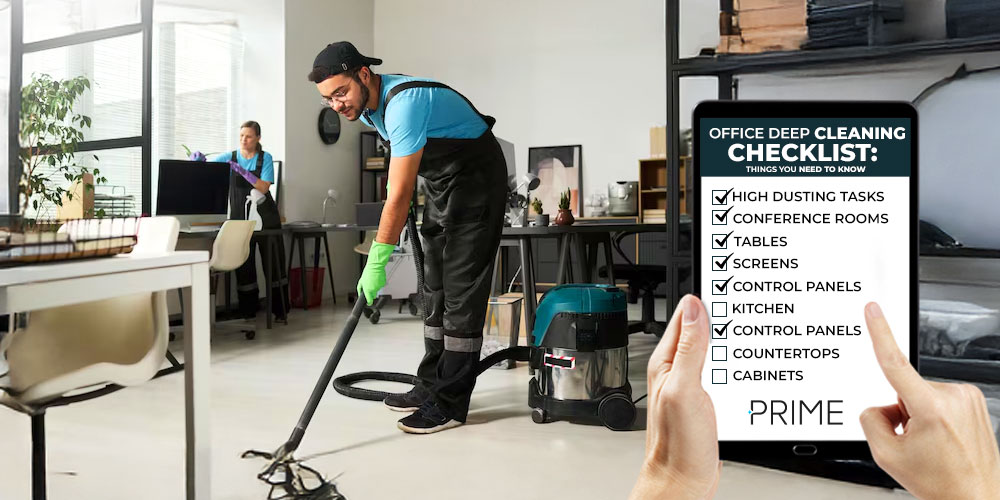
Since the cleaning task is comprehensive, following an office deep cleaning checklist can be helpful. It will include the different tasks you should consider to make the space sparkle. However, in large offices, in-house janitors’ deep cleaning may not reach all areas. For that reason, you should look for professional deep cleaning services. With a professional office deep-cleaning services checklist, they will leave no space for subpar upkeep.
Click Here: Download Free PDF
If you also want to take office cleaning to new heights, you’ve come to the right place.
This blog will discuss the office deep cleaning checklist that you can use to enhance the office environment in terms of health and sanitization. Furthermore, it will explore all the areas that require thorough deep cleaning.
What Is an Office Deep Cleaning Checklist?
An office deep-cleaning checklist is a comprehensive guide for cleaning and sanitizing hard-to-reach areas. It goes beyond daily tidying, which includes mopping the floors, dusting the desks, or wiping down the windows.
In an office deep-cleaning checklist for businesses, individuals focus on high-touch surfaces such as light switches and vents. The checklist includes areas and necessary tasks to enhance the space’s appearance and provide a clean, sanitized office.
Beyond light and vents, the office deep cleaning checklist focuses on:
- High-touch Points: These are areas that are frequently touched, such as keyboards, elevator buttons, light switches, and doorknobs.
- Floors and Related Spaces: Deep cleaning floors, carpets, and areas under furniture will remove stains and watermarks, as well as minimize the risk of disease spread.
- Inside the Appliances: In an office cleaning checklist for facility managers, appliance maintenance is vital. Cleaning the shelves of refrigerators and the microwave dish will keep food fresh and keep germs at bay.
So, what does deep cleaning include? To put it simply, it includes intensive cleaning of all surfaces inside and out. From mopping areas under furniture to cleaning and polishing hardwood floors, it covers every corner.
Difference Between Regular Office Cleaning and Deep Cleaning
As a business owner, it is your core responsibility to maintain workplace hygiene. In many cases, the in-house cleaning team tidies up the offices by dusting the desks or quickly mopping the floors when visible dirt is present. But that’s not enough.
And often these owners confuse such tasks with deep cleaning. However, the deep cleaning process is much more intensive. To adopt the right cleaning strategy, it is essential to know the difference between regular office cleaning and deep cleaning.
The points of difference include:
- Regular cleaning is more frequent than deep cleaning. For regular cleaning, you can engage the cleaning team to perform daily, weekly, or bi-weekly tasks. Deep cleaning an office, however, requires a monthly or quarterly maintenance.
- For regular office cleaning, the team would dust surfaces and dispose of trash. But office deep cleaning will focus on hidden and hard-to-reach areas.
- The tools also vary for regular office cleaning and deep cleaning. While standard brooms, dustpans, and vacuum cleaners are essential for regular office cleaning, deep cleaning will require specialized tools such as scrubbers, disinfectants, and steam cleaners.
- Regular cleaning focuses on the overall cleanliness and appearance of the office. When it comes to deep cleaning, the process removes stubborn dirt, sanitizes surfaces, and improves the overall hygiene of the space.
Who This Office Deep Cleaning Checklist Is For?
After understanding the differences between regular cleaning and deep cleaning, offices would implement a checklist to remove deep dirt from hard-to-reach areas. That way, office hygiene will improve.
But the real question is: who requires a printable office deep-cleaning checklist? Many individuals can benefit from the checklist. They are as follows:
- Office Managers/administrators: These individuals may follow a monthly office deep-cleaning checklist to maintain workspace cleanliness. When it has been a long time since dusting high-touch surfaces or cleaning the floors under furniture, they can schedule the respective cleaning teams to handle the work.
- Business Owners: These individuals may use a quarterly office deep-cleaning checklist to enhance property value. As an owner, you may witness cobwebs in the vents or light switches. These elements not only decrease property value but also put employees’ health at risk. Hence, focusing on vents and high-touch surfaces like door handles and keyboards will foster a clean environment, thereby improving your brand reputation.
How to Use This Office Deep Cleaning Checklist? (Step-by-Step Guide)
A lot goes through the minds of the business owners and office managers when using the deep cleaning checklist. The bigger the office, the more spaces will be added to the office cleaning checklist.
Hence, it is essential to follow a top-down approach to use the checklist. The approach includes preparation, tool arrangement, and compliance with safety standards.
While professional cleaning companies are already familiar with the deep cleaning process, managers/business owners like you may struggle to get started with the checklist.
So, here’s how you’re going to use an office deep cleaning checklist:
Preparing the Office Before Deep Cleaning
The first step is to prepare the office before starting the cleaning process. When following an office cleaning checklist for employees, the preparation phase will save time during the actual cleaning.
You can employ the in-house cleaning teams to prepare the office for deep cleaning. They will take a quick scan of the space and determine the preparation steps. These steps include:
- Removing clutter
- Shredding old documents
- Clearing out fridge (expired food products)
- Disposing trash
- Unplugging electronics and appliances
- Positioning chairs and desks away from walls
- Opening windows for ventilation
Tools, Equipment, and Supplies Needed
Once the preparation is done, you should arrange the tools and supplies for office deep cleaning. Unlike regular cleaning, deep cleaning requires specialized equipment to reach hard-to-reach and hidden areas of the office.
Depending on the areas, the tools will change for office deep cleaning. For instance, to clean the windows, using microfiber clothes and glass cleaners will prevent scratches from the elements and remove stains and dirt. Other tools and supplies include:
- Mops & buckets
- Vacuum cleaners
- Dusters
- Brooms & dustpans
- Scrub brushes/pads
- Disinfectants
- Steam cleaners
- Carpet extractor
- Rubber gloves
- Multi-surface cleaners
Safety and Compliance Considerations
A professional cleaning service knows the safety protocols, which they use to design the cleaning checklist. But business owners and managers may lack the knowledge of the safety protocols.
Thus, to use the office cleaning checklist, you need to understand the safety and compliance considerations for offices. These involve:
- Notifying staff before using any chemicals to clean restrooms, kitchens, and common areas.
- Checking HVAC systems, cleaning and replacing filters to maintain indoor air quality.
- Ensuring that cleaning procedures comply with OSHA (Occupational Safety and Health Administration) health and safety regulations.
- Creating a security pass for the cleaning teams will enable them to follow the after-hours office deep-cleaning checklist. It will cover all areas of the office, from floors to dustbins, when employees are not present.
General Office Areas & Workstations Deep Cleaning Checklist
In the office cleaning checklist by area, the first thing that you need to address is the general office areas and workstations. Though these spaces are overlooked, employees spend most of their time here. For that reason, it is essential to thoroughly clean these spaces following a checklist that includes:
- Decluttering and Preparation: Before the cleaning process, these spaces need some organization. Clearing out the desks, cabinets, and shelves is a core preparation step for office deep cleaning. Also, it will involve emptying trash bins, unplugging devices, and moving furniture away from walls.
- High-Dusting Tasks: Check ceilings and corners for cobwebs and remove them. Furthermore, dust high shelves and wipe down windows to provide a clean appearance. Even cleaning the blinds can help keep germs out of common office areas.
- Low-Dusting and Surface Cleaning: These areas include desks, monitors, and keyboards. Furthermore, disinfecting phones and light switches can improve the office’s health.
- Sanitizing High-Touch Points: Sanitize the general areas and workstations that people frequently touch. Doorknobs, keyboards, light switches, and elevator buttons are spaces that require thorough sanitization.
- Electronics Cleaning (Safely): Monitors, keyboards, and phones are common electronics in office workstations. Use dry clothes to dust these elements, and spray disinfectant from a distance on the devices to prevent the spread of disease.
- Furniture Deep Cleaning: It involves dusting chair frames and desk surfaces. Furthermore, the cleaning team will clean the inside of drawers and cabinets to remove dirt and stubborn grime.
- Floors and Under-Furniture Cleaning: Floors in an office space experience high foot traffic. Mopping and sanitizing the floors will enhance the office environment and reduce employee absenteeism. Deep cleaning also addresses spaces under the furniture. Using specialized mops, cleaning teams can reach these spaces and remove grime and dirt.
Conference Rooms & Meeting Spaces
These are collaborative spaces in an office. When a client or an employee steps inside conference rooms and meeting spaces, they expect it to sparkle. Dirty windows and cluttered chairs can detract from the overall look of the space. In that scenario, following a deep cleaning checklist for the office can be helpful. The list will focus on areas like:
- Tables, Chairs, and Presentation Equipment: Wipe down tables and chairs in the conference and meeting rooms to remove dust. For presentation equipment, use electronic-safe wipes to clean the surfaces for a better look.
- Screens, Remotes, and Control Panels: Carefully wipe them with microfiber cloths. It will remove dust buildup from those components.
- Glass Walls, Whiteboards, and Doors: Use microfiber cloths to clean the glass walls and prevent scratches. For whiteboards, use rubbing alcohol solutions to remove markers. Cleaning doors will include dusting and sanitizing the surfaces.
Kitchen, Pantry & Breakroom Deep Cleaning Checklist
In an office, the kitchen, pantry, and break rooms are the most used areas. After a busy workday, these spaces look like a mess and need utmost attention. When you put effort into maintaining the cleanliness of these spaces, it boosts the overall hygiene. The checklist for cleaning these spaces includes:
- Appliances: Wiping down microwaves, refrigerators, and coffee machines are core tasks of the office kitchen deep cleaning checklist. Also, remove the food particles to thoroughly clean the inside of the appliances.
- Countertops, Sinks, and Cabinets: Cleaning teams will use disinfectants to wipe down countertops and cabinets. Use liquid soap to clean and disinfect sinks to prevent the spread of germs.
- Dining Tables, Chairs, and Shared Surfaces: Dust dining tables, chairs, and other shared surfaces, such as kitchen counters and appliances. Use a soft cloth to wipe down surfaces, and vacuum the chair seats. It will ensure a complete cleanup of these spaces.
- Dish Management and Leftover Cleanup: Use dishwashers to clean the pile of dishes and organize them in the cabinets. Check the fridge and shelves for leftovers, and carefully dispose of them in the dustbins
- Trash Bins, Recycling, and Odor Control: Clearing out trash and recycling waste will improve the overall hygiene of the office environment. To get rid of the foul smell that usually comes from leftover food in the fridge, consider spraying room fresheners.
Restroom Deep Cleaning Checklist
Restrooms are the most vulnerable spaces to germs and other pathogens. To ensure employees’ well-being, pay close attention to thoroughly cleaning the restrooms. From cleaning the faucets to wiping down the mirrors, there are various tasks present in an office restroom deep cleaning checklist:
- Shelves and faucets: Use multi-surface cleaners to clean the shelves and faucets in the restrooms. Ensure the shelves are cleaned from the inside after clearing out the empty essentials.
- Mirrors and Glass Surfaces: Wipe down the mirrors and other glass surfaces with glass cleaners and a microfiber cloth. It will enhance the restrooms’ appearance.
- Clean Toilet Seats: Use high-grade toilet cleaners to clean the lid and the seat. Also, scrub the floors to improve the space’s hygiene.
- Restock Supplies: Check for empty items and restock them, including toilet paper, soap, and fresh towels. That way, the restroom will reflect the proper functioning of your office.
Windows, Glass & Doors Deep Cleaning Checklist
A dirty window or a stained glass door can damage the office’s reputation. To ensure the office sparkles, it is essential to thoroughly clean the windows, glass doors, and other surfaces. The checklist below will include the tasks for the cleaning process:
- Windows and Frames: Dust the grime from the window frame corners and wipe down the surface for a clean look. Use glass cleaners to remove stains and dirt from the windows.
- Doors and Sills: Wipe them down with soapy water to remove stubborn dirt. Also, use a sponge and warm water to clean the sills, creating a clean, healthy workspace for everyone.
- Buffing the Surfaces: After wiping down glass surfaces with soapy water to remove dirt, buff the area immediately. Use a microfiber cloth to dry the surfaces for optimum results.
Storage Areas, Cabinets & Hidden Spaces
Storage areas, cabinets, and carpets are among the most overlooked elements in office deep cleaning. It is important to focus on these areas to achieve balance and maintain a well-maintained office. By incorporating an office carpet deep-cleaning checklist and wiping down storage spaces, you can ensure a functional, healthy office environment.
- Clearing Clutter From Storage Areas: Remove notepads from desks, food from pantry shelves, and essentials from restroom cabinets.
- Cleaning Interior Storage Spaces: Wipe down the cabinets and drawers in workstations, kitchen, and restrooms. Use a dry cloth to remove dust, then use soapy solutions to remove stains or stubborn grime.
- Carpet Cleaning: Carpets require thorough cleaning to prevent the spread of allergens. Using high-grade vacuum cleaners and steam cleaners will remove dust from carpets, making them look good as new.
- Surfaces Under Furniture: Move away the furniture and clean the surfaces underneath. Use vacuum cleaners to remove dust particles and sanitize areas, improving hygiene and employees’ health.
When is Professional Office Deep Cleaning Necessary?
Though managing small offices is easy for business owners and facility administrators, the great challenge comes when you have to deal with large spaces. Also, your lack of knowledge about the health and safety standards can disrupt the deep cleaning process.
To avoid these problems, you should hire a professional office deep-cleaning service. The trained professionals understand the importance of office cleaning, and depending on the level of mess, they will plan the deep cleaning process.
If you don’t know when to hire office deep cleaning, here are the signs you should consider:
- Check for visible dirt buildup, carpet stains, or a persistent odor, and hire a cleaning service that uses advanced tools to clean the space and ensure odor control.
- An increase in employee sick days indicates the presence of hidden mold, dust, or allergens. Hiring a professional deep cleaning service ensures the use of high-grade sanitizers to reduce germs and allergens, thereby improving employee productivity.
- Places with high foot traffic require thorough cleaning. Mopping the floors during working hours can interfere with employees’ work. That’s when office deep cleaning services come to the rescue, maintaining floor care even before or after work hours.
Boost Hygiene and Employee Productivity with Prime Cleaning’s Deep Cleaning Services
By now, you know the office deep cleaning checklist and how to use it. For your NYC office, focus on all visible and hidden spaces to improve cleanliness. From clearing out trash to mopping floors and steaming carpets, there is a wide range of tasks to perform.
Since it can be stressful and time-consuming, hiring a team of professionals can be helpful. They have experience in deep cleaning every corner of an office space. Also, the professionals will follow a checklist that complies with the city’s safety and health regulations.
Are you looking for such professionals for the job? Well, at Prime Cleaning Services, we offer office deep cleaning that will elevate hygiene and boost employee productivity.
Our trained cleaning team provides deep cleaning services for offices across various industries. From government offices to co-working spaces, we ensure every surface is cleaned, without missing a spot.
Check out our office deep cleaning services to boost cleanliness and employee efficiency.
Office Deep Cleaning Checklist: FAQs
How long does an office deep clean take?
An office deep clean can take a few hours in small spaces or a whole day in large offices. The complexity of the work also determines the time for the deep clean. If an office has many rooms and large entryways, it will take more time to deep clean.
Is office deep cleaning safe during working hours?
Deep cleaning is a highly intensive upkeep process. It usually requires pulling furniture, dusting surfaces, and thoroughly cleaning high-touch areas. During working hours, it can disrupt employees’ work. For optimal results, deep cleaning an office should be safe and stress-free, either before or after working hours.
How often should high-touch surfaces be disinfected?
High-touch surfaces include light switches, doorknobs, elevator buttons, and keywords. Since these areas are frequently touched, daily disinfection is essential. The cleaning teams can disinfect these surfaces every day before and after work to prevent contamination.
What does an office deep cleaning checklist include?
An office deep-cleaning checklist covers every nook and cranny of the space. From dusting high areas like switches and vents to cleaning keyboards and wiping down windows and glass surfaces, it covers it all.
Can office deep cleaning help reduce employee sick days?
Yes, office deep cleaning uses intensive cleaning processes to remove dust, allergens, and germs from the space. By thoroughly cleaning furniture, upholstery, restrooms, and the kitchen, which harbour bacteria and allergens, it will reduce the risk of disease spread, minimizing employee sick days.
Is an office deep cleaning checklist customizable?
Yes, the office deep cleaning checklist is customizable. Depending on the layout and required cleaning tasks, you can customize the checklist. If the kitchen area in your office requires special attention, you can ask the in-house cleaning team or a professional service to prepare a checklist focused on that area.