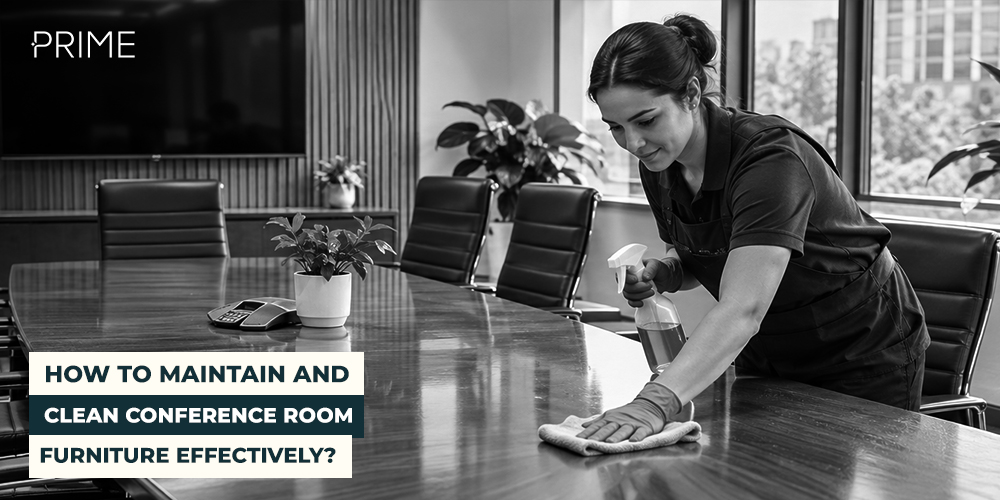

Clean conference room furniture with a dry microfiber cloth first, then a cleaner matched to the material: a lightly damp cloth with mild soap for wood, veneer and laminate; glass cleaner for glass; a pH-neutral cleaner for stone; and upholstery-safe products for chairs. Spray the cloth, not the furniture, wipe gently, and dry the surface completely. Dust daily, vacuum fabric chairs weekly, and treat spills right away.
Conference rooms are where clients form their opinion of your company. A smudged glass table or a coffee-stained chair undoes a good first impression fast. This guide covers the right supplies, how to clean each type of table and chair, how to handle common stains, and a simple schedule your team or cleaning crew can follow.
Key takeaways
- Match the cleaner to the material. One all-purpose spray on every surface is the most common cause of damage.
- Apply cleaner to the cloth, not the furniture. Excess liquid seeps into veneer edges, joints and upholstery.
- Dust and wipe daily, vacuum chairs weekly, inspect monthly.
- Blot spills immediately. Rubbing spreads a stain and pushes it deeper.
- Check the manufacturer’s care label before using any disinfectant or stain remover.
What Supplies Do You Need to Clean Conference Room Furniture?
- Microfiber cloths: pick up dust and fingerprints without scratching. Keep separate cloths for tables, chairs and glass.
- Mild, pH-neutral soap or a manufacturer-approved furniture cleaner
- Glass cleaner for glass tops and partitions
- pH-neutral stone cleaner for marble, granite or quartz tables
- Upholstery and leather cleaners suited to your chairs
- Vacuum with an upholstery attachment (HEPA-filtered if possible)
- Soft-bristled brush for seams, mesh and corners
- Dry, lint-free cloths to finish every surface
How to Clean a Conference Room Table Without Damaging It?
1. Clear the table and remove loose dust
Remove laptops, cables, cups, notepads and décor so you can reach the whole surface. Wipe the table with a dry microfiber cloth to lift loose dust before any liquid touches it. Dry dusting first prevents grit from scratching the finish.
2. Choose the right cleaner for the surface
| Table material | What to use | What to avoid |
|---|---|---|
| Wood and veneer | Microfiber cloth lightly dampened with mild soap and water, wiped with the grain | Soaking the surface, all-purpose sprays, silicone polishes |
| Laminate | Mild soap and water on a soft cloth | Abrasive pads; water left on the edges |
| Glass | Glass cleaner, then a dry lint-free cloth to polish | Paper towels that leave lint |
| Stone (marble, granite, quartz) | pH-neutral stone cleaner | Vinegar, lemon and other acidic cleaners that can etch or dull stone |
| Metal | Soft cloth with very dilute soap, dried immediately | Abrasives; polish unless the manufacturer approves it |
3. Wipe gently and remove residue
Apply the cleaner to the cloth, not the table. Wipe in the direction of the grain on wood, paying attention to edges, corners and the spots people touch most. If any residue remains, follow with a cloth dampened with plain water.
4. Dry the surface completely
Go over the whole table with a dry, lint-free cloth. Check edges, leaf seams and extension joints, where water can collect and swell wood or veneer. Put items back only once everything is fully dry.
How to Clean and Maintain Conference Room Chairs?
Chairs get more contact than any other furniture in the room, so they show dirt, oils and stains first. For more detail, see our guide on how to clean an office chair properly.
Fabric chairs
- Vacuum first with an upholstery attachment, working into seams and crevices.
- Check the care label. “W” means water-based cleaners are safe; “S” means solvent-based only; “WS” allows either; “X” means vacuum only.
- Test in a hidden spot before treating the whole seat.
- Clean with a barely damp cloth and mild upholstery cleaner, then blot with a dry cloth. Don’t soak the fabric.
Leather and vinyl chairs
- Leather: use a leather cleaner suited to the finish, then a conditioner every few months to prevent cracking.
- Vinyl: wipe with mild soap and water and dry well.
- Avoid abrasive sponges, alcohol-heavy wipes and harsh solvents, which dry out and crack the surface over time.
Mesh and plastic chairs
- Mesh: vacuum or brush out debris, then dab stains with a damp cloth. Dragging a cloth across mesh can snag or fray it.
- Plastic: wipe with mild soap and water. For stubborn marks, a paste of baking soda and water on a soft sponge usually works.
How to Remove Common Stains From Conference Room Furniture?
| Stain | What to do |
|---|---|
| Coffee and tea | Blot immediately with an absorbent cloth. Don’t rub. Treat what remains with a cleaner suited to the material. |
| Ink and marker | Use a remover approved for that surface and test it in a hidden spot first. Dab from the outside in so the stain doesn’t spread. |
| Fingerprints and grease | Microfiber cloth with the right surface cleaner, then a dry cloth to remove streaks. |
| Water rings on wood | Use a wood care product approved by the manufacturer. Avoid home remedies such as toothpaste or mayonnaise, which can damage the finish. |
| Cloudy marks on glass | Glass cleaner and a lint-free cloth, polishing until clear. |
If a stain on upholstery or a fine finish doesn’t lift on the first try, stop. Repeated scrubbing does more damage than the stain. That’s the point to call in professional upholstery cleaning.
How Often Should You Clean Conference Room Furniture?
| Frequency | Tasks |
|---|---|
| After meetings | Clear crumbs and cups, wipe spills, reset chairs |
| Daily | Dust and wipe table surfaces, wipe armrests and other high-touch points |
| Weekly | Vacuum fabric chairs, clean table edges and bases, wipe chair legs and casters |
| Monthly | Check for stains, scratches, loose fittings and upholstery wear |
| Every 6 to 12 months | Professional upholstery extraction and a detailed furniture clean |
Busy rooms that host several meetings a day need the daily and weekly tasks done more often. A day porter can reset rooms between meetings so they’re always ready.
How to Protect Conference Room Furniture From Damage?
- Coasters and mats: keep drinks, hot dishes and laptops off unprotected wood and stone.
- Felt pads: put them under décor, phones and equipment to prevent scratches.
- Lift, don’t drag: move chairs and tables carefully to protect legs, casters and floors.
- Limit direct sun: use blinds to reduce fading and heat damage, especially on wood and leather.
- Keep wood dry: never leave damp cloths or spills sitting on veneer or edges.
- Maintain moving parts: check chair casters, height levers and table fittings, and tighten anything loose.
Common Mistakes to Avoid
- Using one cleaner on everything. Wood, stone, glass and leather each react differently.
- Spraying directly onto furniture. Liquid pools in joints and soaks into upholstery.
- Using abrasive pads. They scratch finishes and snag fabric.
- Letting spills sit. Coffee and tea set quickly, especially on light fabric.
- Overusing disinfectants. Alcohol-heavy and harsh products can dull finishes and crack leather. Use a disinfectant compatible with the material, and only on high-touch points.
- Ignoring upholstery. Fabric chairs hold dust and odors that daily wiping won’t reach.
When Should You Hire a Professional Cleaning Service?
Consider professional cleaning when:
- Stains on upholstery or wood don’t come out with routine cleaning
- Fabric chairs hold odors or embedded dirt
- Rooms are in heavy, all-day use and routine cleaning can’t keep up
- You have delicate materials such as leather, fine veneer or natural stone
- You’re preparing for a client visit, board meeting or office event
Keep Your Meeting Rooms Client-ready with Prime
Prime Cleaning Services keeps conference rooms across NYC ready for every meeting. Our crews wipe and reset rooms nightly, day porters can turn rooms over between meetings, and our carpet and upholstery team handles deep cleaning of chairs and furniture after hours.
Our cleaners follow a meeting room cleaning checklist and use products matched to each surface.
Request a free walk-through or call 212 603 9480.
Frequently asked questions
1. What is the safest cleaner for a conference room table?
For most wood, veneer and laminate tables, mild soap and water on a microfiber cloth. Glass needs glass cleaner and stone needs a pH-neutral stone cleaner. Always check the manufacturer’s care instructions.
2. Can disinfectants damage conference room furniture?
Yes. Alcohol-heavy and harsh disinfectants can dull finishes, discolor fabric and crack leather over time. Use a disinfectant labeled as safe for the material, follow its contact time, and limit it to high-touch points.
3. How should conference rooms be sanitized between meetings?
Wipe high-touch surfaces such as table edges, armrests, remotes and shared equipment with a compatible disinfectant, leave it on for the contact time on the label, and let surfaces dry before the next meeting.
4. What products should I avoid on office furniture?
Steel wool, abrasive pads, bleach, ammonia on wood, acidic cleaners on stone, and silicone polishes, which leave a residue that attracts dust.
5. When should conference room furniture receive professional deep cleaning?
Furniture in a conference room receives professional deep cleaning when upholstery has trapped embedded dirt, stains that will not come off or a bad odor. It also helps when routine cleaning causes heavy buildup. Frequency of cleaning is, however, dependent on use and furniture condition.
6. How can office managers make conference furniture last longer?
Use coasters and mats, wipe spills right away, keep furniture out of direct sun, check moving parts monthly, and schedule regular professional upholstery cleaning.