
A new era of cleanliness is rising with technology and sustainability working together. Traditional cleaning methods can’t meet today’s rising hygiene expectations. Industries now require smarter systems to protect people and spaces effectively.
Commercial buildings, healthcare centers, transport hubs, schools, and hospitality facilities all need stronger cleaning standards.
With Advanced Cleaning Innovations, your business can maintain safer, healthier, and more efficient environments. These modern tools elevate hygiene and redefine what true cleanliness means today.
The present blog highlights cutting-edge cleaning technologies transforming modern hygiene. You’ll discover smarter hygiene practices and sustainable solutions that help you improve safety, efficiency, and sanitation standards across your facility with clarity, confidence, and industry-ready insights.
Keep scrolling!
The Major Benefits of Advanced Cleaning Innovations
You move in a world where cleanliness shapes trust, productivity, and well-being, so modern solutions have become essential. These innovations elevate how you protect your space, your people, and your long-term operational goals.
Moreover, they empower you to maintain stronger standards with less effort and more accuracy.
As you explore these benefits, you’ll see how modern cleaning elevates your facility far beyond surface shine.
- Elevates Safety Standards More Consistently: Today’s methods strengthen your defense against germs and hidden contaminants, helping keep your space safer throughout the day. Moreover, the use of UV-C Technology helps you manage threats that traditional tools often overlook. It gives everyone who enters your facility greater peace of mind.
- Creates a Healthier Environment for Daily Activity: Modern cleaning methods enable you to remove pollutants, irritants, and stale odors more effectively. As a result, your facility supports clearer breathing, sharper focus, and a more refreshing atmosphere that people genuinely appreciate.
- Reduces Operational Strain and Gains Better Efficiency: Newer methods streamline repetitive tasks and help your team maintain stronger results with less physical effort. Consequently, you free up time and energy for more meaningful work, which keeps daily operations running smoothly.
- Improves Long-term Building Care and Asset Life: These updated cleaning strategies preserve flooring, furniture, and high-use surfaces with greater precision. In effect, you minimize damage, reduce maintenance costs, and extend the lifespan of important assets across your facility.
- Enhances Your Brand Image and Overall Visitor Experience: A spotless, well-maintained environment speaks loudly to anyone who enters your space. Additionally, embracing Sustainable Cleaning shows your commitment to both cleanliness and responsible practices. It strengthens trust with clients, guests, and employees alike.
Quick Summary: What are the Latest Innovations in Cleaning Technology in 2026
| Innovation Category | Latest Innovation (2026) | How It Works | Primary Applications | Current Adoption (2026) |
|---|---|---|---|---|
| Robotics & Automation | AI-powered autonomous floor scrubbers and vacuum robots | Robots use LiDAR, cameras, AI vision, and SLAM mapping to clean autonomously, avoid obstacles, recharge themselves, and optimize cleaning routes. | Offices, airports, hospitals, warehouses, retail stores | High |
| Robotics & Automation | Autonomous restroom cleaning robots | Purpose-built robots clean toilets, sinks, mirrors, urinals, countertops, and surrounding floors with AI-guided navigation and automated disinfection. | Airports, malls, hospitals, office buildings | Emerging (Commercial Deployments) |
| Smart Cleaning & IoT | IoT-connected cleaning equipment | Machines transmit real-time operational data including battery health, usage, maintenance alerts, and cleaning history to facility management dashboards. | Commercial facilities, universities, healthcare | High |
| Smart Cleaning & IoT | Occupancy-based cleaning | Smart sensors monitor restroom or room occupancy and trigger cleaning based on actual usage instead of fixed schedules. | Offices, airports, shopping centers | High |
| Artificial Intelligence (AI) | AI-powered route optimization | AI continuously updates cleaning paths based on foot traffic, obstacles, and dirty zones to maximize efficiency. | Large commercial buildings | High |
| Artificial Intelligence (AI) | AI vision for dirt detection | Cameras and computer vision identify stains, debris, spills, and high-soil areas, allowing robots to apply targeted cleaning instead of uniform coverage. | Commercial and residential robotics | Emerging |
| Data Analytics & Facility Management | Cleaning performance dashboards | Managers monitor completed cleaning routes, productivity, equipment status, chemical usage, and service verification through cloud platforms. | Facility management companies | High |
| Data Analytics & Facility Management | Predictive equipment maintenance | Sensors monitor motor health, battery performance, and wear to predict maintenance before failures occur. | Large cleaning fleets | High |
| Disinfection Technologies | UV-C robotic disinfection | Autonomous robots use UV-C light to disinfect unoccupied rooms without applying chemicals. Human safety controls are required because UV-C exposure is hazardous. | Healthcare, laboratories, pharmaceutical facilities | Moderate |
| Disinfection Technologies | Electrostatic spraying | Charged disinfectant droplets wrap around surfaces to improve coverage on complex shapes and high-touch areas. | Healthcare, schools, transportation | High |
| Chemical Innovations | Environmentally preferred disinfectants | Modern EPA-registered disinfectants increasingly combine broad-spectrum efficacy with lower toxicity, faster contact times, and improved environmental profiles. | Commercial cleaning across industries | High |
| Chemical Innovations | Enzyme-based cleaning products | Biological enzymes break down organic soils, grease, and odors rather than relying solely on harsh chemicals. | Restrooms, kitchens, healthcare | High |
| Sustainability & Green Cleaning | Concentrated chemical dispensing systems | Automated dilution systems reduce chemical waste, improve consistency, and minimize plastic packaging. | Commercial cleaning contractors | High |
| Sustainability & Green Cleaning | Water-efficient floor scrubbers | New scrubbers recycle cleaning solution or precisely meter water usage to reduce consumption while maintaining cleaning performance. | Warehouses, retail, manufacturing | High |
| Indoor Air Quality (IAQ) | HEPA filtration cleaning equipment | Commercial vacuums equipped with HEPA filters capture fine dust, allergens, and airborne particles, improving indoor air quality. | Healthcare, education, offices | High |
| Indoor Air Quality (IAQ) | Air-quality integrated facility monitoring | IAQ sensors monitor particulate matter, CO₂, humidity, and VOCs to support healthier indoor environments and optimize cleaning priorities. | Smart buildings | Growing |
| Digital Workforce Management | Mobile inspection and quality assurance apps | Supervisors perform digital inspections, attach photos, assign corrective actions, and generate compliance reports in real time. | Commercial cleaning companies | High |
| Digital Workforce Management | QR/NFC verification systems | Staff scan QR codes or NFC tags after completing cleaning tasks, creating timestamped proof of service for clients. | Healthcare, education, commercial offices | High |
| Advanced Service Robotics | Multi-function service robots | New robotic platforms combine vacuuming, scrubbing, mopping, transporting supplies, and facility monitoring into a single autonomous unit. | Large facilities, airports, hospitals | Emerging |
The Top 21 Cleaning Tools Innovation Transforming The Industry
The cleaning industry is shifting faster than ever, as technology is rewriting the rules of workplace hygiene. This new wave of progress empowers you to clean with precision. Instead of guesswork, you can now have control over consistency, safety, and long-term facility care.
In the points below on disruptive cleaning innovations, you will see how each advancement solves modern challenges.
Get ready to prepare your space for rising expectations around cleanliness, transparency, and performance.
1. Advanced Commercial Cleaning Robots
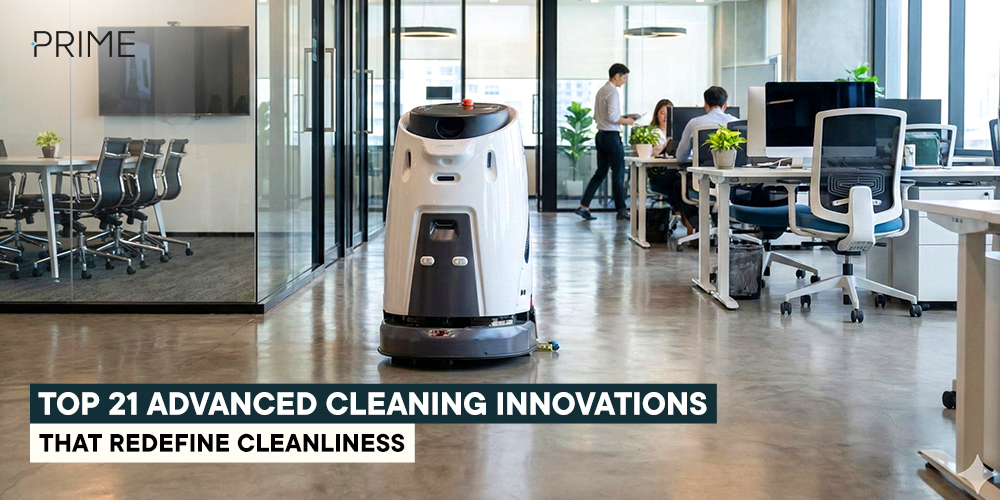
You gain a massive advantage when autonomous machines support your cleaning team with consistent, repeatable tasks. Cutting-edge office cleaning systems navigate busy areas, identify soil levels, and deliver uniform results that traditional routines rarely match. Additionally, their ability to run overnight helps your premises stay ready for morning operations without adding extra labor pressure.
Moreover, features like water-saving systems and route optimization help reduce waste while boosting productivity. Over time, next-generation commercial disinfection systems pair seamlessly with robotic platforms to elevate your overall hygiene strategy.
2. Cleaning Drones
Transform large-area cleaning with aerial drones designed for height, reach, and difficult angles. These lightweight units handle high walls, vents, ceiling beams, and outdoor facades. You gain safer access to areas that typically demand ladders or specialized lifts.
Furthermore, drones improve speed and reduce disruptions, especially in warehouses, industrial spaces, and atriums. Their onboard cameras and mapping tools help your team evaluate progress in real time. Smart tools like these maintain a consistently polished environment with fewer physical risks.
3. Automation-Ready Cleaning Carts & Docking Stations
Streamline cleaning workflows when carts synchronize with digital systems and recharging docks. Such setups support organized storage, reduce time wasted searching for supplies, and optimize movement through the building. As your cleaning crew navigates each shift, the integrated components enhance efficiency and encourage smooth task transitions.
Additionally, smart docking stations help reduce equipment downtime and maintain consistent readiness. It directly improves daily cleaning outcomes and reinforces a more professional working rhythm.
4. Mobile Apps for Crew Coordination
Empower your team by enabling every crew member to operate through a shared digital command center. Mobile apps help assign tasks, track completion, and resolve issues instantly. Moreover, these tools allow you to monitor progress remotely, improving accountability and reducing miscommunication.
Real-time notifications help your team respond quickly to urgent needs across the establishment. As a result, your entire cleaning program gains a stronger structure, a predictable rhythm, and smoother alignment across all shifts.
5. Smart Chemical Dispensers & Dilution Control
You can elevate safety and precision when cleaning products dispense at exact dilution ratios. These systems prevent chemical overuse, protect your team, and deliver consistent cleaning quality across all zones in your unit.
Furthermore, accurate dosing reduces costs over time and limits unnecessary waste. Smart dispensers also help you maintain compliance with evolving hygiene standards. Especially, it’s applicable for the high-sensitivity environments that demand reliable, repeatable chemical performance.
6. AI & IoT-Driven Cleaning Management Systems
You unlock cleaner facilities with data-guided decisions instead of random guesswork. AI-powered dashboards highlight peak traffic times, identify neglected areas, and recommend optimal cleaning frequency. Moreover, connected devices track supply usage and equipment performance, helping your team avoid delays and maintain steady workflows.
Over time, you see clearer patterns, fewer interruptions, and stronger consistency. Such a massive shift strengthens your entire operation, helping you deliver outcomes grounded in insight rather than routine.
This is where intelligent cleaning workflows powered by IoT cleaning technology make a meaningful impact.
7. Electrostatic Sprayer Systems
Strengthen your office’s hygiene strategy by ensuring surfaces receive even, wraparound coverage with charged droplets. Electrostatic sprayers help your team reach corners, textured surfaces, and high-touch areas with uniform precision.
They work quickly across large spaces, making them ideal for offices, educational hubs, and public zones that require rapid turnover. When you adopt this method, you reduce coverage gaps and improve overall cleanliness without increasing manual workload.
8. UV-C Disinfection Technology
Adopt a powerful layer of protection by introducing UV-based cleaning into your workflow. Devices like these help neutralize harmful microorganisms on surfaces without relying on chemicals.
Furthermore, they operate with speed, making them valuable for restrooms, shared equipment rooms, and medical-adjacent spaces. The technology enhances your confidence by delivering dependable coverage in areas that require strict cleanliness standards. With proper training and placement, your establishment experiences a noticeable lift in hygiene standards.
9. Fogging & Misting Disinfection
Your cleaning scope improves once fine disinfectant droplets disperse throughout large or complex rooms. Fogging reaches behind furniture, under fixtures, and into ventilation areas that standard tools often miss. The lightweight mist settles evenly, giving your team a more efficient way to treat hard-to-clean sections.
The approach supports periodic deep-cleaning cycles, ensuring your entity stays protected against contaminants that linger below the surface.
10. Ozone-Based Disinfection
When ozone systems break down odors, bacteria, and airborne impurities, you gain a chemical-free disinfection. The method works particularly well in spaces that trap smells or require deep deodorization.
Ozone penetrates hard-to-sanitize areas, providing a more comprehensive cleaning effect. After proper airing-out cycles, treated rooms feel noticeably fresher and healthier. This approach supports long-term cleanliness while reducing reliance on harsh chemical treatments.
11. Dry Vapor Steam Cleaning
Now, remove stubborn grime, grease, and embedded dirt with high-temperature vapor that cleans without saturating surfaces. A method like this delivers impressive results on grout lines, restrooms, kitchen areas, and textured flooring.
The steam supports thorough cleaning without leaving behind excess moisture, reducing slip risks and drying times. Over time, the approach helps you maintain a higher level of cleanliness with minimal chemical use. Let your facility adopt eco-forward routines, supported by sustainable cleaning methods, for healthier, long-term maintenance.
12. Appliance Sanitizer Innovations
Appliance sanitizers are gaining momentum because people nowadays expect deeper cleanliness around shared tools and high-touch equipment. Newer models operate with shorter cycles, helping teams maintain healthier environments without slowing down work.
Their targeted action elevates confidence in each space, especially in busy commercial settings where precision matters.
13. Eco-Friendly Chemical Alternatives
Eco-focused chemicals continue to evolve, offering safer options without compromising cleaning power. They have upgraded formulas that reduce harmful residue, creating healthier indoor spaces for teams and guests.
They also help organizations meet sustainability goals while elevating long-term maintenance standards. As a property owner, you can now shift toward these solutions to support overall building wellness.
14. Energy & Water-Efficient Cleaning Equipment
Efficient systems reshape daily workflows by conserving water and electricity while delivering strong cleaning performance. Their design supports long-term operational savings, making them ideal for large facilities aiming to reduce overhead.
With these tools, your team remains productive through consistent output and easier handling. The shift benefits both budgets and the environment.
15. Sustainable Robotic Cleaning Programs
Modern robotics programs do more than automate. They function as reliable partners that handle repetitive floor care or large-area cleaning. Contemporary facilities implement these systems to maintain steady productivity during peak hours.
Moreover, the machines reduce staff strain, offering a smart way to balance the workload while improving overall consistency. Their growing adoption signals a major movement toward efficiency.
16. Advanced Surface Protection Coatings
Many buildings now rely on advanced antimicrobial coatings to extend surface life and reduce the need for frequent maintenance. These protective layers resist stains and scuffs while supporting healthier environments.
Your entity will appreciate how the technology simplifies long-term care, particularly for high-traffic zones. It helps teams maintain reliable results with less effort.
17. Smart Microfiber & Advanced Textile Tools
Enhanced microfiber and textile tools help professionals capture more dust, oils, and unseen debris in a single pass. They have an exceptionally upgraded structure that improves performance even in tight corners.
In this way, teams achieve better results with fewer repeats. These tools also last longer, which adds value for busy facilities that experience heavy daily use.
18. Virtual & Augmented Reality Training
Training programs now use immersive tools to improve onboarding and elevate staff performance. VR and AR simulations guide teams through complex procedures while reducing real-world risk. To be precise, these systems accelerate learning by recreating scenarios that typically require extensive supervision.
Operators feel more confident when entering live environments because they’ve practiced every step in advance. Such an approach also helps organizations maintain consistency across multiple shifts and locations.
19. Luminescent Sweepers
These modern sweepers illuminate dust trails, debris patterns, and missed zones with glowing visual indicators. Their smart lighting technology makes imperfections highly visible, enabling your crews to correct details instantly.
In this regard, the improved visibility enhances the after-hours cleaning when lighting conditions vary. Many teams rely on it to maintain professional-level outcomes in high-traffic corridors and entryways.
20. Floor Finish Polymer Technology
New polymer blends offer greater resistance to scratches, scuff marks, and long-term wear. These compounds bond smoothly with flooring materials to create a richer, clearer finish that lasts longer between maintenance cycles. To be specific, they enhance traction, which supports safety in busy areas.
Adoption continues to rise as facilities look for ways to preserve flooring investments. Their durability helps maintain a polished look that holds up under heavy daily use.
21. Integrated AI Facility Hygiene Platforms
AI-driven platforms bring all cleaning operations into one intelligent ecosystem. These systems analyze traffic trends, forecast supply needs, and recommend optimized cleaning schedules. They also highlight performance gaps before issues escalate.
Managers benefit from clear insights and streamlined reporting tools that help them make informed decisions. As time passes, these platforms strengthen daily operations and complement advancements, such as antimicrobial coatings, to support healthier buildings.
Advanced Cleaning Techniques Used by Professionals
Modern commercial cleaning is about more than keeping surfaces looking clean. Professional cleaning companies use advanced cleaning techniques that improve hygiene, reduce cross-contamination, and deliver consistent results across offices, healthcare facilities, schools, and other commercial spaces.
By combining specialized equipment, proven cleaning methods, and trained professionals, businesses can maintain healthier environments while protecting their facilities for the long term.
Color-Coded Microfiber Cleaning Systems
Color-coded microfiber cloths and mops help prevent cross-contamination by assigning specific cleaning tools to designated areas such as restrooms, kitchens, and workspaces. This simple yet effective system improves hygiene while reducing the spread of bacteria between surfaces.
HEPA Vacuum Cleaning
High-Efficiency Particulate Air (HEPA) vacuums capture fine dust, allergens, and airborne particles that conventional vacuums may recirculate. They are widely used in offices, healthcare facilities, and educational buildings to improve indoor air quality and create healthier workplaces.
Steam Cleaning Technology
Steam cleaning uses high-temperature vapor to loosen dirt, grease, and bacteria from hard surfaces with minimal chemical use. It is particularly effective for kitchens, restrooms, grout lines, and other areas that require deep cleaning while supporting environmentally responsible cleaning practices.
Touchpoint Cleaning Protocols
Professional cleaning programs prioritize high-touch surfaces such as door handles, elevator buttons, desks, keyboards, light switches, and shared equipment. Routine cleaning and disinfection of these frequently used areas help reduce the spread of germs in busy commercial environments.
Preventive Floor and Carpet Maintenance
Instead of waiting until floors and carpets show visible wear, preventive maintenance combines scheduled vacuuming, floor scrubbing, spot treatment, and periodic deep cleaning to preserve appearance and extend the life of commercial flooring materials.
Data-Driven Quality Assurance
Many commercial cleaning companies now use digital inspection checklists, scheduled audits, and performance tracking to verify cleaning quality and maintain consistent service across multiple facilities. These systems help ensure cleaning standards are met while providing greater accountability and transparency for clients.
Advanced Disinfection Solutions for Businesses
Maintaining a clean workplace goes beyond removing visible dirt. Today’s businesses require advanced disinfection solutions that help reduce the spread of germs, protect employees and visitors, and support healthier indoor environments.
Modern commercial cleaning companies combine proven cleaning protocols with innovative technologies to disinfect high-touch surfaces, shared workspaces, and large facilities more efficiently while following manufacturer guidelines and required disinfectant contact times.
Electrostatic Disinfection
Electrostatic sprayers apply electrically charged disinfectant droplets that adhere more evenly to hard, non-porous surfaces, making them ideal for offices, schools, healthcare facilities, and other high-traffic commercial spaces. For effective results, they should always be used with EPA-approved disinfectants and according to product label directions.
EPA-Registered Disinfectants
Professional cleaning companies use EPA-registered disinfectants that are tested for effectiveness against a wide range of pathogens. Selecting the appropriate product and allowing the required dwell time are essential steps in achieving proper disinfection.
UV-C Disinfection Technology
UV-C technology is increasingly used as a supplemental disinfection method for healthcare facilities, laboratories, and other sensitive environments. When used correctly, it can help reduce microorganisms on selected surfaces and equipment while complementing routine manual cleaning.
High-Touch Surface Disinfection
Frequently touched areas such as door handles, elevator buttons, light switches, shared desks, keyboards, and breakrooms require targeted disinfection throughout the day. Focusing on these touchpoints helps businesses maintain cleaner, healthier workplaces where employees and visitors interact most often.
Data-Driven Cleaning Programs
Many modern facilities now use occupancy data, cleaning schedules, and digital quality inspections to prioritize high-use areas and improve consistency. These technology-supported cleaning programs help businesses allocate resources efficiently while maintaining high cleaning standards across their facilities.
Why Businesses Should Switch to Modern Cleaning Solutions?
As a commercial building or office owner, you know that cleanliness directly affects customer satisfaction, operational efficiency, and long-term value. With advanced office cleaning services, you get to use tools that help you maintain healthier and more attractive spaces.
These new-age modern solutions reduce strain on your staff, streamline maintenance, and protect both your property and its occupants.
Strengthen Health Protection at Scale
Latest systems prevent invisible risks while ensuring deeper, more reliable cleaning outcomes. Clients and visitors get to experience healthier spaces, and potential illness-related disruptions decrease.
Investing in these upgrades helps your property meet heightened sanitization expectations and instills confidence in every occupant.
Improve Efficiency Without Compromising Quality
Smart equipment streamlines tasks, allowing your team to achieve high-quality results faster. On the other hand, it improves consistency across all areas. As a result, your staff can focus on more meaningful work rather than repeating basic cleaning routines.
In high-traffic properties, this efficiency directly enhances customer satisfaction and operational flow.
Reduce Long-Term Operational Costs
High-tech cleaning solutions minimize the need for water, chemicals, and repeated cleaning cycles. In turn, this reduces expenses while maintaining strong performance. Such efficiency and resource control make property management more predictable and cost-effective.
Prime Cleaning Services is the most trusted office-cleaning partner in NYC. Our unmatched cleaning practices are strategic investments that protect both your budget and your property.
Raise Safety Standards Across Every Touchpoint
Cross-contamination risks drop when high-traffic areas receive consistent, thorough treatment. Advanced tools monitor coverage and ensure every surface meets commercial disinfection and safety standards. These improvements keep tenants safer, strengthen operational oversight, and reinforce your property’s reputation for professionalism.
Elevate Cleanliness and Efficiency with Prime Cleaning’s Advanced Solutions
Embracing the emerging Advanced Cleaning Innovations transforms how your property looks, feels, and performs. The solutions we explained above enhance hygiene, efficiency, and sustainability, providing tenants and employees with safer, healthier environments.
By integrating smarter technologies, you reduce operational stress while maintaining compatible results across every corner of your space. Staying ahead in cleanliness standards builds trust and elevates your property’s reputation.
Discover how Prime Cleaning can help you implement these solutions. Schedule a consultation today and get a customized quote for your project.
Top 21 Advanced Cleaning Innovations That Redefine Cleanliness: FAQs
Q: What are the new technologies improving cleaning effectiveness?
New cleaning technologies include AI-powered cleaning robots, UV-C disinfection, electrostatic sprayers, and smart cleaning equipment that improve cleaning efficiency, surface coverage, hygiene, and consistency.
Q: What are AI robotic floor scrubbers, and how do they work?
Ans: AI robotic floor scrubbers clean floors autonomously. These smart tools use sensors and mapping to navigate efficiently while ensuring consistent hygiene and coverage.
Q: Are UV-C disinfection robots safe around people?
Ans: UV-C robots must operate in empty spaces, as direct exposure can harm skin or eyes. However, they safely disinfect when unoccupied.
Q: What types of commercial spaces benefit from robotic cleaning solutions?
Ans: Offices, hospitals, schools, retail stores, airports, and warehouses benefit most, especially high-traffic areas needing consistent, efficient daily cleaning.
Q: How do electrostatic sprayers improve disinfection?
Ans: Electrostatic sprayers charge liquid disinfectants. It allows them to evenly coat surfaces, corners, and hard-to-reach areas for better pathogen elimination.
Q; What is the role of IoT-connected smart cleaning equipment?
Ans: IoT smart equipment tracks usage, monitors performance, and provides data-driven insights. They efficiently enable efficient cleaning and predictive maintenance across facilities.
Q: What industries use long-lasting antimicrobial coatings?
Ans: Healthcare, hospitality, food service, transportation, and schools use antimicrobial coatings. The sole objective of this coating is to reduce microbial growth on high-touch surfaces for extended periods.
Q: Are robotic cleaning solutions sustainable?
Ans: Yes, absolutely! Robotic solutions reduce chemical, water, and energy use while optimizing labor. The cleaning procedure becomes more environmentally friendly and operationally sustainable.