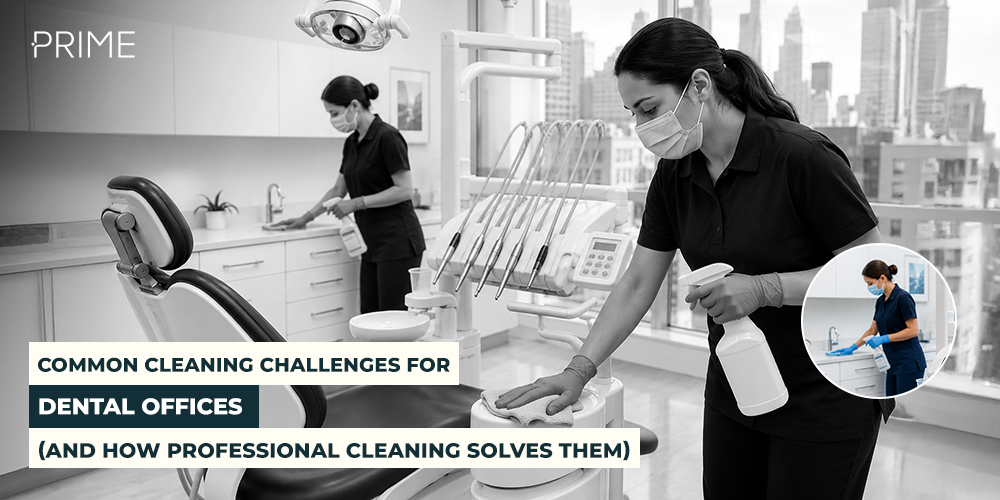

Dental clinics in New York City deal with bloodborne pathogens and aerosols daily. These are common cleaning challenges for dental offices that can compromise patient safety if not managed properly.
From infection control to equipment sanitation-every aspect needs to be taken care of to maintain patient and employee safety. That’s why dental practice managers and owners should introduce professional cleaning services.
These trained cleaning experts are familiar with standardized cleaning regulations. This ensures that dental practices pass inspections without the complications of penalties.
Also, they use high-efficiency cleaning tools to mitigate the risk of cross-contamination. When the dental office shows top-notch cleanliness in every corner, it establishes a strong reputation as a business.
Ready to manage your dental office sanitation challenges? Fortunately, the right cleaning strategy and expertise can help your medical facility stay ahead of these problems.
This blog outlines the common challenges for dental offices, explains why they occur, and shares practical solutions to maintain high hygiene standards.
It will also discuss how professional healthcare cleaning services support dental practices with consistent, regulation-focused cleaning every day.
Key Takeaways
- Dental offices face unique cleaning challenges such as aerosols, cross-contamination, biohazardous waste, and strict infection control requirements that demand specialized cleaning practices.
- Consistent cleaning between patients and daily deep cleaning are essential for protecting patients and staff and maintaining a safe clinical environment.
- Following OSHA and CDC recommendations helps dental practices strengthen infection prevention, support compliance, and stay prepared for inspections.
- Professional healthcare cleaning services improve cleaning consistency, reduce the burden on dental teams, and help maintain high hygiene standards every day.
- A structured cleaning plan and trained cleaning professionals help dental practices create a cleaner, safer, and more welcoming experience for every patient.
Why Dental Offices Require Specialized Cleaning in NYC?
Dental offices require specialized cleaning because they face infection control risks that regular janitorial cleaning cannot adequately address.
As dental facilities in NYC experience continuous patient flow, it’s necessary to follow regulatory compliance that only specialized cleaning can handle.
The following are the reasons dental offices require specialized cleaning in NYC:
- Aerosol-generating procedures: Dental treatments release fine aerosols that can settle on nearby surfaces, making frequent cleaning and disinfection essential.
- Bloodborne pathogen exposure: Contact with blood and bodily fluids requires strict cleaning practices to reduce infection risks.
- Clinical contact surfaces: Dental chairs, lights, trays, and countertops need disinfection after every patient to prevent cross-contamination.
- Medical waste handling: Biohazardous waste and sharps must be handled and disposed of safely to protect staff and patients.
- Regulatory compliance: Meeting OSHA (Occupational Safety and Health Administration) and CDC (Centers for Disease Control and Prevention) guidelines requires consistent cleaning protocols and proper documentation.
- Daily disinfection between patients: Treatment rooms must be cleaned and disinfected after every appointment to maintain a safe clinical environment.
Common Cleaning Challenges for Dental Offices
Every dental practice faces cleaning challenges that are different than a typical commercial space. The presence of aerosols and blood splatter increases the chances of disease transmission through contaminated surfaces.
All of these highlight maintenance neglect that affects regulatory compliance and overall reputation. Understanding these challenges is the first step toward maintaining a safer, more efficient dental practice.
Preventing Cross-Contamination Between Patients
Cross-contamination between patients is one of the most significant challenges of cleaning a dental office. When high-speed dental tools create aerosols, they spread to distant surfaces, causing disease transmission.
If treatment areas are not cleaned and disinfected between appointments, harmful pathogens may transfer from one patient to the next, increasing the risk of infection.
The space therefore requires thorough cleaning and disinfection of clinical contact surfaces after every patient visit.
Managing Aerosols and Airborne Contaminants
Managing aerosols and airborne contaminants is another major dental clinic cleaning challenge. Procedures such as drilling, ultrasonic scaling, and polishing release fine droplets that remain suspended in the air before settling on nearby surfaces.
Keeping up with these contaminants can be difficult, especially during busy appointment schedules. Dental teams are primarily focused on patient care and may not have the time or expertise to clean every affected surface thoroughly after each procedure.
Hence, HEPA (high-efficiency particulate air) filtration systems should be used to capture airborne particles and improve indoor air quality, supporting a cleaner and safer clinical environment.
Proper Cleaning vs Disinfection vs Sterilization
Cleaning a dental office is not just about wiping down the area or the entryway for external appearance. It is also essential to disinfect the surfaces and sterilize the equipment to eliminate harmful microorganisms.
Keeping these steps consistent can be challenging for busy dental teams balancing patient care with infection control. It is therefore a wise choice to schedule specialized cleaning that knows what tools to use to clean the dental office.
They ensure environmental surfaces are cleaned and disinfected correctly, while supporting the practice’s overall infection prevention protocols.
Cleaning High-Touch Clinical Surfaces
Keeping high-touch clinical surfaces clean is one of the most common dental office hygiene challenges. Dental chairs, overhead lights, X-ray controls, and drawer handles are touched repeatedly by clinicians, assistants, and patients throughout the day.
Missing even one frequently used surface can allow harmful microorganisms to spread between appointments.
The best way to reduce this risk is to follow a standardized dental office cleaning checklist and disinfect all clinical contact surfaces after every patient using Environmental Protection Agency (EPA)-registered healthcare disinfectants.
Safe Handling of Biohazard and Medical Waste
Safe handling of biohazard and medical waste is one of the more complex dental facility cleaning challenges. Used gauze, blood-contaminated materials, sharps, and disposable personal protective equipment (PPE) require proper segregation, handling, and disposal.
Mistakes can increase the risk of exposure, workplace injuries, and regulatory violations. Reducing these risks requires staff training, clearly labeled waste containers, and strict disposal procedures.
Professional healthcare cleaners are trained to handle regulated medical waste safely while supporting compliance with established infection control standards.
Choosing the Right Disinfectants
What disinfectants you’re using remains one of the most common dental office disinfection challenges. Using chemical disinfectants to wipe down dental instruments can increase patient risk.
Moreover, the wrong disinfectants can damage the clinic’s surfaces, downgrading its shiny appearance. It is thus crucial for dental practices to use EPA-registered disinfectants that are approved for healthcare environments and follow the manufacturer’s instructions for dilution and contact time.
Such a practice helps ensure effective disinfection without compromising equipment or patient safety.
Maintaining Compliance with OSHA and CDC Guidelines
Maintaining compliance with OSHA and CDC guidelines is an ongoing challenge for dental practices. Infection control recommendations evolve, and practices must consistently follow documented cleaning protocols and maintain accurate records.
Regular staff training, documented cleaning procedures, and periodic compliance reviews help dental practices stay aligned with current requirements.
Working with a cleaning provider that understands these healthcare standards adds another layer of consistency and accountability.
Cleaning Around Sensitive Dental Equipment
Among significant dental office cleaning challenges is cleaning around sensitive equipment. These spaces use expensive devices, such as intraoral cameras, digital sensors, and curing lights, which cannot be exposed to excessive moisture.
Most dental teams lack the knowledge to clean the equipment, and improper techniques can damage them worth thousands of dollars.
Specialized cleaners use color-coded microfiber cloths to categorize the different surfaces. Furthermore, they follow the manufacturer’s cleaning instructions to enhance equipment safety.
Keeping Waiting Areas Safe During High Patient Traffic
Another common dental office cleaning problem is keeping waiting areas safe during high patient traffic. The constant movement of patients around check-in screens, reception counters, chairs, and door handles can quickly accumulate dust.
The challenge becomes noticeable when you have to balance cleanliness with patient experience. If not cleaned, patients might have to step into an unwelcoming space that directly impacts the dental clinic’s professional image.
It is thus essential to maintain a clear cleaning routine for high-frequency areas. For instance, the door handles, waiting chairs, and reception counters should be cleaned every 1-2 hours during peak times.
Maintaining Consistent Cleaning Standards Every Day
Maintaining consistent cleaning in a dental office is a serious challenge. As patient volume fluctuates and staff priorities shift, cleaning tasks can be delayed, overlooked, or completed differently from one day to the next.
These inconsistencies can create gaps in infection prevention and make it difficult to maintain the same level of hygiene across the practice.
Standardized cleaning protocols and scheduled quality inspections help maintain consistency. If your cleaning staff is not trained in using EPA-approved products, a cleaning company with experience in medical office cleaning will ensure thorough upkeep, regardless of how busy the day gets.
Industry-Backed Solutions for Dental Office Cleaning
| Cleaning Problem | Industry-Backed Solution | Recommended Cleaning Approach |
|---|---|---|
| Cross-contamination | Establish a strict cleaning and disinfection protocol between patients, especially for clinical contact surfaces. | Clean first to remove soil and organic matter, then disinfect using an appropriate EPA-registered hospital disinfectant according to its label and contact time. Frequently touched surfaces such as light handles, switches, drawer knobs, countertops, and dental-unit controls should receive particular attention. |
| Bacteria buildup | Use routine environmental cleaning and disinfection, while preventing contamination of cleaning tools and solutions. | Clean high-touch and patient-care surfaces on a defined schedule and whenever visibly soiled. Use fresh cleaning solutions and properly clean/decontaminate reusable mop heads and cloths to avoid transferring microorganisms from one area to another. |
| Biohazards, including blood and body fluids | Follow a written bloodborne-pathogen cleaning and decontamination procedure and use appropriate PPE. | Decontaminate equipment and environmental surfaces after contact with blood or other potentially infectious materials. Address visible contamination or spills as soon as feasible using an appropriate disinfectant and follow OSHA requirements for housekeeping and exposure control. |
| Unpleasant odors | Identify and remove the source of the odor rather than masking it with fragrances. | Clean and disinfect contaminated surfaces, promptly remove waste, maintain appropriate waste containers, and address moisture or organic buildup. Dental unit waterlines should also be properly maintained because untreated lines can develop microbial biofilm. |
| Hard-to-clean areas | Include frequently overlooked clinical contact points in a documented cleaning checklist. | Pay special attention to light handles, switches, drawer knobs, dental-unit controls, computer equipment, bracket trays, seams, edges, and other difficult-to-reach surfaces. Barrier-protect surfaces where appropriate and replace barriers between patients. |
Daily Dental Office Cleaning Checklist
A consistent cleaning routine is essential for maintaining infection control throughout the day. Dividing cleaning tasks into before opening, between patients, and end-of-day responsibilities helps ensure every area receives attention at the right time.
It also supports a safe, compliant, and well-maintained dental practice. Let’s see what the daily dental office cleaning checklist looks like.
Before Opening
Cleaning before opening helps create a safe, hygienic environment before the first patient arrives and ensures the practice is ready for the day’s appointments.
Before patients arrive, complete the following cleaning tasks:
- Floors: Vacuum or mop all floors to remove dust, dirt, and debris that may have accumulated overnight.
- Reception: Wipe reception counters, check-in screens, phones, and other frequently touched surfaces.
- Restrooms: Clean and disinfect all fixtures, refill soap and paper supplies, and check overall cleanliness.
- Waiting room: Sanitize seating, tables, door handles, and other shared touchpoints while tidying the space.
- Waste bins: Empty bins, replace liners, and ensure waste is properly disposed of before opening.
Between Patients
Cleaning between patients is critical to break the chain of infection and prepare the treatment area for the next appointment.
After each patient, focus on the following areas:
- Chair: Clean and disinfect the dental chair, including the headrest, armrests, and adjustment controls.
- Light: Wipe and disinfect the dental light handles and switches before the next procedure.
- Countertops: Disinfect work surfaces where instruments, materials, or supplies are handled.
- Instrument area: Clean the work area and safely transfer reusable instruments for sterilization.
- High-touch surfaces: Disinfect frequently touched items such as drawer handles, keyboards, X-ray controls, and other contact points.
End of Day
End-of-day cleaning helps remove contaminants that build up throughout the day and prepares the practice for a safe start the next morning.
Before closing, complete these essential cleaning tasks:
- Floors: Vacuum and mop all clinical and common areas using appropriate cleaning products.
- Restrooms: Perform a thorough clean and disinfect all fixtures, surfaces, and touchpoints.
- Waste removal: Remove general and regulated waste according to established disposal procedures.
- Surface disinfection: Disinfect treatment rooms, workstations, and other clinical contact surfaces that require daily cleaning.
- Supply restocking: Replenish gloves, paper products, hand soap, disinfectants, and other essential supplies for the next day.
What OSHA Cleaning Requirements Apply to Dental Offices?
OSHA requires dental practices to follow cleaning and safety procedures that reduce workplace exposure to infectious materials and support a safe clinical environment.
Maintaining these standards helps protect employees, promote infection control, and keep the practice prepared for inspections.
To support OSHA compliance, dental offices should:
- Develop written cleaning procedures: Create clear cleaning protocols so every treatment room and common area is cleaned consistently.
- Protect employees during cleaning: Ensure staff wear the appropriate PPE when handling contaminated surfaces, waste, or cleaning chemicals.
- Handle exposure risks safely: Follow established procedures whenever blood or other potentially infectious materials are present to reduce workplace exposure.
- Dispose of regulated waste correctly: Separate and discard sharps and contaminated waste using approved containers and disposal methods.
- Train employees regularly: Provide ongoing training so staff understand safe cleaning practices, chemical handling, and workplace safety responsibilities.
- Label and store cleaning chemicals properly: Keep cleaning products clearly labeled, safely stored, and readily accessible with their safety information.
- Maintain accurate records: Document staff training, cleaning procedures, and exposure control measures to support compliance and inspection readiness.
What CDC Infection Control Recommendations Should Dental Practices Follow?
The CDC provides infection control recommendations to help dental practices reduce the spread of disease and maintain a safe environment for patients and healthcare personnel.
Following these recommendations supports consistent hygiene practices and strengthens day-to-day infection prevention.
Key CDC infection control recommendations include:
- Perform hand hygiene consistently: Clean hands before and after every patient interaction and after removing gloves.
- Use appropriate personal protective equipment (PPE): Wear gloves, masks, eye protection, and protective clothing based on the procedure being performed.
- Clean and disinfect clinical contact surfaces: Disinfect treatment chairs, lights, countertops, and other frequently touched surfaces between patients.
- Sterilize reusable instruments properly: Clean, package, sterilize, and store reusable instruments according to recommended protocols before reuse.
- Follow safe injection practices: Use sterile needles and syringes for every patient and never reuse single-use devices.
How Can Dental Offices Maintain Cleaning Standards During Busy Appointment Schedules?
Busy appointment days can put pressure on even the most organized dental practice. The key is to make cleaning part of the daily workflow instead of treating it as a task that happens only when time allows.
- Allow time between dental procedures: Leave enough time to clean and disinfect the operatory before seating the next patient.
- Keep every operatory procedure-ready: Stock each treatment room with approved disinfectants, barriers, and disposable supplies for immediate between-patient cleaning.
- Use the same turnover process every time: Follow a standardized routine for disinfecting dental chairs, lights, delivery units, and other clinical contact surfaces after each appointment.
- Reserve detailed cleaning for after clinic hours: Between-patient cleaning should focus on operatories, while waiting areas, floors, restrooms, and non-clinical spaces receive thorough end-of-day attention.
- Support the dental team with professional cleaners: Schedule cleaning teams who specialize in routine dental office upkeep, allowing clinicians to focus on patient care without compromising hygiene standards.
Do HEPA Air Purifiers Help Keep Dental Offices Cleaner?
Yes, HEPA air purifiers help keep dental offices cleaner by capturing airborne particles generated during dental procedures. It thus helps improve indoor air quality and reduces the spread of contaminants.
While they do not replace routine cleaning and surface disinfection, they add an extra layer of protection to the dental office.
By continuously filtering the air, these systems help reduce airborne contaminants before they settle on surfaces, support cleaner treatment rooms, and create a healthier environment for patients and staff.
What Signs Indicate a Dental Office is Not Being Cleaned Properly?
Poor cleaning standards often become visible long before they lead to compliance issues. Recognizing these warning signs early helps dental practices address hygiene gaps before they affect patient safety or the overall patient experience.
- Persistent odors: Lingering clinical or restroom odors may indicate inadequate cleaning or waste management.
- Dust around equipment: Dust on dental units, monitors, or storage areas suggests routine cleaning is being overlooked.
- Missed touchpoints: Fingerprints or residue on chair controls, light handles, and drawer pulls indicate high-touch surfaces are not being disinfected consistently.
- Sticky floors: Sticky or stained flooring in treatment rooms or reception areas points to incomplete daily cleaning.
- Overflowing waste: Full waste bins or improperly managed biohazard containers can increase hygiene and safety risks.
- Poor inspection results: Repeated issues during internal audits or regulatory inspections often highlight gaps in cleaning practices.
- Inconsistent documentation: Missing or incomplete cleaning logs make it difficult to verify that required tasks have been carried out.
- Patient complaints: Comments about cleanliness, unpleasant smells, or untidy treatment areas can quickly affect trust in the dental practice.
Why Many Dental Practices Hire Professional Healthcare Cleaning Services?
Maintaining a dental office requires more than routine cleaning. Many practices partner with professional healthcare cleaning services to strengthen infection control, support compliance, and ensure consistent hygiene without disrupting daily patient care.
- Trained healthcare cleaners: They understand the cleaning requirements of dental operatories and other clinical areas.
- Consistent cleaning schedules: Routine and deep cleaning are carried out on time, even during busy appointment periods.
- Better infection prevention: Proper cleaning and disinfection help reduce the risk of cross-contamination throughout the practice.
- Compliance support: Professional cleaners follow healthcare cleaning protocols that support OSHA and CDC infection control standards.
- Reduced workload for clinical staff: Dentists and assistants can focus on patient care instead of managing extensive cleaning tasks.
- Detailed cleaning records: Documented cleaning activities help demonstrate consistency and support inspection readiness.
- Improved patient confidence: A visibly clean and well-maintained dental office reassures patients and reinforces trust in the practice.
Why Should You Trust Prime Cleaning Services for Dental Office Cleaning?
Dental offices need a cleaning partner that understands the demands of a clinical environment. At Prime Cleaning Services, we combine healthcare cleaning expertise with dependable service to help dental practices across NYC maintain high hygiene standards every day.
- Healthcare-focused cleaning expertise: We understand the infection control requirements of dental offices and other healthcare facilities.
- Customized cleaning plans: Every cleaning schedule is tailored to your practice’s hours, patient volume, and operational needs.
- Trained and vetted cleaning professionals: Our team follows standardized cleaning procedures to deliver consistent results.
- Flexible scheduling: We clean before opening, after hours, or on weekends to avoid disrupting patient care.
- Reliable quality assurance: Regular inspections help ensure every cleaning meets our high standards.
- Eco-friendly cleaning options: We offer environmentally responsible cleaning solutions that support a healthier indoor environment.
- Trusted by NYC businesses: Our responsive team delivers dependable commercial cleaning services across New York City.
Keep Your Dental Practice Clean, Safe, and Inspection-Ready
Understanding the common cleaning challenges for dental offices is essential for maintaining a safe, compliant, and professional practice.
From managing aerosols and disinfecting clinical surfaces to meeting regulatory compliance, every step plays a role in protecting patients, staff, and your reputation.
At Prime Cleaning Services, we provide medical cleaning services, including dental office cleaning. Our trained professionals deliver reliable, regulation-focused cleaning that helps your practice maintain a healthier environment and make a lasting impression on every patient.
Schedule our customized cleaning plan to get a spotless clean dental office today!
Frequently Asked Questions
1. How often should a dental office be professionally cleaned?
Dental offices should be professionally cleaned on a routine schedule. The treatment and patient-facing areas should be disinfected 1-2 times per hour between patient appointments. The frequency of deep cleaning depends on patient volume, the services offered, and the practice’s infection control requirements.
2. Why are dental offices more difficult to clean than regular offices?
Dental offices are exposed to aerosols, bloodborne pathogens, and medical waste during routine procedures. They also require strict cleaning, disinfection, and infection control practices that go beyond standard commercial office cleaning.
3. What are the biggest cleaning challenges in a dental office?
The biggest challenges in a dental office include preventing cross-contamination, managing aerosols, and disinfecting high-touch clinical surfaces. Other cleaning tasks related to a dental office include handling medical waste safely, maintaining regulatory compliance, and cleaning around sensitive dental equipment.
4. How do aerosols affect dental office cleaning?
Aerosols affect dental office cleaning by spreading the decontamination area from the treatment chair to the entire space. Dental aerosols can carry saliva, blood, and microorganisms that settle on nearby surfaces. This makes thorough surface disinfection and proper air filtration essential after many dental procedures.
5. What disinfectants are used in dental offices?
Dental offices typically use EPA-registered disinfectants including quaternary ammonium compounds, synthetic phenols, and chlorine compounds designed for healthcare settings. These products should be used according to the manufacturer’s instructions to ensure effective disinfection of clinical surfaces.
6. Why is cleaning between dental patients so important?
Cleaning between patients helps remove contaminants from treatment areas before the next appointment. This reduces the risk of cross-contamination and supports a safe clinical environment.
7. What surfaces should be disinfected after every dental patient?
All clinical contact surfaces should be disinfected after every dental appointment. These surfaces include dental chairs, light handles, countertops, delivery units, drawer handles, X-ray controls, and other frequently touched equipment and should be disinfected after every patient.
8. What areas in a dental clinic require the most frequent cleaning?
Treatment rooms, operatories, reception counters, waiting areas, restrooms, and high-touch surfaces throughout the clinic require frequent cleaning and disinfection throughout the day.
9. Can a regular commercial cleaning company clean a dental office?
General commercial cleaners can handle routine cleaning, but dental offices benefit from healthcare cleaning professionals who understand infection control protocols, clinical environments, and regulatory requirements.
10. Why are dental unit waterlines difficult to maintain?
Dental unit waterlines can develop biofilm inside narrow tubing if they are not maintained properly. Regular treatment, flushing, and monitoring help maintain water quality and reduce contamination risks.
11. What is the difference between cleaning and sterilizing dental equipment?
Cleaning removes visible debris and organic matter from instruments, while sterilization destroys all microorganisms, including bacterial spores, before reusable instruments are used again.
12. How do dental offices reduce cross-contamination?
Dental practices reduce cross-contamination by disinfecting treatment rooms between patients, following proper hand hygiene, wearing appropriate PPE, sterilizing reusable instruments, and following established infection control procedures.
13. What areas of a dental office are most commonly missed during cleaning?
The areas of a dental office that are commonly missed include light handles, chair controls, drawer pulls, keyboards, touchscreens, door handles, waiting room armrests, and other high-touch surfaces that require regular disinfection.